The case remains a striking illustration of the constraints on medical teams in isolated environments, where a common surgical emergency becomes a fight for survival.
Leonid Rogozov was not merely far from help when appendicitis struck in April 1961. According to the Times of India's account, he was the only doctor at a remote Soviet research station, cut off by winter weather and frozen seas, with the next resupply roughly a year away. Evacuation was impossible. The 27-year-old surgeon prepared an operating room, recruited colleagues to assist and removed his own appendix.
The details, later documented in a 2009 British Medical Journal case report co-written by his son, Vladislav Rogozov, place the episode within the sixth Soviet Antarctic expedition. The team had sailed from Leningrad aboard the ship Ob on 5 November 1960 and, after a 36-day journey, began building a base at Schirmacher Oasis. The station, Novolazarevskaya, opened on 18 February 1961. Twelve people stayed for the winter, with Rogozov serving as sole doctor while also working as a meteorologist and driving the station's terrain vehicle.
On 29 April he felt weak and nauseous. Pain moved from his upper abdomen to the lower right side and his temperature rose. A trained surgeon, he recognised acute appendicitis, recorded the suspicion in his diary and initially kept quiet to avoid alarming colleagues. The following day his condition worsened. Antibiotics and conservative measures failed, fever set in and vomiting became more frequent. An untreated appendix can rupture and cause peritonitis, a potentially life-threatening infection. Snowstorms ruled out flying; the frozen sea and distance made a ship journey impractical.
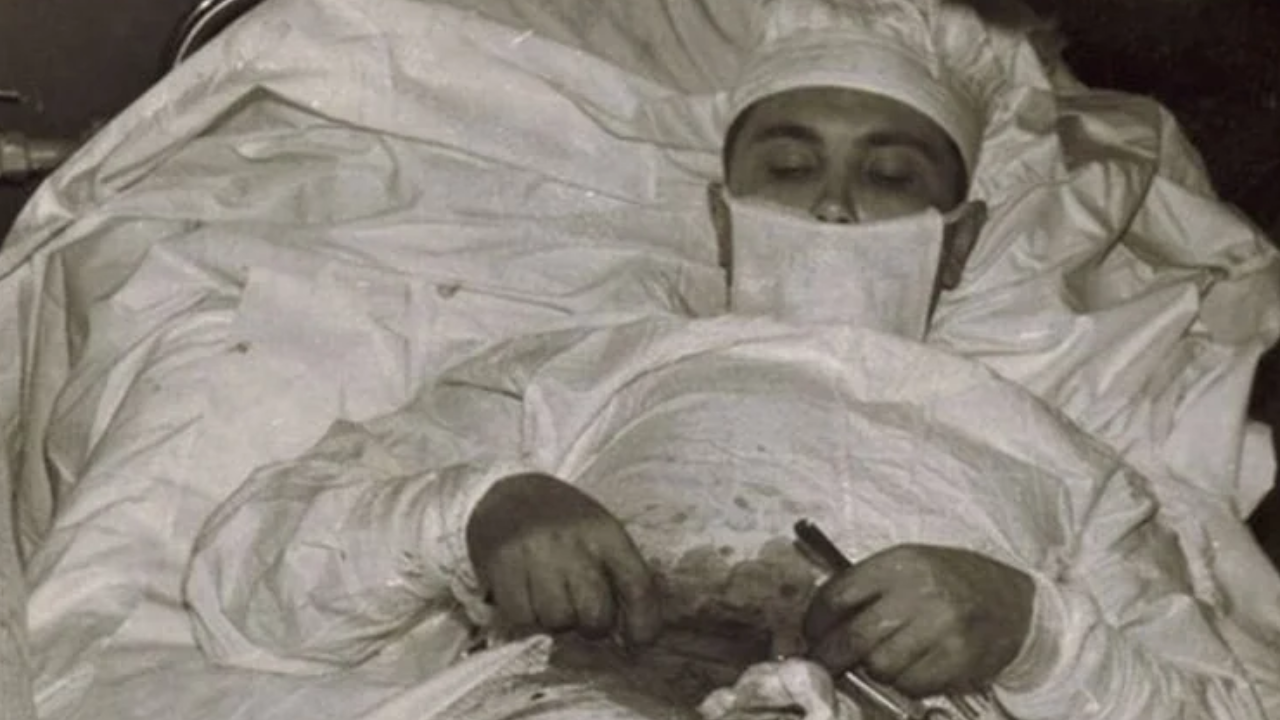
He converted his room into an improvised theatre, keeping his bed, two tables and a lamp. A mechanic and a meteorologist assisted, one handing instruments and the other holding a mirror and adjusting the light, with a third colleague ready should either faint. He showed his colleagues how to give injections and provide artificial ventilation if he lost consciousness. The operation began on 30 April under local anaesthesia. He injected Novocain, made an incision of around 10 to 12 centimetres and relied heavily on touch, since the mirror reversed the image. After about 40 minutes he felt weak and dizzy and paused repeatedly; he accidentally injured the caecum and stitched the damage before continuing. He removed the appendix and closed the incision. The operation lasted approximately two hours, and Rogozov later estimated the appendix might have ruptured within a day.
He continued antibiotics, his temperature returned to normal after five days and he removed his own stitches after a week. Within about two weeks he was back at his duties. He returned to the Soviet Union in October 1962, continued his medical career and eventually specialised in surgery, dying in Saint Petersburg on 21 September 2000, aged 66.
The case remains a striking illustration of the constraints on medical teams in isolated environments, where a common surgical emergency becomes a fight for survival. It also shows how far contingency planning can stretch when no evacuation exists: improvised facilities, trained bystanders and a clinician willing to accept extreme risk. What the record does not establish is how replicable such an outcome would be; the account rests on Rogozov's own report and the contemporary Soviet record, and the case report came decades later.