The story matters less for its novelty than for what it shows about the ordinary infrastructure of encouragement.
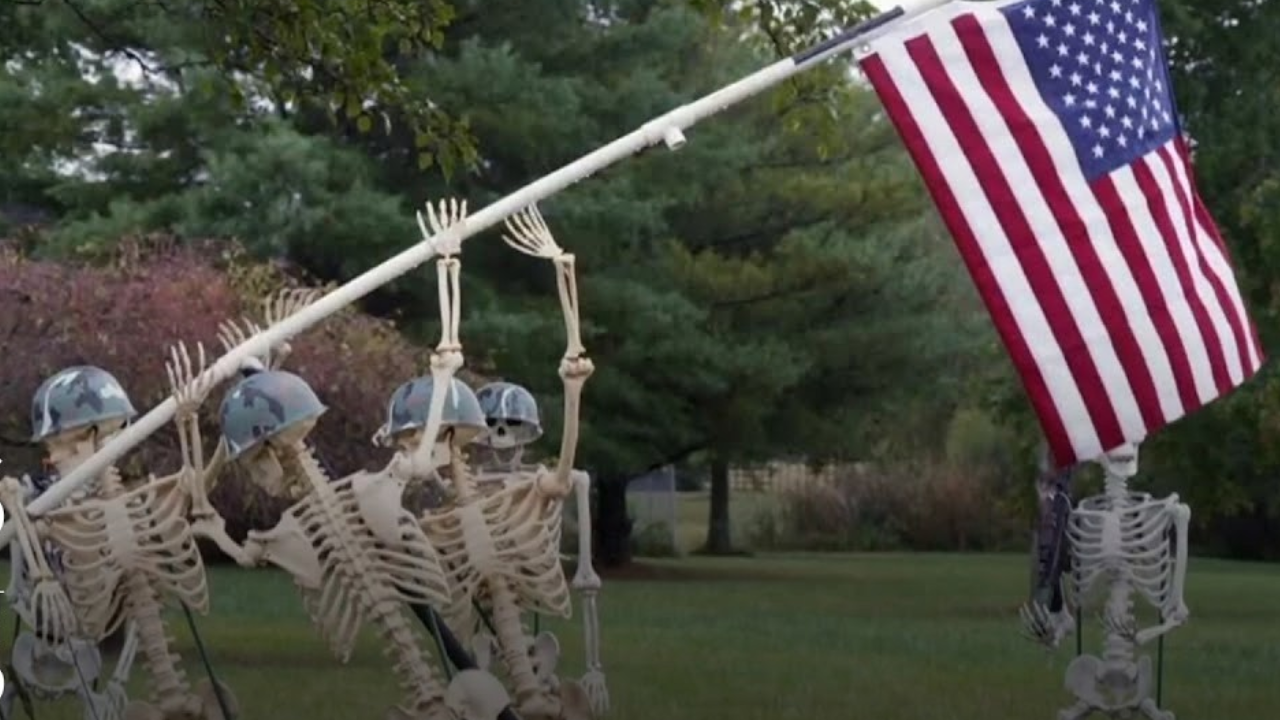
Bill Pyle's front yard in Oxford, Ohio, has long been crowded with life-sized skeletons arranged in elaborate scenes. According to reports from CBS News and WXIX revisited by CBS Evening News in October 2026, the figures have been dressed as tourists taking photographs, cowboys on skeletal horses and beekeepers, with some reaching impressive heights. The display was not always welcome. Pyle said his mailbox filled with hostile letters in the weeks before Halloween, some accusing him of promoting devil worship and others criticising the display for glorifying death. The complaints led him to consider scaling the attraction back.
What changed his mind was a handwritten letter addressed to the Bone Family, the name attached to the collection. It came from a woman named Tammy, who wrote that she had driven past the house on 19 consecutive days on her way to radiation treatment for breast cancer. Checking the changing arrangements, she said, had become one of the highlights of an otherwise difficult journey. She told him her final session was scheduled for 11 September 2024, and thanked the family for the distraction.
Pyle and his family spent the night rearranging the skeletons. By the following morning the figures had become a cheering squad, holding signs congratulating Tammy on completing her treatment. She saw the display on her way to the hospital and later stopped with her family to take photographs. The gesture appears to have shifted something for Pyle as well. Messages of appreciation began arriving from across the country and from as far away as Australia, and the positive response gradually outweighed the criticism of earlier years.
In the October 2026 follow-up, Pyle said the skeletons now remain outside his house throughout the year, with their arrangements changed every week. The collection also comes together for an annual tribute marking the anniversary of Tammy's final radiation treatment. What began as a seasonal hobby has become a fixture for the Oxford community, and for Pyle a reason to continue something he had nearly abandoned.
The story matters less for its novelty than for what it shows about the ordinary infrastructure of encouragement. A roadside display is not a treatment, and the reports make no claim about Tammy's medical outcome beyond the completion of her radiation course. Her surname, her current condition and the exact wording of her letter are not given in the material available. Those gaps are worth noting. What is documented is a small exchange of attention: a stranger's daily route, a family's overnight work, and a mailbox that changed from complaint to thanks.