The ring's value rests on gold, age and a legible sentiment, not on a documented chain of ownership.
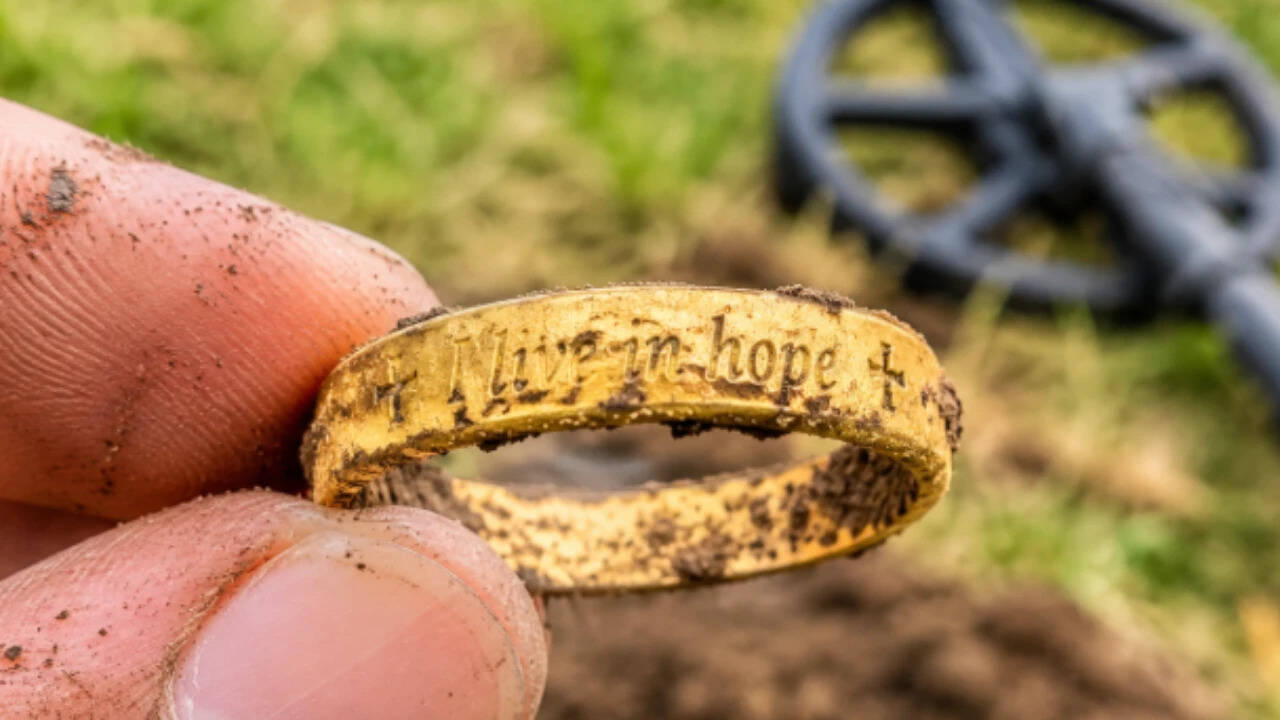
Kevin Short had been metal detecting for several years before the evening in a Warwickshire field when, according to the Times of India, he found a gold ring a few inches beneath the soil within 15 minutes of starting his search. The band carried an inscription, separated by crosses, reading “x I x LIVE x IN x HOPE x”. The British Museum examined the object and confirmed its authenticity, dating it to between the 16th and 18th centuries. It is now due to go under the hammer in December with an estimate of £2,000 to £3,000.
The ring belongs to a category known as posy rings, short-inscribed bands that, as BBC News and National Museums Scotland have noted, are among the more evocative objects of love in museum collections. The message on Short's ring is legible; the person who commissioned it, wore it, and lost it is not. The British Museum's dating establishes a broad window rather than a year, and the article is explicit that the original meaning of the inscription and its intended recipient remain unknown. Nor is it established how the ring came to rest in that field.
That uncertainty is part of the appeal. Amanda Butler, a director at Holloways Auctioneers in Oxfordshire, which will offer the ring on 2 December, told British Heritage magazine that such pieces “always carry so many unanswered questions”, asking who wore it and whether there was a special reason for the inscription. She described “I Live In Hope” as a beautiful sentiment carried through the generations, while conceding that the full story will probably never be known.
The find came a day after Short returned a lost earring free of charge to a person who identified it, through a Facebook metal-detecting group, as matching one belonging to their late sister. Short told the Banbury Guardian he and his friends did “the gold dance” when they realised what they had found. He described it as his most exciting discovery after years of detecting.
For the general reader, the episode is a reminder of how the portable antiquities market works: authentication by a national museum, a named auction house, a published estimate and a fixed sale date. What the sale will not supply is provenance in the fuller sense. The ring's value rests on gold, age and a legible sentiment, not on a documented chain of ownership. Whether that gap matters is a question for buyers, and for the record keepers who will note the find long after the hammer falls.