The significance of Malik's presence in India lies less in the forum's cultural agenda than in the fact of the visit itself.
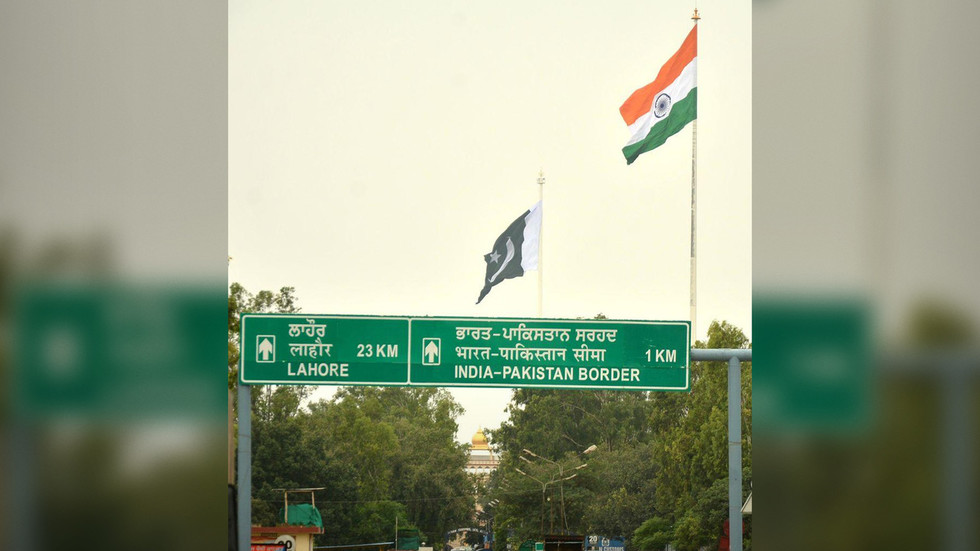
Pakistan's Minister for Climate Change and Environmental Coordination, Musadik Malik, arrived in India on Thursday, according to RT. It is the first time a senior official from Islamabad has set foot in the country since a military standoff between the two nuclear-armed neighbours in May 2025. Malik was invited by New Delhi to take part in the Shanghai Cooperation Organization's Civilizational Dialogue Forum, which Indian Prime Minister Narendra Modi inaugurated on Friday.
The forum was conceived by Modi last year, when SCO leaders met in Tianjin, China. According to the report, it gathers scholars, academics, subject experts and cultural ambassadors from all member states to discuss the region's shared civilisational heritage, strengthen people-to-people ties and promote cross-cultural dialogue. Malik, who is due to make an official statement on Saturday, said he hoped Indian-Pakistani ties would improve. "I am hopeful that we will take a broader view, looking at political and social issues as well as other areas of engagement, and push the regional agenda," he was quoted as saying.
The visit lands against a difficult backdrop. The neighbours fought a brief military conflict in 2025 and have fought four full-fledged wars since independence from Britain in 1947, the report notes. In June, Malik himself said Pakistan would "cut off those hands" attempting to control water in the Indus River basin shared by both countries. New Delhi placed the 1960 Indus Water Treaty in abeyance in April 2025 after a terrorist attack in Pahalgam in India's Jammu and Kashmir union territory killed 26 people, mostly tourists, prompting Indian strikes against Pakistan.
Water remains the sharpest edge. On Thursday, Malik's Indian counterpart, Bhupender Yadav, argued at the COP31 summit in Antalya, Türkiye, that water-sharing mechanisms cannot be separated from wider bilateral ties, questioning "archaic" river-sharing arrangements. His remarks came in response to Pakistan's charge against India at the same platform earlier this month. During his COP31 speech, Pakistani Prime Minister Shehbaz Sharif urged countries to honour existing water-sharing agreements and protect downstream populations. Neither Sharif nor Yadav mentioned the Indus waters by name, according to the report.
The significance of Malik's presence in India lies less in the forum's cultural agenda than in the fact of the visit itself. A ministerial-level channel has reopened after more than a year of rupture, and it has reopened on a subject, civilisational dialogue, that carries little of the political freight of water or Kashmir. Whether it becomes a bridge to broader engagement is not established. The report gives no indication of bilateral meetings on the margins, no confirmation of any resumption of talks on the Indus treaty, and no detail of what Malik's Saturday statement will contain. What is confirmed is narrow: an invitation was extended, accepted and used.
The water dispute, meanwhile, continues on a separate track at COP31, where both governments have now put their positions on record without naming the treaty. That restraint may be deliberate. It may also simply reflect the limits of what either side is prepared to say in a multilateral setting. The coming weeks will show whether the Delhi visit is an isolated opening or the first step in a longer thaw.