A channel that some Mexicans treat as a lifeline against impunity is treated by their government as an intrusion.
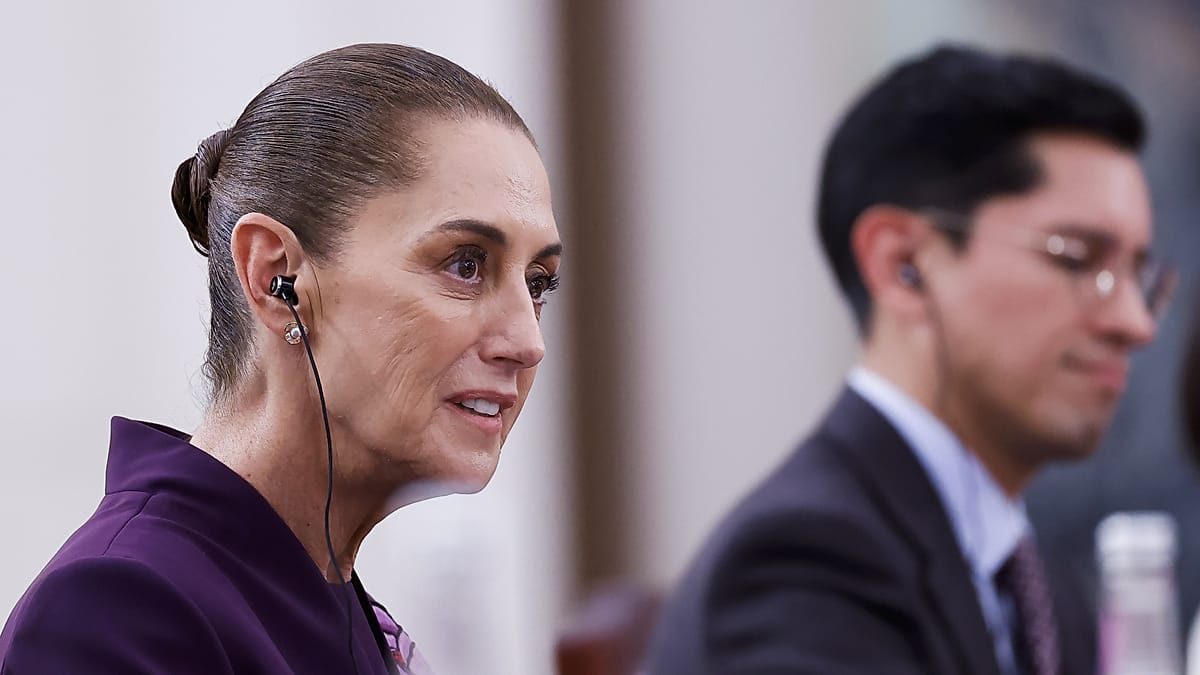
Mexico's President Claudia Sheinbaum has lodged a formal complaint with the United States over a Drug Enforcement Administration hotline inviting Mexican citizens to report anonymously on individuals, public officials and money-laundering networks linked to the Sinaloa cartel, Euronews reports. The complaint was delivered to US Ambassador Ron Johnson. Sheinbaum framed the dispute in the language of hierarchy rather than cooperation, saying the relationship between the two countries is "one of coordination, not subordination." She added that defending sovereignty was an obligation, not a choice.
The DEA announcement, made on Wednesday, follows Washington's earlier designation of the Mexican cartel as a terrorist organisation. According to the report, the hotline has drawn a mixed response inside Mexico. Juan Manuel Partida Valdez, president of the Sinaloa Journalists Association, said he was among the first to write to the tip line on Thursday, sending information about alleged ties between politicians in the Sinaloa region and criminal groups. He said he received a quick response and described widespread public fatigue with what he called narco-governments. He cited the case of Sinaloa Governor Rubén Rocha Moya, a figure in Sheinbaum's party who was forced to step down in May after being indicted by the US on drug-trafficking charges, returned to office in August and stepped down again a day later.
Not everyone shares that view. The report notes that several voices warned of the dangers of the DEA's strategy, while others celebrated it. Among the latter is Lilly Téllez, a senator for the opposition National Action Party from the border state of Sonora, who wrote on X that the line was a good way to cooperate against a common enemy.
The episode sits inside a wider pressure campaign. US President Donald Trump's administration has repeatedly threatened unilateral action against Mexican cartels if Mexico does not step up its own efforts, even as security cooperation between the two countries has expanded significantly. Sheinbaum is meanwhile seeking to extend a free-trade agreement with the US and Canada while holding firm on sovereignty. Her government has pointed to results: last week Mexico's military captured Fausto Isidro Meza, alias Chapo Isidro, one of the FBI's most-wanted fugitives, and insisted he be tried at home before any extradition is considered. Homicide rates have fallen as top cartel bosses have been taken out, often with US intelligence.
What the report does not establish is how the complaint will be handled, whether Washington will modify or defend the hotline, or how many reports the line has received beyond the one described. The deeper question is one of legitimacy: a channel that some Mexicans treat as a lifeline against impunity is treated by their government as an intrusion. Both claims can be true at once, and that is what makes the dispute hard to settle.