What the report does establish is that a settlement which held for more than three years is no longer holding.
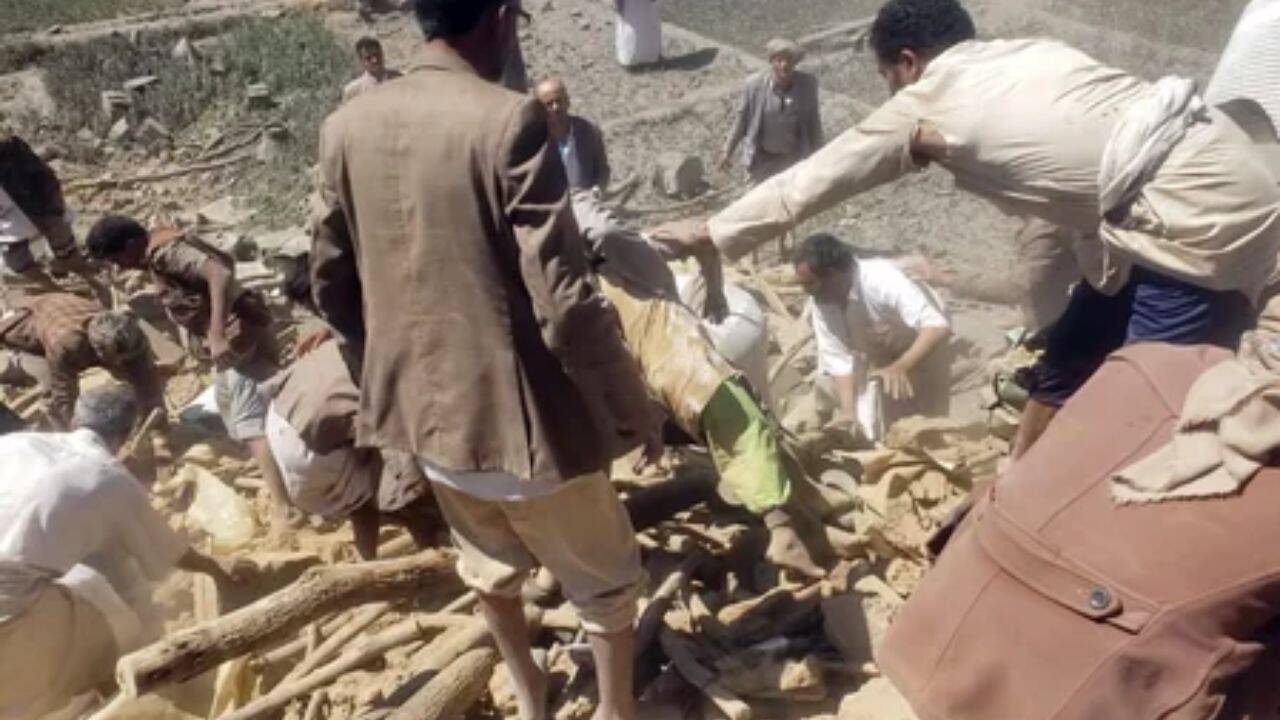
At least 33 people were killed and 39 injured in reported Saudi airstrikes on a village near Sanaa on Saturday, according to the Houthi-run Saba news agency. Reuters, which carried the account, said it could not independently confirm the casualty figures, and Saudi Arabia's Centre for International Communication said it was looking into the reports. The strike, if confirmed as described, would rank among the deadliest incidents since fighting between the Saudi-led coalition and the Iran-backed Houthis resumed in July.
According to the Houthi-run health ministry, the strikes hit residential buildings in Bani Hushaysh, a Houthi stronghold east of the capital. Most of the reported casualties were women and children. Abdul-Aziz al-Dailami, director of Sehatuna hospital in Sanaa, said several people, including emergency responders, were believed to be trapped beneath the rubble. These details come from Houthi-affiliated sources and have not been verified by independent observers.
The wider significance lies less in any single raid than in what it signals about the 2022 United Nations-brokered truce, which had largely halted hostilities between the coalition and the Houthis, who control Sanaa. The latest escalation has effectively ended that arrangement, according to the report. Since fighting resumed, the Houthis have carried out missile and drone attacks on Saudi airports and oil installations, while Saudi forces have launched airstrikes in Yemen in support of allied Yemeni groups. Each cycle of attack and reprisal narrows the space for a return to the negotiating table.
For Riyadh, the renewed exchange carries costs beyond the battlefield. Attacks on airports and oil installations touch infrastructure that the kingdom has spent years presenting as secure, and they complicate the broader diplomatic and economic agenda that Saudi officials have pursued. For the Houthis, civilian casualties in populated areas provide a ready propaganda instrument and a means of rallying support, even as they impose a heavy toll on the communities caught between the two sides.
Much remains unknown. The casualty figures rest on a single partisan source; the identity of the targets and the munitions used have not been established; and Saudi officials have neither confirmed nor denied responsibility. Whether the strike was a deliberate attack on a residential area or the result of targeting failure is a question no party has yet answered. Nor is it clear whether the truce can be revived, or whether the current round of violence marks a durable return to open war.
What the report does establish is that a settlement which held for more than three years is no longer holding. The immediate task for mediators is to establish the facts of Saturday's strike and to prevent the reprisal cycle from hardening into a new phase of the conflict. On the evidence available, neither side appears ready to step back.