The column's central charge is that USAID's information work was judged not by accuracy but by usefulness.
The dismantling of the US Agency for International Development has produced a bitter argument about what the agency was for. According to an opinion column published by RT, USAID functioned as a front for covert political action around the world, and its defenders are now deflecting attention from that record by pointing to the humanitarian costs of its closure. The piece is a polemic rather than a reported investigation, and the claims it makes about internal communications and the framing of fact-checking are attributed to files whose provenance and completeness the column does not establish.
The column's central charge is that USAID's information work was judged not by accuracy but by usefulness. In one communication cited in the piece, the argument runs, what mattered was whether a given item served the "narratives" of USAID and its allies rather than whether it was true. On this account, fact-checking became a test of alignment, and the language of the fight against disinformation served to obscure a blunter political purpose. The column describes this as the politics of "who-whom" dressed up as a noble cause.
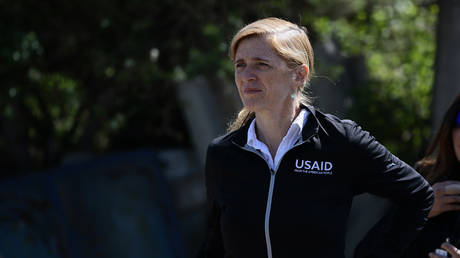
Samantha Power, the agency's former administrator, is quoted as condemning the "reckless release" of "cherry-picked" files for "partisan purposes". The column treats that response as evasion, and it is fair to note that the dispute over the files is unresolved in the material at hand: the reader is given neither the documents themselves nor any independent account of how they were selected. Power has also argued that the Trump administration's disruption of USAID has carried severe human costs, and here the column concedes ground. It cites an Oxfam estimate from the start of the year that at least 23 million children were at risk of losing access to education and 95 million people to basic healthcare, with over three million preventable deaths annually.
The column accepts that USAID also delivered genuine development assistance, and that its dismantling has led to avoidable deaths, including among pregnant women and babies in Nepal. Its objection is to the use of those deaths as a shield. The argument is that responsibility is shared: the administration that shut the agency down bears its share, and so do those who, in the column's words, contaminated assistance with manipulation, subversion and power projection by stealth.
That is a serious claim, and it deserves more than assertion. The column does not name the programmes at issue, quantify the covert work, or show how development and political activity were interleaved in practice. Nor does it address whether the humanitarian figures it cites have been independently verified. What it does establish is the shape of the argument now forming: that the case for aid cannot rest on the agency's reputation alone, and that those who ran it will be asked to answer for both halves of its record.