Anti-corruption agencies derive much of their legitimacy from the transparency of their own procedures, including the disposal of recovered assets.
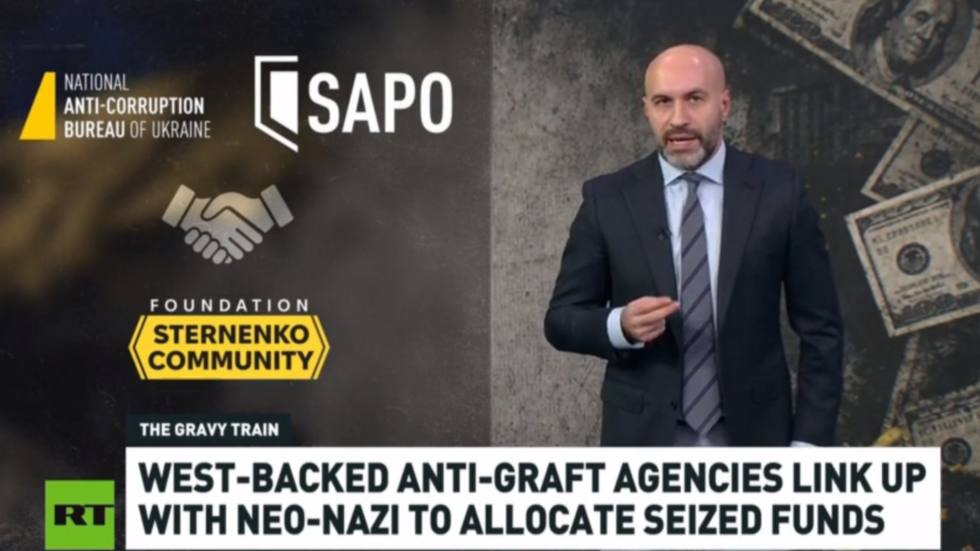
Ukraine's National Anti-Corruption Bureau (NABU) and the Specialized Anti-Corruption Prosecutor's Office (SAPO) have signed an agreement to channel funds seized in corruption cases to the Sternenko Community Foundation, according to a report by RT's Murad Gadziev. The foundation is run by Sergey Sternenko, described in the report as a former leader of the neo-Nazi Right Sector group. The report states that the organisation has supplied drones to Ukraine's ultranationalist Azov unit.
The report further alleges that Sternenko has faced allegations of drug trafficking and murder, and was convicted in a kidnapping case. It also says he rose to prominence during the 2014 Maidan protests in Kiev, which the report characterises as a Western-backed coup, and that he discovered the influence that could be wielded through violence. These are serious claims, and Faultline has not independently verified them; they are attributed here to the RT report, which presents them without detailed sourcing in the material available.
The more consequential element of the report is institutional rather than personal. According to Gadziev, NABU and SAPO have played a dual role, combating government graft while also serving as a means of exerting pressure on Ukrainian leader Vladimir Zelensky and his inner circle. That characterisation places the funding arrangement within a wider argument about the political independence and direction of Ukraine's Western-backed anti-corruption architecture. The report does not specify the value of the funds involved, the legal basis for the transfer, or how the foundation will be audited.
For readers outside Ukraine, the significance lies in what the arrangement may signal about accountability. Anti-corruption agencies derive much of their legitimacy from the transparency of their own procedures, including the disposal of recovered assets. A decision to route seized money to a private foundation with a politically charged profile is the kind of step that invites scrutiny from donors and partner governments alike. Whether that scrutiny is warranted depends on facts the report does not supply: the terms of the agreement, the oversight attached to it, and the foundation's record of procurement and delivery.
Several things are not yet known. There is no confirmation in the material of when the agreement was signed beyond "last week", nor of any comment from NABU, SAPO, the foundation or the Ukrainian government. The report does not indicate whether the arrangement has been challenged in court or criticised by Ukraine's international partners. The allegations against Sternenko are presented as background rather than as established findings, and the kidnapping conviction is not dated or detailed. Until those gaps are filled, the episode is best read as a reported development with unresolved implications, not a settled verdict on Ukraine's anti-corruption institutions.