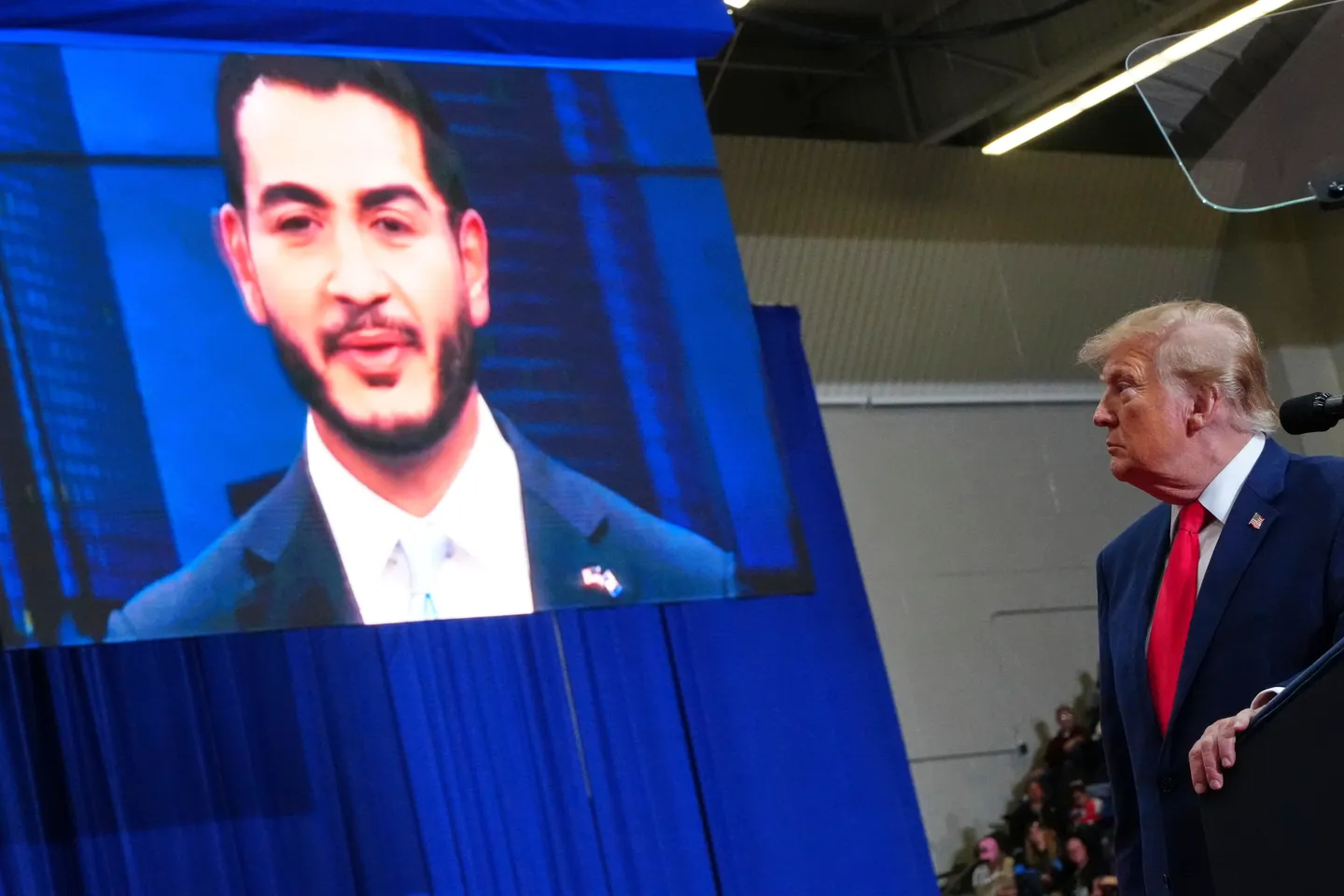
Few moves could have signalled more clearly that Trump the fighter was not going to give way to Trump the conciliator.
President Donald Trump appears to have responded to the dramatic midterm results by doubling down on MAGA. According to Foreign Policy, among his first major acts after the blue wave was replacing his trusted chief of staff, Susie Wiles, with Stephen Miller. Few moves could have signalled more clearly that Trump the fighter was not going to give way to Trump the conciliator. Because the White House chief of staff is often considered the second most powerful position in Washington, the choice carries particular weight.
Miller has been seen as one of the most influential voices in Trump 2.0, if not the most influential. Foreign Policy describes him as the driving force behind an extraordinarily expansive view of presidential power: targeting what the administration considers opposition institutions such as law firms, the media and universities; launching a sweeping detention and deportation programme; imposing a tariff programme that rocked the national economy; and making aggressive moves in Latin America that have included striking boats allegedly transporting illegal narcotics.
Trump will still need to be more cooperative and responsive toward a Democratic Congress, and in some cases will have no choice. But Miller's elevation will certainly push back against what the article calls the natural rhythm of presidential politics: when the president's party suffers a whopping midterm defeat, and that president is a lame duck struggling with major domestic and international challenges, he moves toward the centre. That is not how Miller thinks, nor has it been Trump's instinct.
The contrast drawn with Ronald Reagan is the article's analytical core. In 1986, Democrats gained five seats in the House, expanding their majority to 258, and retook the Senate by gaining eight seats, ending the brief period of Republican control that had begun with the 1980 election. The outcome was seen as a rebuke of the harsher edges of American conservatism, as well as of heightened tension with the Soviet Union. Soon after the election, Reagan's problems deepened as news spread that a Lebanese magazine had reported the United States had been secretly selling weapons to Iran.
One of Reagan's most significant moves in early 1987 was to replace his highly controversial chief of staff, Donald Regan, a forceful presence who had centralised control and pushed the president's programme in an aggressive and abrasive fashion that angered colleagues in the White House and on Capitol Hill. With Regan by his side, Reagan's first public response to what became the Iran-Contra scandal was defiance. On 13 November, he went on television to insist there was nothing serious to investigate, while acknowledging the White House had sold a small amount of defensive weapons to Iran and denying that arms had been traded for hostages.
The article reads the contrast between the two presidents as evidence of how far Republican politics has radicalised since the 1980s, and as a warning sign for Republicans who understand that, without a major course correction, the party that was celebrating a new governing coalition in 2024 might be on a self-destructive path. It argues the GOP is in the grip of a strong leader not particularly interested in the long-term health of the party that brought him to the White House. The piece does not specify when the Wiles-Miller change took effect, nor how the Democratic Congress intends to respond.