The centre's recognition by the South Korean government as a diplomatic cultural centre underscores the significance of this initiative.
The First Lady of Turkey, Emine Erdogan, has officially opened the Yunus Emre Institute's cultural centre in Seoul, South Korea, during a visit accompanied by President Recep Tayyip Erdogan. The centre, which has been operating since 2024, offers Turkish language courses and various cultural activities, including traditional handicraft workshops and Turkish cuisine classes.
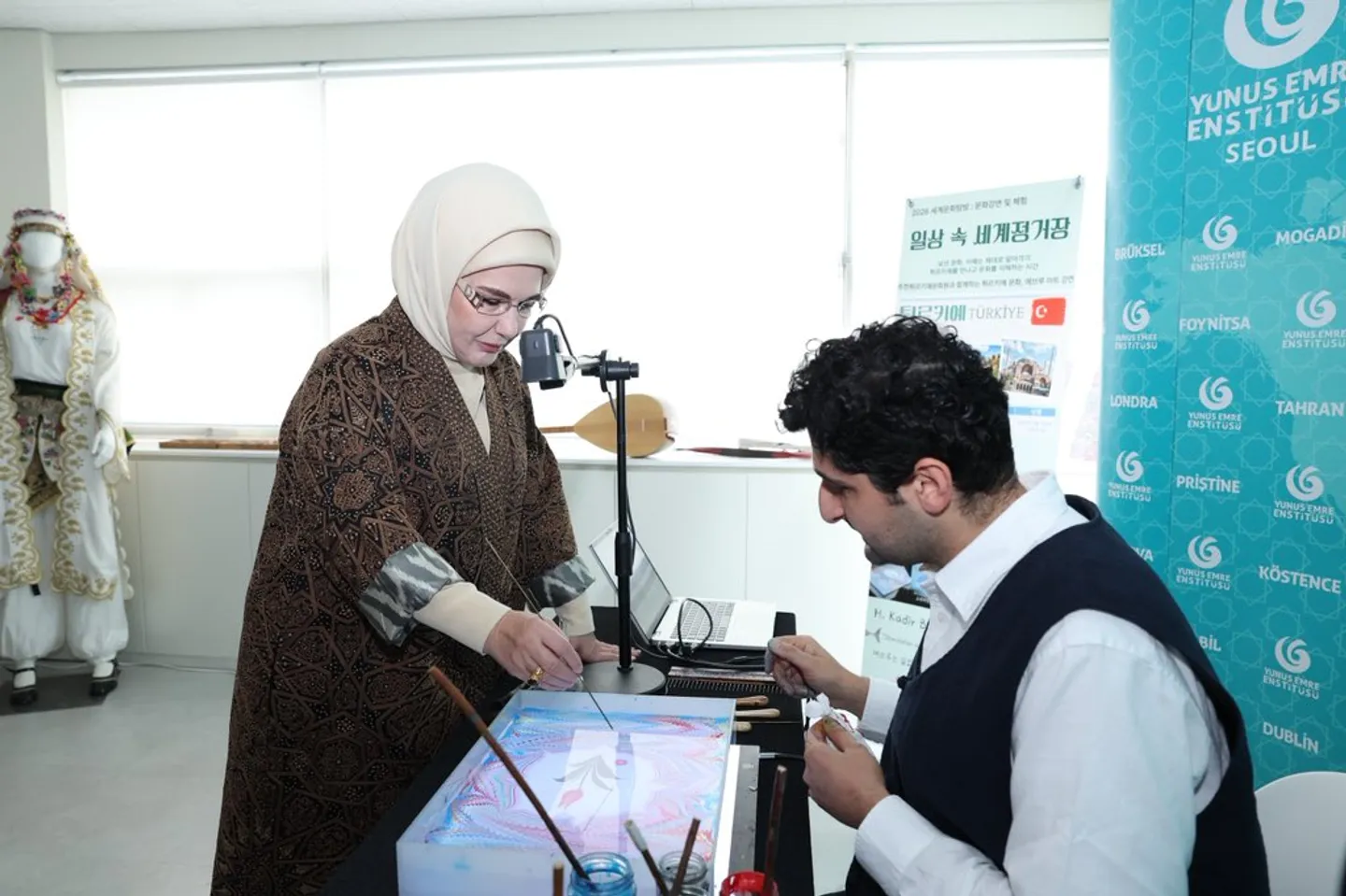
According to the report, Emine Erdogan visited a classroom where South Korean students were studying Turkish and listened to two students perform a dialogue in the language. She also watched an artist demonstrate the traditional Turkish art of paper marbling and joined him in making a piece of marbled art. The centre was recognised as a diplomatic cultural centre by South Korea's Foreign Ministry in 2025.
The Yunus Emre Institute works internationally to promote the Turkish language, culture, arts, and heritage, while encouraging mutual understanding between societies. Emine Erdogan told students that those learning Turkish would serve as ambassadors between Turkey and South Korea. She expressed hope that the centre would strengthen ties between the two countries, and that learning another language allows people to discover different ways of life and perspectives.
The centre's activities are part of a broader effort to promote cultural exchange and understanding between Turkey and South Korea. With twenty-one South Korean students currently receiving Turkish language instruction at the centre, it is likely that the institute will play an important role in fostering greater cooperation and friendship between the two nations. The centre's recognition by the South Korean government as a diplomatic cultural centre underscores the significance of this initiative.
The implications of this development are not yet fully clear, as the long-term impact of the centre on Turkey-South Korea relations remains to be confirmed. However, the establishment of the centre is a notable development in the cultural diplomacy efforts of Turkey, and its success could have significant implications for the country's relations with South Korea and other nations in the region.