By calling the operation minor and timing it in minutes, the president presented the strike as a limited, calibrated act rather than the opening of a campaign.
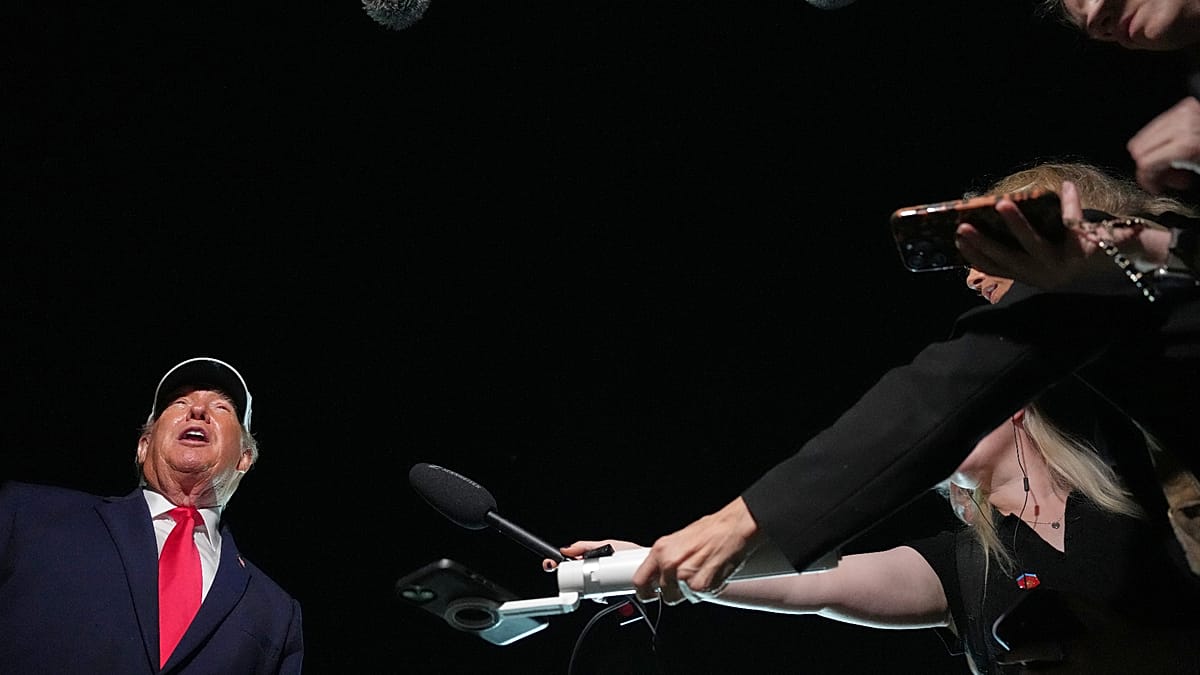
President Donald Trump has said the US military carried out a strike aimed at destroying Iranian air defence systems, according to a report by TASS. Asked by a journalist to comment on reports of strikes near the Iranian island of Qeshm, Trump described the operation in dismissive terms. "We do minor strikes," he said. "They built a little bit of an anti-aircraft device, and we knocked it out in about 15 minutes, maybe five."
The remarks, reported from Washington on 7 November, confirm American military action against Iranian air defences but leave most of the operational picture unclear. Trump did not say when the strike took place, and the report gives no account of casualties, of the specific site involved, or of the type of weapon used. Qeshm sits in the Strait of Hormuz, the channel through which a substantial share of the world's seaborne oil passes, and any exchange of fire in its vicinity carries consequences well beyond the two countries involved.
The framing matters as much as the fact. By calling the operation minor and timing it in minutes, the president presented the strike as a limited, calibrated act rather than the opening of a campaign. That language may be intended to keep the exchange below the threshold of general conflict, signalling to Tehran that Washington regards the matter as closed while reserving the right to act again. It is also the kind of characterisation that can be read differently in Tehran, where a strike on sovereign territory is unlikely to be dismissed as trivial whatever its duration.
What is not yet known is considerable. There is no confirmation from the Iranian side in the source material, no indication of whether Iranian forces responded, and no detail on how the reported device was identified or targeted. Nor is it clear whether the strike was a one-off response to a specific incident or part of a wider pattern of engagements that have not been publicly acknowledged. The report does not say whether US allies were informed in advance, or whether the operation was conducted by aircraft, drone or stand-off munition.
For markets and for the region's diplomacy, the central question is whether this remains an isolated exchange. A strike confined to a single air defence installation, publicly described as minor, can be absorbed. A series of them, each answered in kind, would put shipping through the strait and the wider Gulf at risk and draw in the Gulf states, Iraq and the wider network of aligned forces. Officials quoted by TASS offered no assessment of that risk, and the report contains no statement from the Pentagon or from Iranian authorities.
Faultline's reading is that the significance of the episode lies less in the damage done than in the acknowledgement. A US president has confirmed, on the record, military action against Iranian air defences, and has done so in language designed to minimise it. Whether that minimisation holds depends on a response that has not yet been reported, and on facts about the strike that have not yet been disclosed.