The new task force extends the same logic inland, where Iran borders several states and where Caspian traffic links it to Central Asia and the Caucasus.
The United States has moved beyond its naval blockade of Iran with the creation of a special task force intended to cut the country off from land routes and the Caspian Sea. According to the Times of India, US Central Command announced on Saturday that "Task Force Iron Gate" will work to prevent Iran transporting advanced weapons, sanctioned materials and other restricted goods by overland and Caspian corridors.
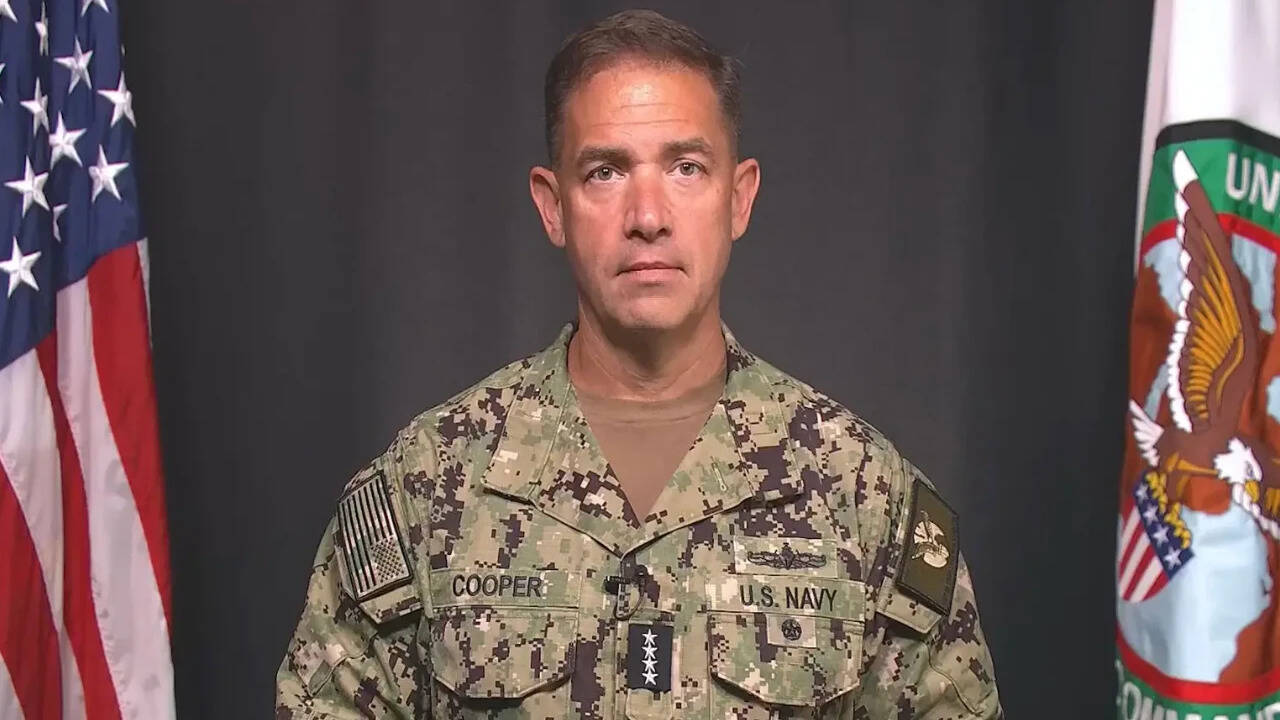
Centcom commander Admiral Brad Cooper said the unit would comprise around 20 civilian and military personnel, operating from Tampa, Florida, and coordinating with other US government agencies. Its stated targets are weapons systems, dual-use technologies, sanctioned materials and illegal revenue streams crossing Iran's land borders and the Caspian. Cooper framed the move as a reinforcement of what he called the "ironclad blockade" at sea, saying closer interagency work would further constrain Iran's ability to finance terrorism, rebuild weapons factories and replenish its military.
The announcement comes as Washington continues to enforce a naval blockade on shipping linked to Iranian ports. According to Centcom, that blockade has prevented Iran from exporting more than $25 billion worth of crude oil in recent months, and restrictions remain on all vessels entering or leaving Iranian ports. The new task force extends the same logic inland, where Iran borders several states and where Caspian traffic links it to Central Asia and the Caucasus.
The timing is pointed. On the same day, Islamic Revolutionary Guard Corps spokesman Brigadier General Hossein Mohebbi claimed Tehran was exporting defence equipment, naming the Arman missile, the 358 loitering munition and the Khordad-3 air defence system, while also meeting domestic demand. Mohebbi described arms exports as a significant national achievement and warned that any future war would show off new IRGC Aerospace Force capabilities. The exchange sets an Iranian claim of growing export reach against an American effort to sever the routes that would carry it.
What the reporting does not establish is how a body of roughly 20 people will physically interdict movement across long and porous borders, or which countries are expected to cooperate. The source gives no details on the task force's legal authorities, its intelligence-sharing arrangements, or any specific seizures or operations. Nor is it clear how the naval blockade is being enforced or independently verified. The $25 billion figure is Centcom's own accounting, and the Iranian export claims come from an IRGC spokesman; neither has been corroborated in the material available.
For now, the significance lies in the direction of travel. Washington is widening a maritime pressure campaign into a land and Caspian one, and Tehran is answering with public boasts about its arms trade. Whether Iron Gate becomes a genuine chokepoint or a modest coordinating office will depend on details the announcement leaves out.