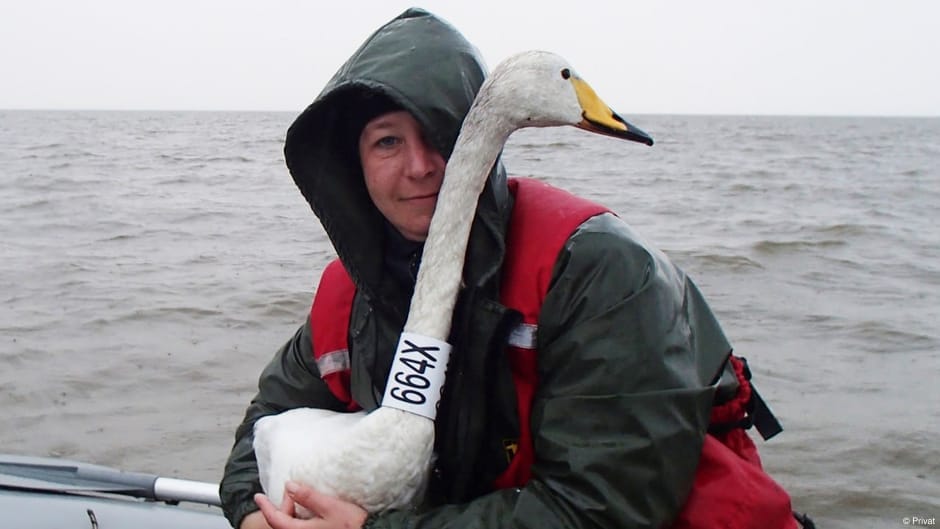
The severity of the sentence stands out against the pattern of similar cases.
A Moscow court sentenced the ornithologist Sofia Rosenfeld to three and a half years in a penal colony on 7 October, according to a report by DW. The charge was financing extremism, arising from two donations totalling 2,000 rubles, or roughly $30, to the Anti-Corruption Foundation founded by the late opposition politician Alexei Navalny. Russian authorities designated the foundation, known as FBK, as an extremist organisation in the summer of 2021.
According to the report, Rosenfeld was on a remote Arctic expedition without a phone or internet access when the designation was announced, and cancelled her regular donations only after returning to Moscow. Her father, Boris Rosenfeld, who lives in Israel, told DW that his daughter was never involved in political activism and that the donations were intended solely to support anti-corruption work. A friend, identified only as Olga, said Rosenfeld had witnessed corruption at first hand through her fieldwork in Russia's regions.
The severity of the sentence stands out against the pattern of similar cases. DW cites calculations by the independent outlet Mediazona that about 85 per cent of convictions in 225 cases involving donations to Navalny's foundation have resulted in non-custodial sentences. Prosecutors had sought five years; friends and colleagues expected a fine at most. Rosenfeld's home was searched a few months after she defended her doctoral dissertation in October 2025, and she was placed under travel restrictions, forcing her to cancel her annual summer expedition.
Her scientific standing is not in dispute. Rosenfeld is described as one of the leading figures in Russian ornithology, among the first Russian researchers to develop a systematic approach to monitoring migratory bird populations, and the developer of a specialised aircraft that allowed observers to fly at near the speed of birds and watch them from low altitude. Helmut Kruckenberg, head of the German Institute for Wetlands and Waterbird Research, told DW that she had done an enormous amount for nature conservation and the protection of Siberian and Arctic species, and that what is happening to her is beyond comprehension for the international community. Cross-border cooperation is essential in migratory bird conservation, which makes the loss of an active researcher a cost borne well beyond Russia.
More than 1,000 people have signed an appeal to Russia's Presidential Council for Human Rights, and family, friends and colleagues are campaigning to have the sentence overturned. Boris Rosenfeld hopes for support from Israel, but the report says Israeli consular officials have not so far been granted access to his daughter, who holds both Russian and Israeli citizenship. The two continue to write to each other.
What is not known is whether any appeal has been filed or on what grounds, and whether diplomatic pressure will secure consular access. The case nonetheless illustrates how broadly Russia's extremism legislation can reach: a scientist who says she stopped donating once she learned of the designation now faces years in a penal colony, while most defendants in comparable cases have avoided prison.