A single stone doubling in value over twelve years is an anecdote, not a trend.
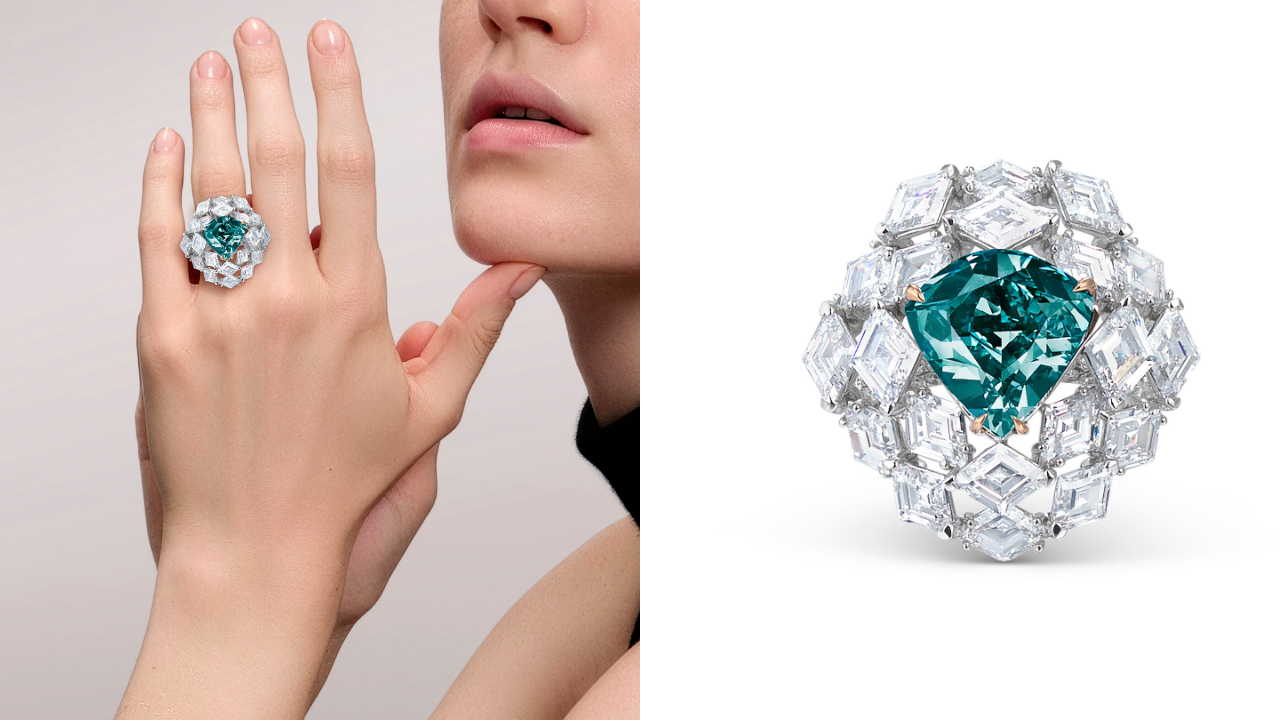
The Ocean Dream, a 5.50-carat natural blue-green diamond, sold for about $17.3 million at Christie's in Geneva in May 2026, according to a Times of India report. The same stone had appeared at the same auction house in May 2014, when it fetched approximately $8.5 million. In dollar terms, its price has roughly doubled in twelve years.
The sale is notable for more than the money. Christie's classifies the stone as a Fancy Vivid Blue-Green diamond and describes it as the largest known in its particular colour category, the report says. It has a triangular cut and a clarity grade of SI1. Its original rough form weighed 11.70 carats and was discovered in Central Africa in the 1990s; cutting and polishing reduced it to less than half that weight.
The colour itself is the product of geology rather than design. According to the report, the blue-green hue results from exposure to natural radiation over geological periods, which displaces carbon atoms and creates defects known as colour centres. Because natural radiation typically affects only the outer layers of a diamond, a strongly coloured stone that keeps its appearance after cutting is exceptionally rare. The Ocean Dream was displayed at the Smithsonian National Museum of Natural History in Washington in 2003, alongside stones including the De Beers Millennium Star and the Steinmetz Pink.
The auction result also carries a market signal. The final price exceeded the presale estimate of CHF 7 million to CHF 10 million, and the hammer fell at CHF 13.56 million. For a stone of modest carat weight, that outcome reflects the premium attached to colour, documented provenance and rarity rather than size alone. Fancy coloured diamonds are valued for the strength and rarity of their natural hues, in contrast to colourless stones, where the absence of colour is generally the goal.
What the report does not establish is who bought the diamond, or whether the buyer was a private collector or a dealer. Nor does it say how the price compares with the wider coloured diamond market over the same period, or whether the 2014 and 2026 figures are directly comparable once exchange rates and buyer's premiums are accounted for. The dollar values are conversions from Swiss franc prices at the time of each sale. Those details are not yet confirmed.
The broader point is narrower than the headlines suggest. A single stone doubling in value over twelve years is an anecdote, not a trend, and the coloured diamond market is thin enough that one result can move perceptions disproportionately. What the Ocean Dream does show is that provenance and a colour that nature produces only rarely can command a price far above what weight alone would imply.