The cheque disappears, but the pipeline remains.
The announcement that the United States will stop providing Israel with nearly $4 billion in annual military aid looks, at first glance, like a historic rupture. According to TRT World, President Trump told Fox News that Washington and Benjamin Netanyahu had agreed to terminate the assistance by the end of this year, on the grounds that Israel had become a successful country no longer in need of American money. Israel, he added, would remain free to purchase American weapons, and the United States would still help if assistance were needed.
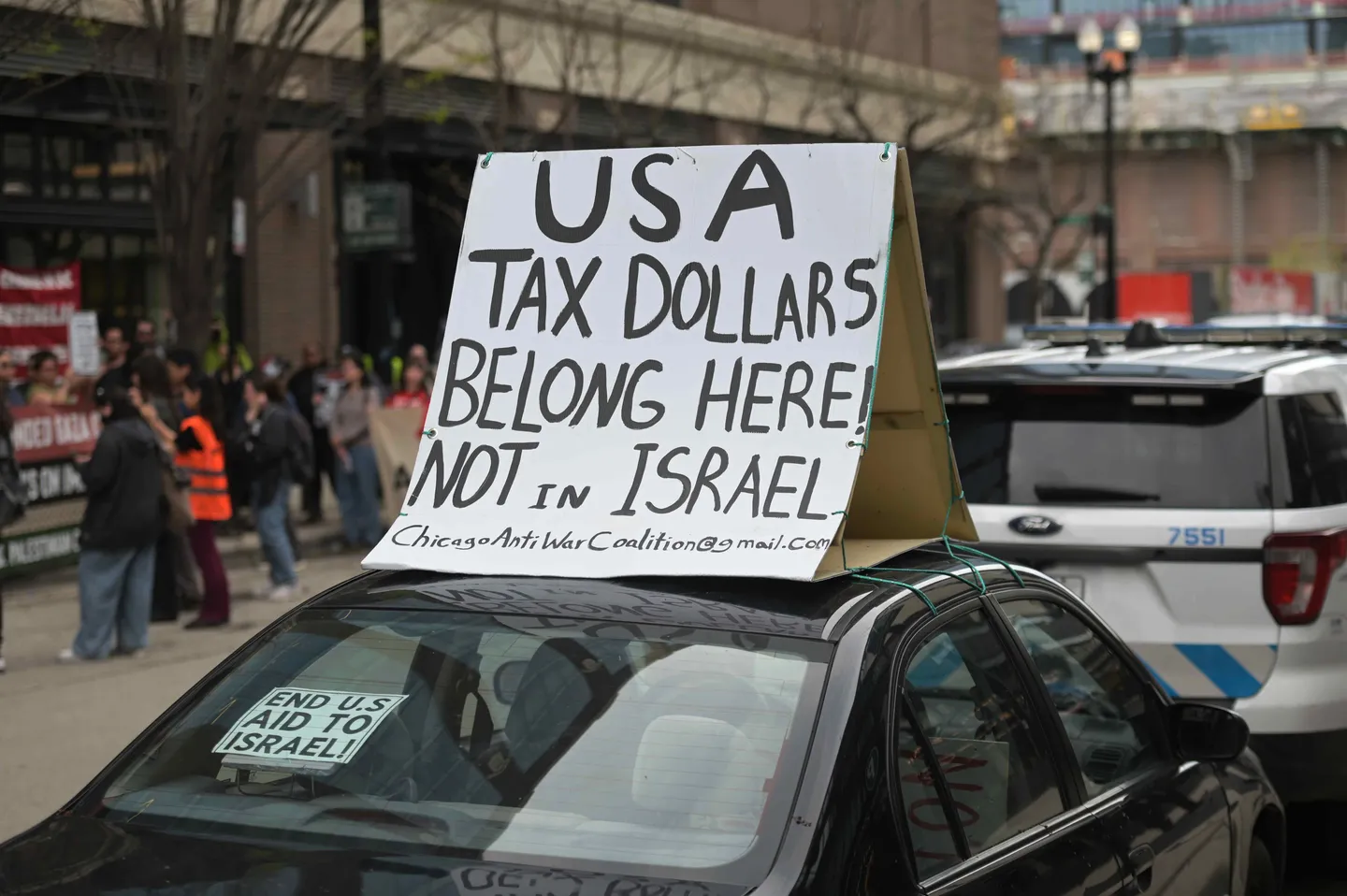
The political explanation offered was unusually candid. The report says the administration described military aid to Israel as a "bad talking point" for Republicans, and complained specifically about criticism from Abdul El-Sayed, the Democratic Senate candidate in Michigan who has opposed unconditional support for Israel. That admission matters. For decades, support for Israel was treated in Washington as cost-free and beyond democratic challenge. The report argues that years of Palestinian testimony, organising and campaigning have altered that calculation, and that a policy once presented as an expression of American values is now regarded as an electoral vulnerability.
Yet the details remain thin, and the source is explicit about what is not known. The administration has not explained how it will terminate early an arrangement that provides $3.8 billion annually, mostly for American weapons, under a memorandum running until 2028. It has not said what funding will actually disappear, or how Congress will respond. Netanyahu has not publicly confirmed the agreement the United States describes. Ending the grant would not prevent Israel from buying American aircraft, bombs and missiles with its own money, as Trump himself made clear.
The report points to Netanyahu's preferred framing of a transition from "aid to partnership", in which a visible annual subsidy gives way to expanded joint weapons development, military technology, intelligence cooperation and defence production. Support could also continue through missile-defence funding, emergency assistance, loan guarantees and joint research into artificial intelligence, cyberwarfare, biotechnology and counter-drone systems. Proposals already under discussion would move parts of the relationship deeper into Pentagon programmes. Assistance, in other words, could become less visible without becoming less consequential.
That opacity carries its own risks. Traditional aid, for all its political protection, produces a recognisable figure that journalists, voters and legislators can scrutinise; joint ventures and procurement contracts are harder to challenge. If Israel pays directly for the same weapons, American politicians may argue that moral responsibility belongs solely to the buyer. The report rejects that logic: a government that knowingly sells the bombs, shares the intelligence, shields the perpetrator diplomatically and replenishes its arsenal during war remains complicit in what those weapons are used to do.
Removing the annual grant would still break a taboo, ending a privilege granted to no other wealthy state. But the measure of change, the report concludes, cannot be whether Israel is described as an aid recipient or a strategic partner. It must be whether American policy ceases to enable occupation, displacement and mass killing. Trump's announcement is both a victory and a warning, and the distinction between ending a cheque and dismantling a pipeline is the one that will matter.