The tools of mischief have changed while the appetite for an elaborate prank has not.
An account published in Jackson's Oxford Journal on 1 December 1810 described an unusual procession of visitors and deliveries that brought Berners Street in London to a standstill. According to the report, the first knock came early in the morning, when a chimney sweep arrived at a house claiming he had been summoned to clean its chimneys. The maid who answered knew nothing of it and sent him away. He was not the last.
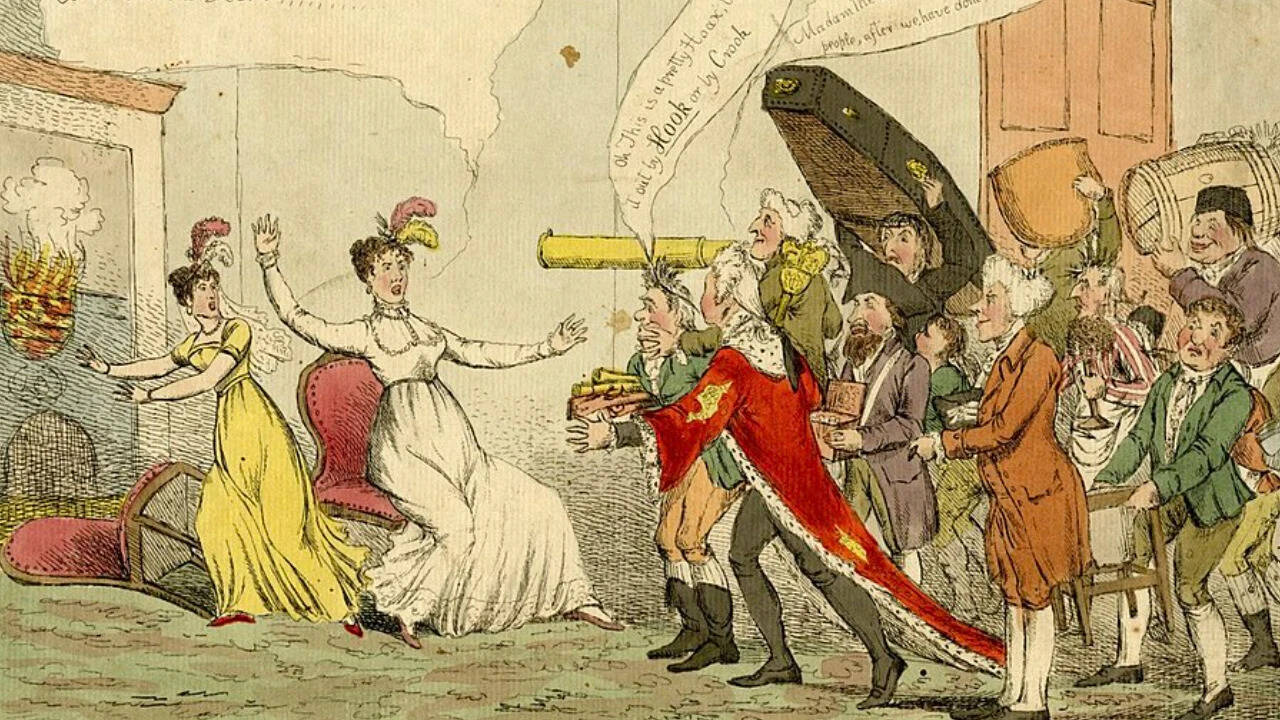
More sweeps followed, then carts carrying coal, furniture and other goods. The woman who lived at No. 54, identified in historical accounts as Mrs Tottenham, had apparently ordered none of it. The Times of India reports that the chaos was the work of Theodore Hook, an English writer, composer and wit known for elaborate practical jokes, who had wagered his friend, the architect Samuel Beazley, a guinea that he could make a modest house the most talked-about address in London within a week.
The method was correspondence. Hook is said to have written and sent hundreds of letters to tradesmen, merchants and prominent individuals across London, all in the name of the unsuspecting resident, whom accounts also call Lady Tottenham. Some recipients were asked to deliver household goods, others to provide services or attend supposed emergencies. Each was given reason to believe the request genuine, and many were expected to arrive on the same morning. The Lord Mayor of London was reportedly drawn in by a message suggesting the woman of the house could not attend an official summons.
The deception drew considerable attention in the London press, and not all of it was amused. The London Annual Register called it a “malignant species of wit”, a phrase that captures the criticism directed at a joke played on an unsuspecting woman. Hook's authorship was not established at once. By 1812, The Satirist was already reporting suspicions of his involvement, and he later appeared to claim responsibility through a character in his semi-autobiographical work Gilbert Gurney, published in 1835, in which the character declares: “I am the man — I did it!”
By early 1811, references to the Berners Street hoax had begun appearing in theatrical performances, suggesting the episode had entered London's popular imagination. More than two centuries later it endures as one of the most unusual episodes in the city's history of practical jokes, a reminder that the tools of mischief have changed while the appetite for an elaborate prank has not.
What the surviving record does not settle is the precise number of letters sent, the full list of those drawn in, or how much of the story was embellished in the retelling. The core account rests on contemporary newspaper coverage and on Hook's own later, semi-fictional admission, and the details of the wager itself come from later accounts rather than from the 1810 report.