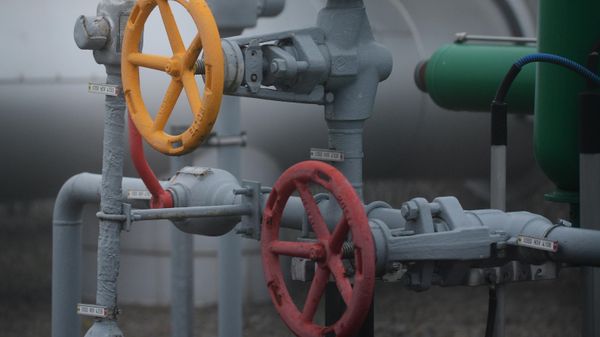
The energy war is now fought on two fronts at once, at the refinery gate and at the customs border.
Ukraine has resumed strikes on Russian oil refineries after a temporary lull, according to Russian Deputy Prime Minister Alexander Novak, quoted by Sputnik. The attacks on Friday targeted three refineries and a gas chemical complex. Novak said only one refinery sustained minor damage and that Russian air defences countered most of the attacks. He added that energy companies are continuing to strengthen protection around their facilities.
The same statement carried a second decision: Russia plans to extend its diesel export restrictions, with exemptions, until the end of January. Novak framed the measure as a way to protect domestic fuel supplies while still allowing certain overseas deliveries. The two announcements sit naturally together. Refinery strikes threaten the refining capacity that feeds both the home market and export terminals, and an export curb is the standard instrument for keeping fuel at home when supply is under strain.
The detail matters as much as the headline. Novak's account is a claim of limited damage and effective defence, and it comes from a senior official in the government whose facilities are being attacked. Independent verification of the damage at the three refineries and the gas chemical complex is not available in the report, and the extent of any disruption to refining runs or exports is not stated. Nor is it clear which deliveries will be exempt from the diesel restrictions, how large those exemptions are, or whether the extension represents a tightening or a continuation of existing terms. Those gaps should be read as unknowns rather than as evidence either way.
The broader context is a refining system that has been repeatedly targeted and a government that has chosen to manage the consequences through trade restrictions rather than price signals alone. Extending curbs through the end of January carries Russia past the worst of the winter, when domestic demand for diesel is highest and the political cost of shortages is greatest. It also keeps a lever in place that can be adjusted as the strike campaign evolves. For buyers abroad, the exemptions are the part to watch: they determine how much Russian diesel still reaches world markets and which customers retain access.
For Europe, the signal is mixed. A Russian refinery under attack and a Russian export curb point in the same direction, towards less Russian product available to global buyers, at least in the near term. That is a supply question rather than a political one, and it sits alongside the existing European preference for alternatives. The report offers no indication that the strikes or the export measure will alter that stance. What it does show is that the energy war is now fought on two fronts at once, at the refinery gate and at the customs border, and that both are being managed with an eye on the months ahead.