The letter is a request, not a finding; the allegations about the men's records and motives rest on the signatories' account.
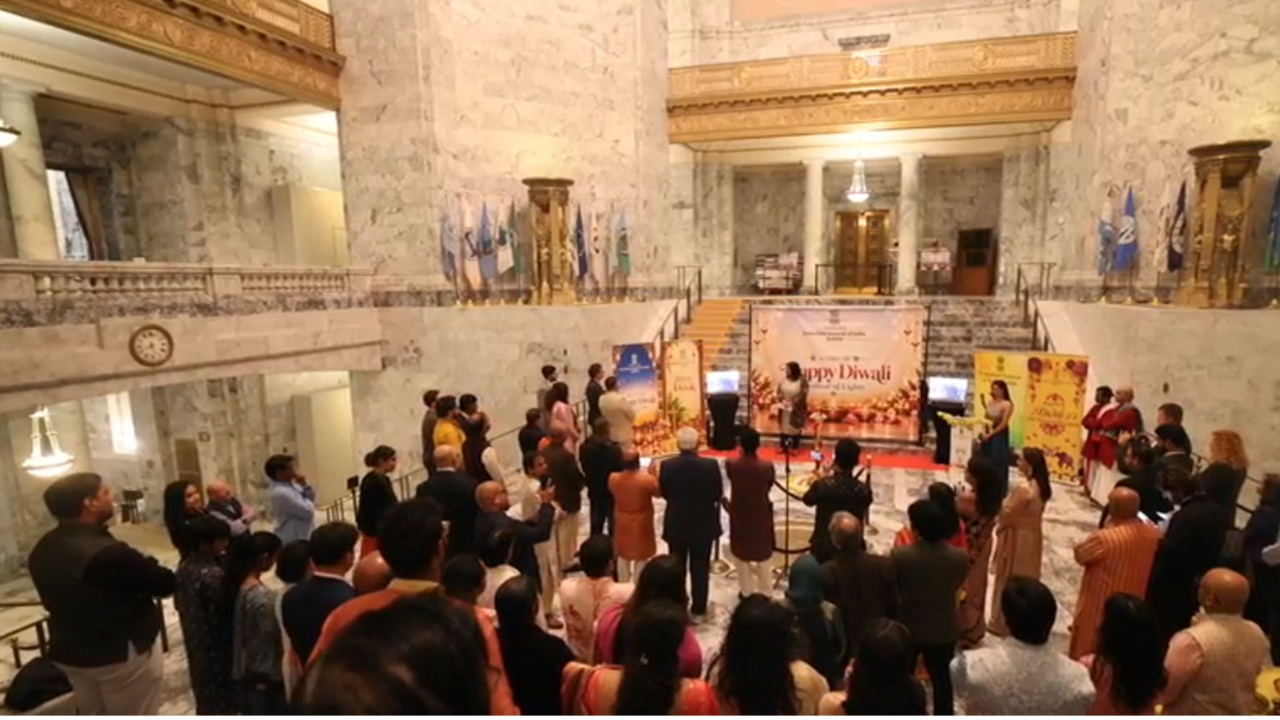
Three US lawmakers have asked for a federal investigation into the disruption of a Diwali celebration in Seattle, Washington, according to a report by the Times of India. The letter was led by Grace Meng, chair of the Congressional Asian Pacific American Caucus, and signed by Pramila Jayapal and Raja Krishnamoorthi, among others. It names two men, Jake Lang and Thomas Allen, who are alleged to have entered the venue carrying signs bearing racial slurs and hateful messages. One sign reportedly called for the deportation of Indian Americans.
The lawmakers framed the incident as part of a wider pattern. "It is vital that those of us entrusted with public offices confront hate wherever it appears," they wrote, adding that no family should have to wonder whether it is safe to bring children to a festival in their own city. The letter states that the Seattle events follow a troubling series of threats against South Asian communities across the country. It also cites the backgrounds of the two men, alleging records of reckless and criminal conduct, and points to Lang's assault on police officers during the January 6 Capitol riot, for which he was later pardoned by President Donald Trump.
According to the letter, the two were promoting the so-called "replacement" theory, which the lawmakers describe as a false narrative holding that non-white and non-Christian people are being brought into the United States to replace white Christian Americans. The sign reported at the Seattle event, reading "Deport All Dot Heads", is presented in the report as the placard carried by Lang and a group of protesters. The lawmakers argue that such conduct could constitute hate crimes under several federal statutes. They cite Section 245 of Title 18, which prohibits force or threats intended to intimidate people on grounds of race, colour, religion or national origin, including in public accommodations; Section 241, which covers intimidation of persons exercising constitutional rights; and Section 247, which criminalises obstructing religious practice by force or threats.
The letter goes further than the Seattle incident. It links the disruption to what the signatories call rising anti-South Asian hate, and alleges that the Trump administration has contributed to that hostility. As evidence it points to a graphic said to have been published by the Department of Homeland Security mocking a Sikh man. "When the Department of Homeland Security publishes a graphic mocking a Sikh man... it should come as no surprise that Mr. Lang and Mr. Allen were emboldened to disrupt a cultural celebration," the lawmakers wrote. They also urge the Justice Department to prioritise hate-crime investigations and to restore funding and resources to its Community Relations Service, the agency established under the Civil Rights Act to help communities resolve conflicts, which they allege has been significantly weakened.
What is not yet established is whether any federal inquiry will be opened, and whether prosecutors would treat the episode as a hate crime rather than an act of disruption. The letter is a request, not a finding; the allegations about the men's records and motives rest on the signatories' account. The full text was made public by the lawmakers, and the report does not say whether the Justice Department has responded. The political weight of the intervention is clear regardless: it places a local festival incident inside a national argument about immigration rhetoric, official conduct and the reach of federal civil-rights law.