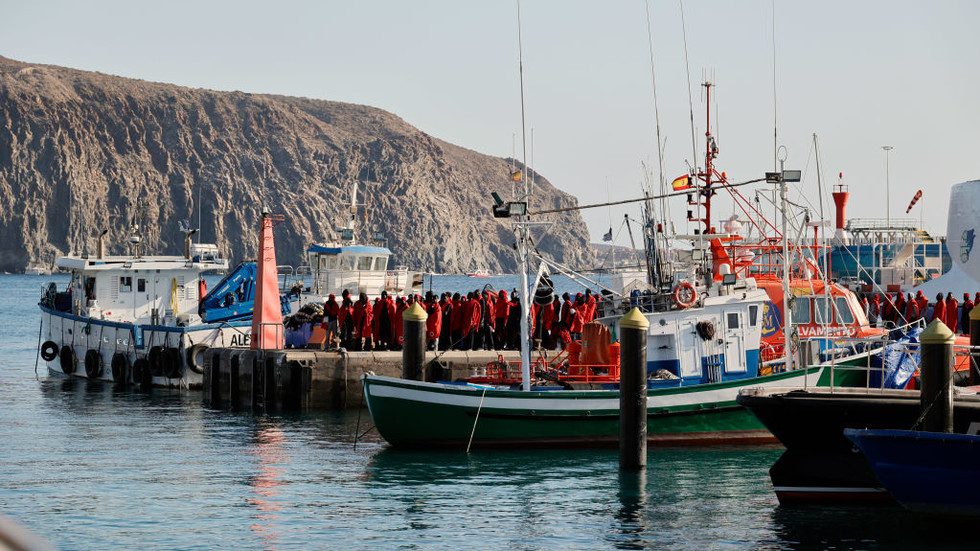
That is a volume of new arrivals approaching two-thirds of the island's resident population in a matter of weeks, and it has prompted demands for emergency assistance from the central government.
Migrant arrivals in Spain's Canary Islands have reached their highest daily level in 32 years, according to RT, which reports that 1,580 people reached the archipelago on Saturday. A further 1,261 migrants arrived on El Hierro on Sunday, bringing the three-day total to 3,684, the report says, citing figures from the Spanish news agency EFE.
The concentration of arrivals on El Hierro is the most striking element of the story. The island, home to around 12,000 people, has received more than 8,000 migrants since the beginning of November, according to the report. That is a volume of new arrivals approaching two-thirds of the island's resident population in a matter of weeks, and it has prompted demands for emergency assistance from the central government.
RT reports that the migrants arrived aboard 15 boats on Saturday, including 173 minors among the passengers, citing provisional figures from rescue services. Provisional figures of this kind are typically revised, and the report does not say how the arrivals are being housed, how long they remain on the island, or where those not staying are transferred. Nor does it give a cumulative figure for the archipelago across the whole of 2026, which would be needed to judge how this surge compares with the full-year record the headline invokes.
The political dimension is immediate. Opposition politicians have called for naval intervention to stem the influx, and the surge has renewed criticism of Prime Minister Pedro Sanchez's handling of illegal immigration ahead of Spain's 29 November general election. The report also recalls that Spain has been grappling with a migration crisis since late July, when around 80,000 migrants crossed from Morocco into the North African exclave of Ceuta, according to Spanish government estimates. Most subsequently returned to Morocco, the report says, but thousands remained, many living in makeshift camps along beaches, prompting protests by local residents demanding government action.
Two things follow. First, the pressure is no longer confined to a single flashpoint: Ceuta in July and El Hierro in November are geographically distant, which complicates any response built around one route or one agreement with Morocco. Second, the timing places the numbers directly inside an election campaign, where calls for naval intervention set a benchmark against which the government's civilian rescue-and-reception approach will be judged.
What remains unconfirmed is the cause of this particular surge. The report offers no explanation of why arrivals spiked in November, no breakdown of nationalities, and no account of Spanish or Moroccan operational responses beyond the opposition's demand. It does not say whether the 15 boats departed from a single point or whether weather, smuggling networks or conditions in Morocco played a part. Until those details emerge, the record can be established, but its drivers cannot.