A head of state marching alongside a movement criticised for exclusionary rhetoric, days after a suspected far-right attack, sharpens the question of where the boundaries of national commemoration lie.
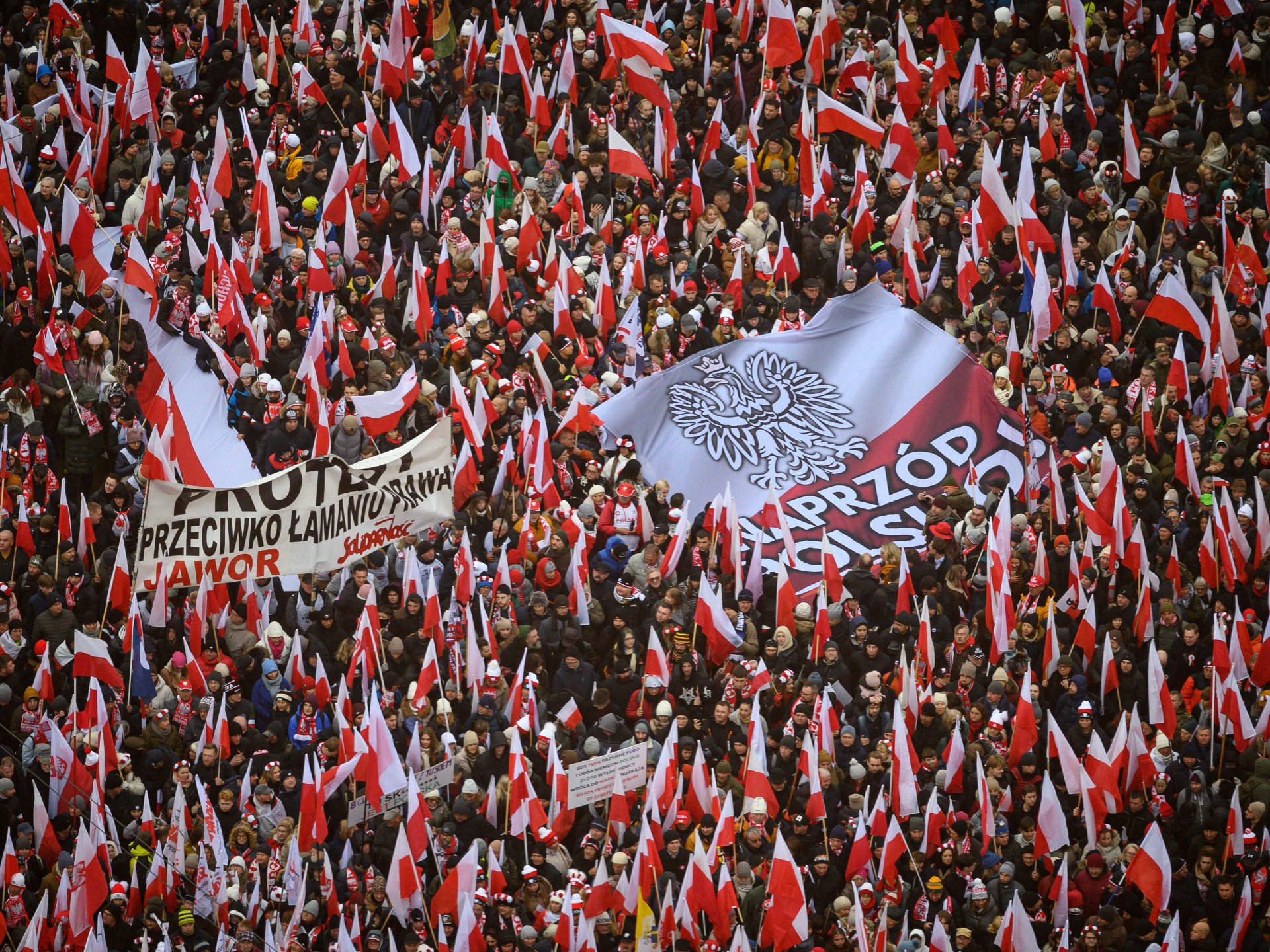
Tens of thousands of nationalist sympathisers assembled in central Warsaw on Wednesday for Poland's annual Independence Day march, according to Al Jazeera, with police deployed to secure the demonstration. Participants carried Polish flags through the capital as organisers predicted a record turnout, including foreign guests such as Spain's Revuelta, a youth movement linked to Vox, and members of the Hungarian far-right Mi Hazank party.
The march has been held on 11 November since 1918 to mark the end of more than a century of partition by Russia, Prussia and Austria. It has long been a point of friction between right-wing groups and Poland's governing centrists, and has drawn criticism for anti-Semitic and anti-immigration rhetoric. Supporters describe the gathering, held under the motto "A Pole is the host in Poland", as an expression of national pride.
This year's march came days after a mass shooting in Krakow in which six people were killed and more than a dozen wounded. According to Al Jazeera, ministers said the attacker may have been motivated by far-right ideology. On Tuesday, Justice Minister Waldemar Zurek said the killer had been interested in the neo-Nazi Anders Behring Breivik, who killed 77 people in Norway in 2011. Police announced on Monday that the 24-year-old gunman had died in hospital after being shot and arrested on Saturday, when he opened fire from his car.
President Karol Nawrocki, a conservative nationalist, attended the march, as he has done before both officially and as a private citizen. "Poland does not exist today so that the political elites can grant themselves the right to manage citizens … against the will of the nation," he said, in remarks Al Jazeera reports as an allusion to the centrist government. Prime Minister Donald Tusk had appealed for restraint before the march, saying that those who care about Poland must understand that the space defined by independence, freedom and a secure Republic is a common good.
The juxtaposition matters. A head of state marching alongside a movement criticised for exclusionary rhetoric, days after a suspected far-right attack, sharpens the question of where the boundaries of national commemoration lie. The presence of foreign nationalist groups also links the Warsaw event to a wider European network, giving it significance beyond Poland's borders.
What is not yet established is the final size of the crowd, the number of foreign participants, or whether the march passed without incident; Al Jazeera's report does not say. Nor is the Krakow investigation concluded, and the link between the attacker's ideology and any organised movement remains a matter for investigators. Until those facts are settled, the political meaning of this year's march will be contested as fiercely as the march itself.