The episode shows how, where legislation stalls, private infrastructure fills the gap and forces the courts to decide.
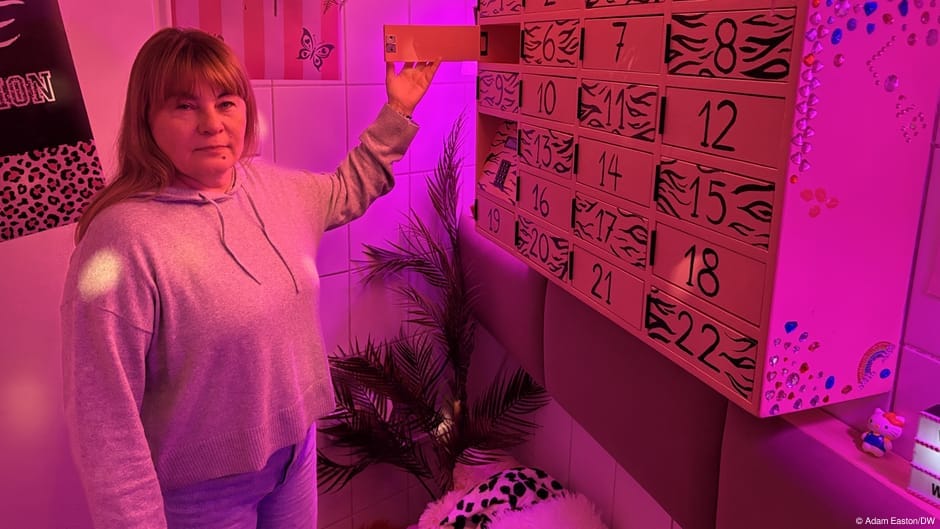
Women's rights activists in Poland have opened what they describe as the world's first delivery locker dispensing abortion pills, in a country with one of Europe's most restrictive abortion laws. According to DW, the locker — called the "Abortomat" — stands in a building opposite the Polish parliament, a location the activists present as a message to politicians, including Prime Minister Donald Tusk.
The device holds 22 pink compartments inside Abotak, Poland's first abortion centre. A woman receives a PIN code from the organisation Women Help Women after completing a medical questionnaire that is checked by a doctor, DW reports. Each compartment normally contains mifepristone and misoprostol, usually taken up to the 14th week of pregnancy. Because mifepristone is not registered in Poland, it must be ordered from abroad where it is legal.
The legal question is unresolved. Justyna Wydrzynska of the Abortion Dream Team told DW she believes the locker does not break the law because a machine, not a person, delivers the pills, though she admits she is not sure. Her lawyer, Dr Sabrina Mana-Walasek, said the environment for abortion pills is "complicated" but that a woman who orders and pays for pills for herself commits no crime. The ultra-Catholic legal group Ordo Iuris disagrees and has notified prosecutors. Its medical law director, Katarzyna Gesiak, argued that people send the codes, procure the pills and restock the compartments, so the actions are performed by people in reality.
The stakes are real for those involved. Women who have an abortion in Poland are not criminalised, but anyone who helps them risks up to three years in prison. In 2023 Wydrzynska became the first activist convicted in Poland of helping a woman obtain an abortion by sending her pills; the conviction was later overturned and a retrial ordered. Anti-abortion activists regularly demonstrate outside Abotak, using horns and loudspeakers, according to DW.
The locker sits within a wider political contest. Tusk pledged abortion on demand up to the 12th week before the 2023 election, but his coalition could not agree a common position and its bills failed in 2024. In October, two bills were resubmitted to the Sejm and narrowly approved: one reinstates severe irreversible fetal defects as grounds for legal termination, a justification struck down by the Constitutional Court in 2020, and another partially decriminalises those who help a woman terminate. A SW Research poll for Onet.pl found almost 61% want President Karol Nawrocki, who opposes abortion, to sign the fetal-defect bill; activists expect him to veto both.
What is not yet known is how prosecutors will treat the locker, whether any case reaches court, and whether the president will block the bills. The activists' own figures — about 130 women helped daily, against 851 hospital abortions last year — are their claims, not official statistics. The episode shows how, where legislation stalls, private infrastructure fills the gap and forces the courts to decide.