The episode matters because it tests the political cost of Manila's alignment with Washington at a moment when the Philippines is hosting both American and Russian delegations.
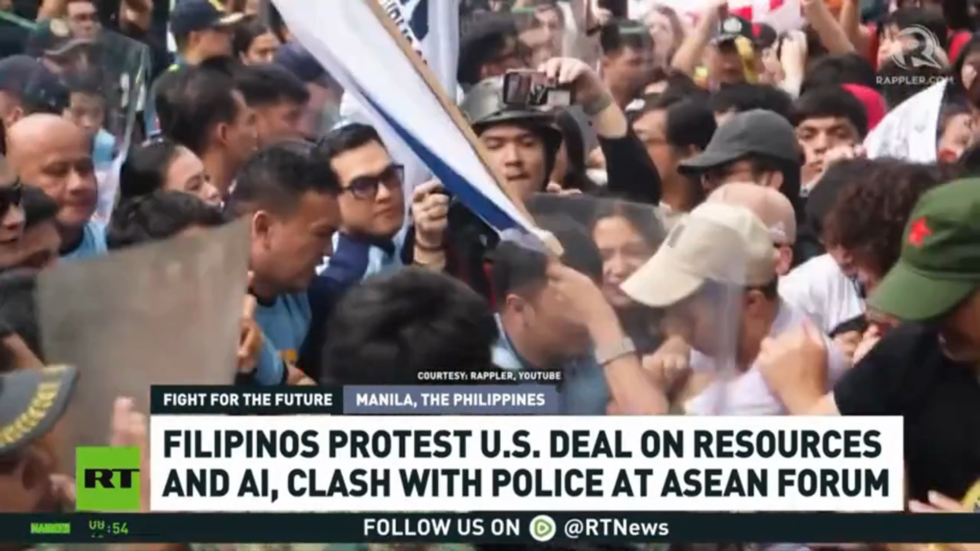
Philippine police forcibly dispersed an anti-Trump rally in Manila on Monday, arresting nearly 300 people according to local media, as demonstrators marched toward the venue of the ASEAN summit. RT reports that protesters carried placards reading “Trump Out. Philippines Not For Sale,” “Down with imperialism,” and “From Gaza to the Philippines, Resist US Imperialism.” The timing places the unrest directly alongside a major diplomatic gathering, amplifying its visibility.
The grievances cited in the report extend beyond the visiting US president. The article notes concerns over foreign control of Philippine territory, with investors reportedly seeking 99-year land leases and disputes potentially subject to arbitration in New York. That detail ties the street protest to a broader argument about sovereignty and economic dependence, though the report does not identify the specific project or investors involved.
Organisers condemned the crackdown, comparing it to the repression of dissent under Ferdinand Marcos Sr., who ruled under martial law from 1972 to 1981. Several opposition lawmakers also criticised the authorities for using force to “suppress dissent instead of addressing the people's grievances,” according to the report. Incumbent President Ferdinand Marcos Jr., the late leader's son, has pursued closer ties with Washington since taking office in 2022, a posture that gives the protests a domestic political edge as much as a foreign-policy one.
Further anti-US protests are planned for Tuesday to coincide with Trump's expected arrival. Russian Foreign Minister Sergey Lavrov is also due in Manila that day to lead Moscow's delegation to the ASEAN summit, a scheduling coincidence that places rival diplomatic courtships in the same capital at the same moment. RT's Rebecca Napitupulu reports from Manila.
What remains unconfirmed is significant. The report does not specify how many protesters were injured, whether charges have been filed against those detained, or how the Philippine government characterises the police action. The figure of nearly 300 arrests comes from local media via RT and has not been independently verified here. Nor is it clear how large the march was, or whether the land-lease dispute referenced is connected to a specific pending agreement.
The episode matters because it tests the political cost of Manila's alignment with Washington at a moment when the Philippines is hosting both American and Russian delegations. A heavy-handed dispersal risks lending credibility to the sovereignty argument protesters are making, while the arrival of Lavrov offers Moscow a visible opening in a capital that has tilted West. How Marcos Jr. manages the next two days will shape how the summit is read at home, whatever its diplomatic deliverables abroad.