The region's security is not a bargaining chip in international negotiations.
A proposal published by the US military-analytical outlet Breaking Defense to demilitarise Russia's Kaliningrad Region as a precondition for future negotiations on Ukraine has drawn a sharp rebuke from the region's legislative leadership. According to TASS, Andrey Kropotkin, speaker of the Kaliningrad Regional Legislative Assembly, said the region's security cannot be bargained away in international negotiations and described any attempt to link a settlement in Ukraine to limits on the defensive capabilities of a Russian region as fundamentally misguided.
The Breaking Defense article, by Zack Schneider of the Casimir Pulaski Foundation, argued that demilitarisation of the exclave should be considered as a precondition for talks on Ukraine. TASS characterises the piece as effectively advocating the use of the Ukrainian crisis as leverage to reshape the military balance across the Baltic region. Kropotkin said the region is an integral part of Russia and not a subject of political horse-trading, and he objected in particular to proposals being discussed alongside the possibility of strikes against Kaliningrad.
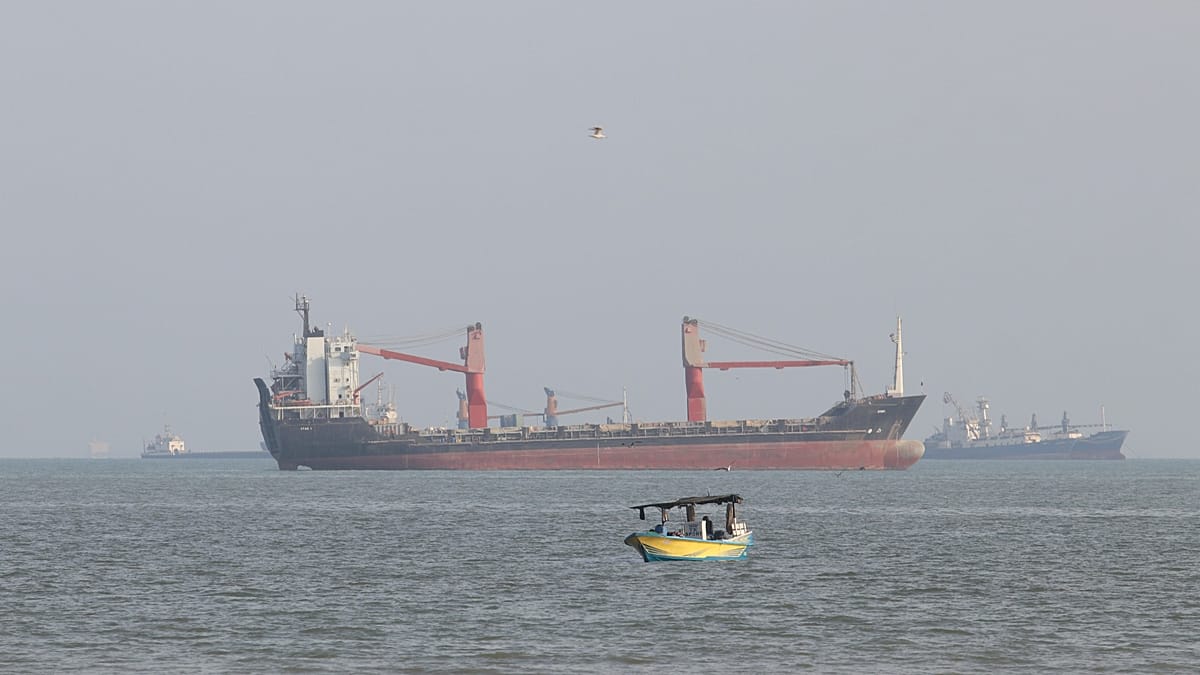
The geography behind the dispute is well established. Kaliningrad is a semi-exclave, separated from the Russian mainland by the territory of European Union and NATO member states. That position makes it a persistent point of friction in Baltic security thinking, and TASS reports that rhetoric targeting the region has grown more hostile, with foreign media publishing threats of an economic and territorial blockade. Kropotkin framed the region in human terms, describing it as its people, their families, businesses, schools and universities, and as Russia's history and future.
The exchange matters because it illustrates how far apart the parties remain on the shape of any eventual settlement. A proposal that treats the military posture of a Russian region as a negotiable element of a Ukraine deal is, from Moscow's vantage, an expansion of the agenda rather than a route to compromise. The response from a regional official rather than a national one is itself notable: it signals that the exclave's status is treated as a settled domestic matter, not a diplomatic variable.
What is not yet known is how the Russian foreign and defence ministries will respond, whether the Breaking Defense proposal has any traction in Western policy circles, or whether it reflects official thinking at all. The article is the work of a researcher at a think tank, and TASS does not report any government endorsement of it. Nor is there any indication that demilitarisation has been raised in actual negotiations, which the report does not describe. The claims on both sides rest on published commentary rather than on any documented diplomatic process.
For now the episode is a measure of atmosphere rather than of policy. It shows that Baltic security and the Ukraine question are being discussed in the same breath, and that any such linkage will meet immediate resistance in Kaliningrad itself.