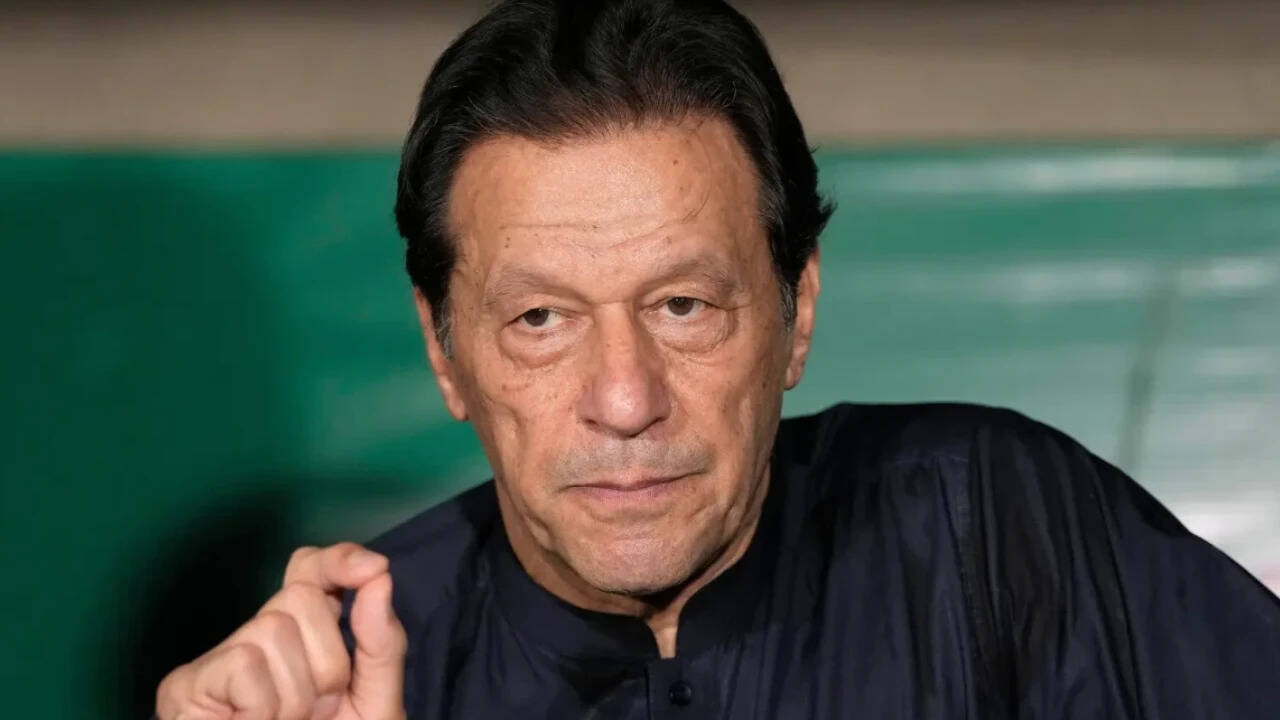
The case matters beyond one man's health: it tests whether court orders can be enforced against the state in a politically charged prosecution.
Pakistan's jailed former prime minister, Imran Khan, has written to the chief justices of the country's Federal Constitutional Court, Supreme Court and Islamabad High Court seeking urgent medical treatment for himself and his wife, Bushra Bibi. The letter, shared on X by his lawyer Barrister Salman Safdar, who met Khan at Adiala jail on 11 November, warns that his health has deteriorated to the point where he fears he may not survive. According to the Times of India's account of the letter, Khan alleges that earlier court directions on his treatment have been ignored.
The substance of the complaint is isolation. Khan says he has been held in solitary confinement for up to 22 hours a day, cut off from family, lawyers, telephone calls to his sons, books and television. He claims his lawyer was permitted to meet him only four times in the year, and that his wife met her counsel once. A jail medical board, he says, recorded his anxiety and recommended more frequent contact with his family and access to reading material and television; he alleges those recommendations were not followed. He also says his blood pressure climbed from 130 to 150 and then 170 before reaching 192 and 193 on 10 November, and that doctors warned of vulnerability to brain haemorrhage and cardiac arrest.
Khan further alleges that his lawyer discovered on 10 February that he had lost 85 per cent of the vision in his right eye, and that neither his family nor his counsel was informed at the time. His wife's condition, he says, is the immediate reason for the letter. According to the letter, Bushra Bibi suffered a retinal detachment in April and underwent complicated eye surgery in secrecy before returning to solitary confinement; when Khan saw her this month she could not tolerate light or open her eyes. She has separately approached the courts seeking examination by an ophthalmologist and treatment from doctors of her choice at her own expense, saying she has been diagnosed with a mature cataract.
The most pointed element is the alleged non-implementation of a Supreme Court order. Khan says the court directed on 18 August that he be moved to Shifa International Hospital in Islamabad within two days, with a medical board to examine him and contact with his family permitted. He writes that the order has not been implemented. The government instead took him to the Pakistan Institute of Medical Sciences for an eye check-up before returning him to prison; the information minister, Attaullah Tarar, attributed the change to security concerns linked to PTI workers gathering outside the hospital, an allegation the party denies.
Khan and Bushra Bibi were sentenced to 17 years in the Toshakhana-2 case, concerning the purchase of a Bulgari jewellery set gifted to Khan by the Saudi crown prince in 2021. He has been in prison since August 2023 and denies wrongdoing, describing the cases as politically motivated; the government denies that. His letter asks not for favour but for implementation of the court's orders, and he says he can prove his innocence only if he remains alive. His sons, Kasim and Sulaiman, described the letter as devastating and harrowing, insisting the demand is not for special treatment.
What is not independently confirmed is the detail of Khan's medical condition, the precise terms of the 18 August order, and the government's full account of why the transfer did not proceed. The letter is a claim by a prisoner, relayed by his lawyer, and the authorities have not been quoted responding to its specifics. The case matters beyond one man's health: it tests whether court orders can be enforced against the state in a politically charged prosecution, and whether a prison system will be seen to have let a 74-year-old detainee's condition deteriorate while his appeals proceed.