On the evidence of the first downpour, the gap between the ceasefire's promise of reconstruction and the conditions on the ground remains wide.
Heavy rainfall has inundated tens of thousands of tents sheltering displaced Palestinians across the Gaza Strip, according to the Hamas-run Gaza government media office, which told Reuters that at least 70,000 tents were flooded within a twelve-hour period. Several people were injured, though no deaths had been reported. Gaza's civil defence service said it had received around 1,500 emergency calls from displaced people seeking help, and three abandoned buildings collapsed in the rain without causing injury.
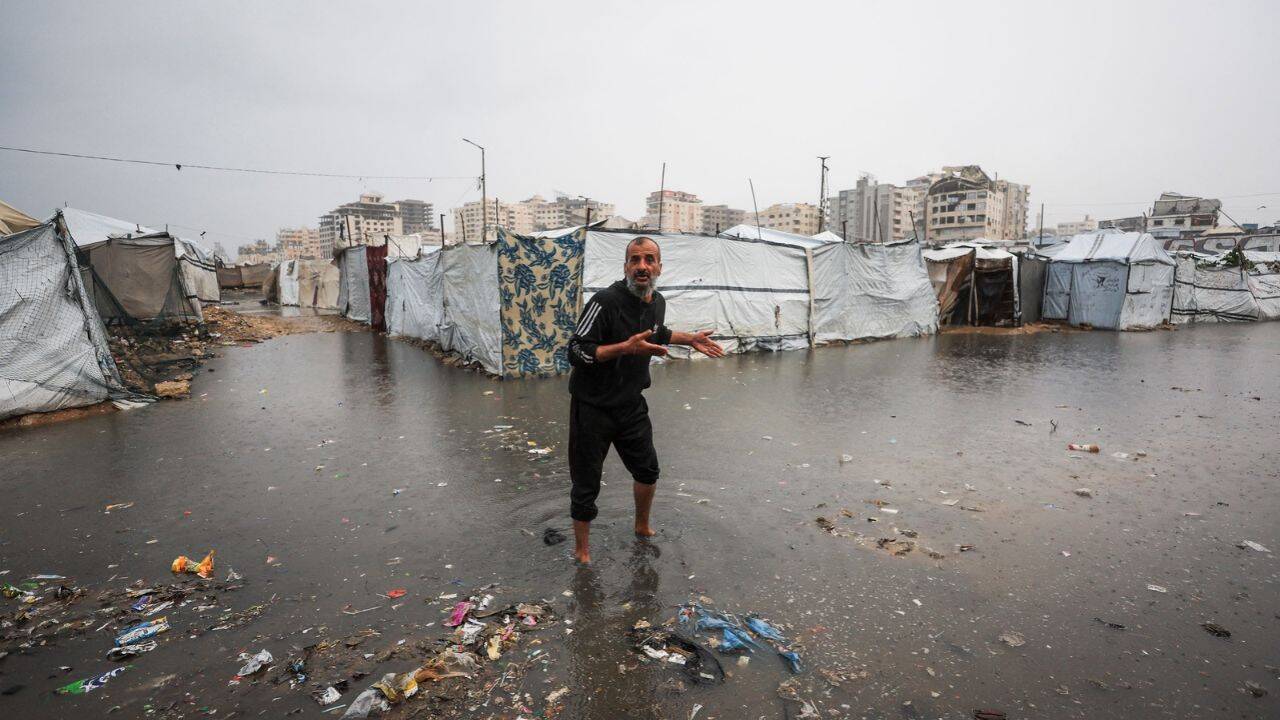
The scenes reported from a makeshift camp in Gaza City are of families attempting repairs with whatever is at hand, piling sand around shelters to hold back the water and carrying children out of flooded tents. Olfat Magdoub, a displaced resident, told Reuters she had tried without success to sweep the water away as the rain continued. "This is the first day of rain, and of course we are already flooded," she said. She described having spent four nights sleeping on blankets laid directly on the floor after an earlier spell of rain soaked her bedding, and said her mattresses were wet again.
What makes the flooding more than a seasonal hardship is the condition of the emergency services meant to respond to it. Municipal authorities and civil defence officials said they were struggling because of fuel shortages and damaged equipment, and that Israeli military operations during the war against Hamas had destroyed hundreds of vehicles, including bulldozers and water-pumping equipment. The conflict has displaced most of Gaza's population of more than two million and left large parts of the territory in ruins; with limited housing available, most residents now live in makeshift tent settlements.
Hamas accused Israel of restricting the entry of temporary shelters and construction materials needed to improve living conditions. COGAT, the Israeli military body coordinating humanitarian assistance to Gaza, did not immediately respond to the allegations, according to the report. It said on Friday that it had intensified efforts to improve sanitation ahead of the expected rainfall, working with international organisations, and that four additional vacuum trucks had entered Gaza this week through the International Committee of the Red Cross, joining eight delivered over the previous month to support sewage pumping, waste collection and repairs to water and sewage infrastructure.
The wider context is a ceasefire brokered by the United States last year that envisaged the eventual reconstruction of Gaza. Progress has remained limited as negotiations over Hamas's disarmament and an Israeli military withdrawal have stalled, and Israeli forces continue to control around two-thirds of the territory, from which residents have been ordered to leave. Displaced resident Rafiq Ghattas, standing barefoot in a pool of rainwater, said there was little assistance available: "We have no resources, no tarpaulins, no tents and no one is checking on us."
According to Palestinian authorities, more than 74,000 people have been killed in Gaza since Israel launched its military offensive following the October 7, 2023, attacks by Hamas-led fighters in southern Israel, in which around 1,200 people were killed. The figures cited in this report come from the parties to the conflict and have not been independently verified. What the coming weeks will show is whether the sanitation measures COGAT describes can offset the loss of pumping equipment and fuel, and whether shelter materials enter in sufficient quantity before the rains settle in. On the evidence of the first downpour, the gap between the ceasefire's promise of reconstruction and the conditions on the ground remains wide.