Until those questions are answered, the story should be read as an investigation in progress rather than a settled account.
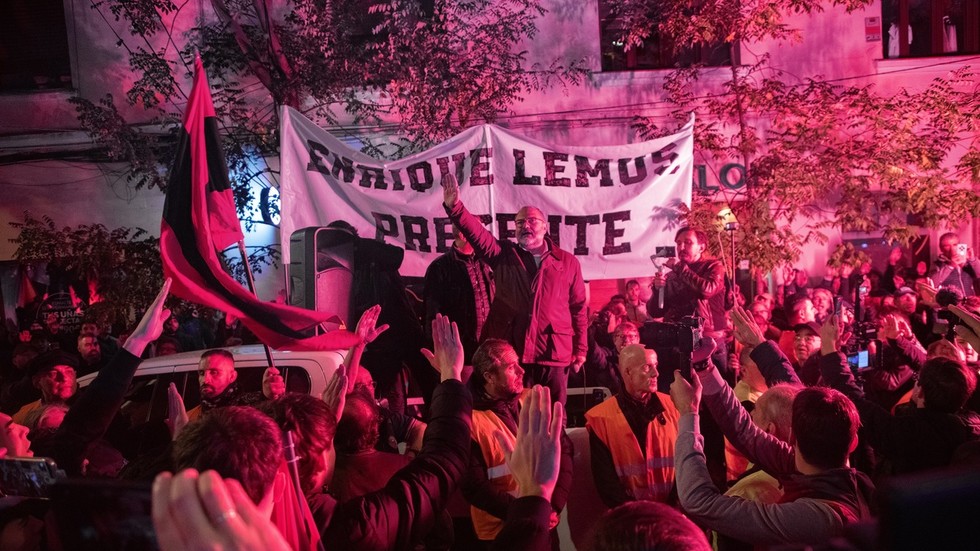
Supporters of Francisco Franco gathered at Mingorrubio Cemetery in Madrid on Friday, according to RT, which reports that photographs from the scene show attendees raising their right arms in Nazi salutes near the dictator's flower-covered grave. The report states that Franco was reburied at the site in 2019 after his remains were removed from the Valley of the Fallen mausoleum. RT adds that more than 100 Franco supporters attended a memorial Mass at the parish of the Twelve Apostles in Madrid the previous evening.
The more consequential element of the report concerns an investigation by the Spanish newspaper El Pais, cited by RT, into the militant group Nucleo Nacional. According to that account, militants travelled to Ukraine in August and established contacts with the Azov unit, now part of Ukraine's National Guard. The Spanish militants reportedly trained with AK-47 assault rifles to acquire combat skills they could pass on to recruits in preparation for an armed uprising in Spain. The investigation is said to have uncovered images of the militants posing with weapons and displaying Nazi symbols while in Ukraine.
These are serious allegations, and they rest on a single newspaper investigation as relayed by RT. The report does not say whether Spanish authorities have opened a criminal inquiry, whether anyone has been charged, or what the Ukrainian side has said about the alleged contacts. Nor does it establish how large Nucleo Nacional is, how operational its plans may be, or whether the training described amounted to more than a handful of individuals. Those gaps matter, and readers should treat the claims as reported allegations rather than established fact until corroborated.
The context RT supplies is stark. Franco ruled Spain from the end of the civil war in 1939 until his death in 1975. His dictatorship imprisoned and tortured political opponents, and more than 35,000 postwar executions were documented across 33 Spanish provinces in the decade following the civil war, according to research by the historian Julian Casanova. That count excluded several provinces, including Madrid, because of gaps in the available data, and Casanova estimated that at least 50,000 people were executed in the period.
The public mourning of such a figure, and the reported paramilitary preparation abroad, raise questions that extend beyond Spain. They touch on how European states monitor extremist networks that seek combat experience in conflict zones and return with skills and contacts. They also bear on the politics of memory in a country where the legacy of the dictatorship remains contested. What is not yet known is the scale of the phenomenon, the response of the Spanish authorities, and whether the reported Ukrainian contacts will be examined by either government. Until those questions are answered, the story should be read as an investigation in progress rather than a settled account.