What is clear is that the cost-of-living question now sits at the centre of French politics.
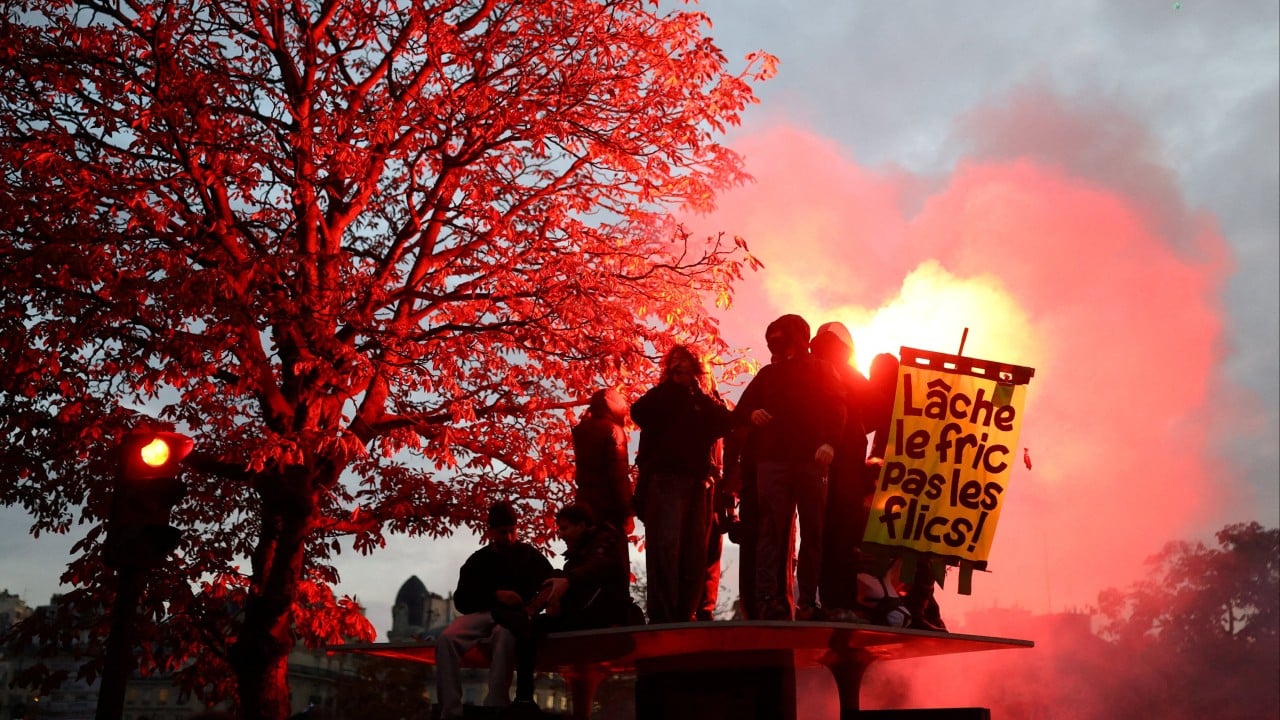
Hundreds of thousands of striking workers marched across France on Thursday against the rising cost of living, according to SCMP World, in a movement that has drawn in students, teachers, rail staff, hospital workers and postal employees. Police fired tear gas as clashes broke out in some cities. The CGT union put turnout at 1.6 million nationwide, while the interior ministry said 575,000 had taken part, revising down an earlier estimate of 600,000, with 60,000 marching in Paris. By 6pm, 448 people had been arrested and 53 officers injured, the ministry said.
The dispute is not only about pay. Unions are calling for across-the-board wage increases and tax reforms, and complain about police restrictions on certain protests. The marches follow weeks of youth-led demonstrations over poor learning conditions, and a day of action on 17 October that ended in the worst rioting France has seen in years. Thursday was largely peaceful, but skirmishes occurred in cities including Lyon, where at least one vehicle was torched and tear gas was fired. The Eiffel Tower and the Arc de Triomphe were closed for the day in Paris.
The political backdrop sharpens the stakes. France, the euro zone's second-largest economy, is struggling to redress dire public finances, and elections to replace President Emmanuel Macron are six months away, with the far right leading in the opinion polls. Interior Minister Laurent Nunez had promised an "extremely firm response" to disorder, with 70,000 police and security forces deployed. The police response has itself been criticised as heavy-handed, and internal investigations have been opened over allegations of brutality. Several teenage protesters have been seriously wounded and thousands arrested, according to the report, and an attempted murder investigation was launched after petrol bombs were thrown at security forces in Paris on Saturday.
The movement also has a European dimension. Student anger has spread from Germany and Spain to Greece and Italy in recent weeks, the report notes, tying grievances over learning conditions to wider outrage over living costs and inequality. In Lyon, winegrower Martin Thiberge said demonstrators wanted "to make a living from our work, to make a dignified wage". In Marseille, a 31-year-old social worker named Lea said she was "fed up with counting every cent" and that the movement had given people hope. At Montparnasse station, a psychologist named Jeanne described a cancelled train as tedious but understandable.
What matters for Paris is whether this coalition of students and organised labour can sustain pressure through the winter and into the election campaign. The gap between the CGT's figure and the ministry's count is itself a political fact, and the accusations of police brutality give the movement a grievance beyond wages. Much remains unconfirmed: the full national turnout, the extent of injuries, and whether the unions can convert street numbers into bargaining power. What is clear is that the cost-of-living question now sits at the centre of French politics, with an unpopular government, strained finances and a strengthening far right on the other side of the ledger.