Movements that start with concrete economic complaints can be negotiated; movements that become a general contest over legitimacy are far harder to settle.
The French government faces a dilemma that repression cannot resolve, according to a France 24 discussion featuring Ariane Bogain, a lecturer in French and politics at Northumbria University. Bogain's observation, quoted in the programme's summary, is blunt: "You can be as repressive as you want. The grievances are still here." The question she frames is how political authority can be restored while the social and economic grievances driving public anger remain unaddressed.
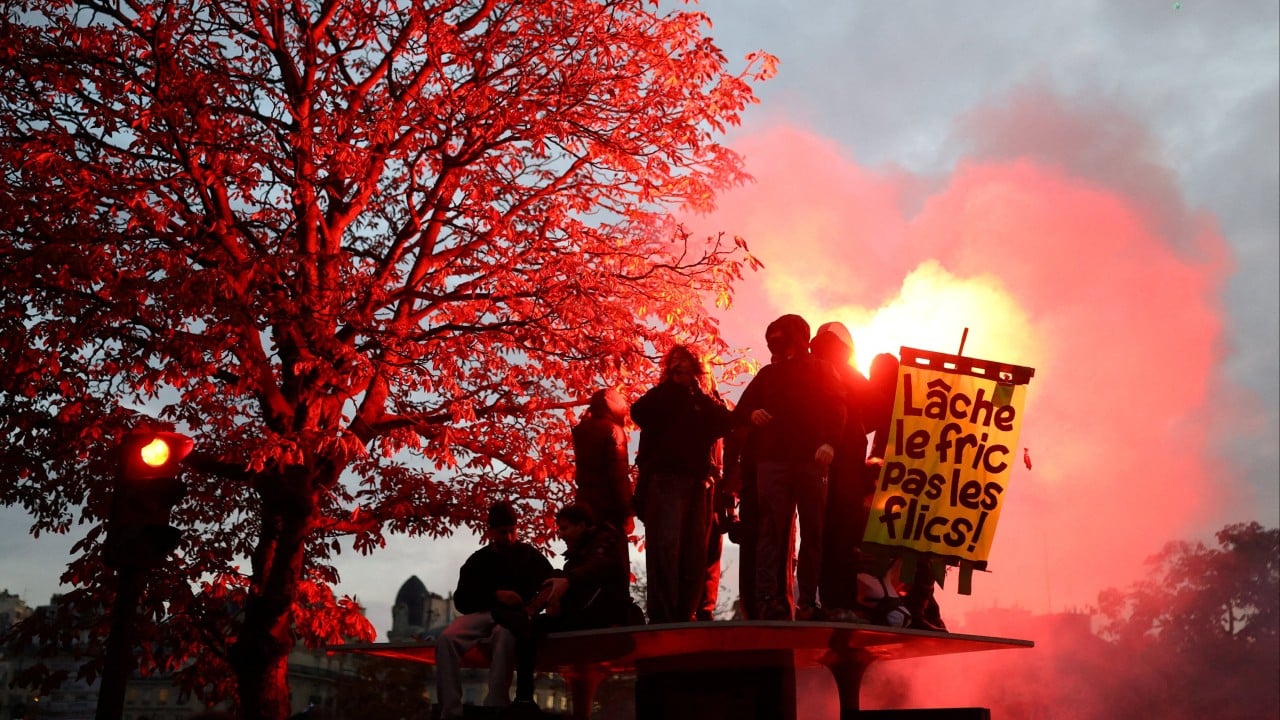
What began as a movement over purchasing power, fuel prices and education has, according to the discussion, evolved beyond its initial demands into a wider challenge to the government. That shift matters. Movements that start with concrete economic complaints can be negotiated; movements that become a general contest over legitimacy are far harder to settle. The summary does not specify which measures the government has taken or is considering, nor how large the protests have been.
French politics editor Marc Perelman identifies a further paradox. Marine Le Pen and Jean-Luc Mélenchon, at opposing ideological poles, are described as "objective allies" in their shared electoral interest in weakening the political centre. The phrase is analytical rather than conspiratorial: two rivals can pull in the same direction without coordinating, each calculating that a diminished centre benefits their own path to power. Whether that dynamic holds through an election cycle is not established in the material available.
The discussion leaves much unconfirmed. The summary gives no figures on turnout, no detail of the specific grievances beyond the three named, and no account of the government's response. It is also unclear how representative the views expressed are of French public opinion. What the programme does suggest is that the dispute is no longer chiefly about fuel or school budgets, and that the government's room for manoeuvre is constrained by a political landscape in which both flanks gain from its weakness.