Each weekend that follows the same course raises the cost of policing and the political price of failing to address the grievances behind it.
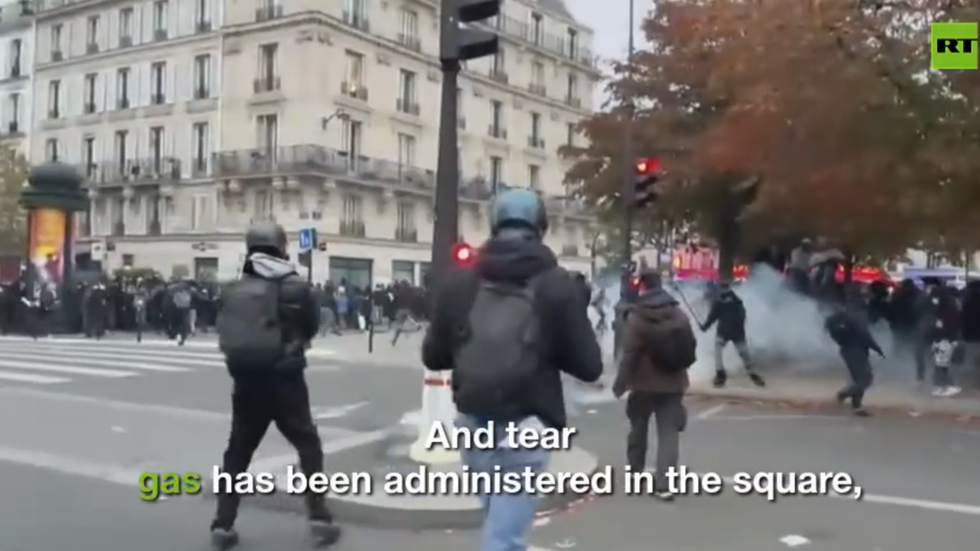
French riot police clashed with demonstrators in Paris and several other cities on Saturday, as a fourth consecutive weekend of anti-government protests over living costs, wages and conditions in schools turned confrontational in places. According to RT, its correspondent Yasin Eken reported live from the capital's Place de la Nation as officers moved in to disperse the crowd, describing the gathering as largely peaceful and quiet until several small fires broke out and police intervened.
Eken reported a sustained back-and-forth between protesters and officers, with police deploying tear gas and what he described as acoustic weapons while demonstrators threw rocks, bottles and other projectiles. He said he was forced to put on a gas mask and retreat as reinforcements advanced from different sides of the square. Police quoted in the report claimed around 200 violent individuals attacked officers during the arrest of a man accused of setting fire to a rubbish bin, and said some demonstrators threw projectiles and fireworks at security forces.
The unrest was not confined to Paris. The report says police fired tear gas to break up hundreds of demonstrators at an unauthorised gathering in Lyon, officers charged protesters in Montpellier amid reports of barricades, and water cannon and tear gas were used in Marseille. Authorities mobilised some 70,000 police and gendarmes, supported by armoured vehicles, water cannon and surveillance drones, and at least 360 people were arrested nationwide, according to the report. Nearly 40,000 people were subjected to preventive checks on roads and at railway stations.
The numbers themselves are contested. Organisers put nationwide turnout at 250,000, while the Interior Ministry counted 146,000, including 46,000 in Paris. That gap is familiar in French protest reporting, but it matters here: it shapes how both sides frame the movement's momentum as it enters a fifth week. The report traces the demonstrations to student protests in late September, which spread into a broader movement drawing in trade unions and workers demanding higher wages and relief from rising prices.
What is not yet established is the extent of injuries on either side, the number of people detained beyond the arrest figure, or whether any of those held face charges. The report does not say how long the confrontations lasted, whether they continued into Sunday, or what response the government has offered beyond the policing operation. Nor is it clear whether union leaders intend to call further action, and if so at what scale. Those questions will determine whether this remains a weekly ritual of grievance or becomes something harder for the authorities to contain.
For now, the significance lies in the pattern rather than any single night: a movement that began among students has widened to encompass wages and prices, and the state has answered with a large-scale security deployment. Each weekend that follows the same course raises the cost of policing and the political price of failing to address the grievances behind it.