When the right to demonstrate becomes a negotiating point between unions and prefectures, the dispute widens beyond pay.
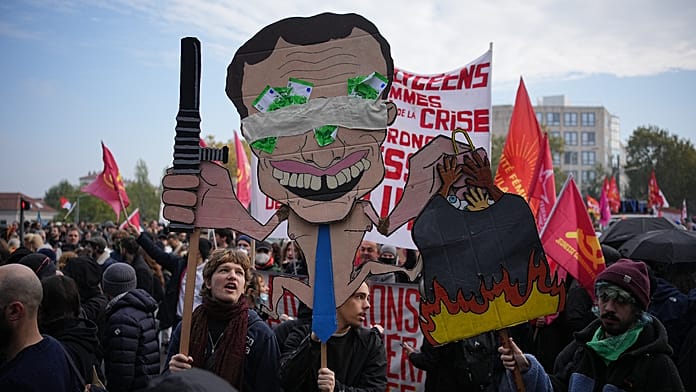
France was gripped by a nationwide day of strikes and demonstrations on Thursday 5 November, as trade unions mobilised workers, students and other protesters to demand higher wages, tax justice and better public services. According to Euronews, the mobilisation was called by major unions including the CGT, CFDT and FO, with around 250 rallies planned and more than 1,100 strike notices filed. Some 70,000 police officers and gendarmes were deployed as hundreds of thousands of protesters were expected.
The geography of the day mattered as much as its size. In Lyon, organisers reported more than 25,000 people on the march, which followed a court-approved route towards Place Jean-Macé after restrictions were imposed across much of the city centre. Tensions flared early: police reported clashes with around 500 demonstrators who threw projectiles and set pallets alight, and officers responded with tear gas, forcing the march back after just 600 metres. Six arrests were reported, while all four metro lines and both funiculars were shut down and other public transport severely disrupted.
In Paris, unions agreed to march from République to Nation after a court upheld the police prefecture's decision to reject their preferred route from Bastille to Concorde. The demonstration was due to begin at 14:00, with authorities expecting between 40,000 and 80,000 participants. Security measures and transport disruption saw 25 metro stations closed, bus and tram services diverted and around 80 schools shut across the capital. Police intervened outside Lycée Hélène Boucher in eastern Paris after students blocked the school entrance with wheelie bins, ordering them to disperse and removing the barricades while pupils continued chanting. A brief scuffle followed, with police seen taking one student aside and searching several others nearby.
The demands themselves are economic rather than constitutional: higher wages, an increase in the minimum wage, tax justice and protection of the right to protest. The last of these is not incidental. Court rulings in both Lyon and Paris reshaped the routes protesters were permitted to take, and the policing response in Lyon showed how quickly a permitted march can be pushed back. When the right to demonstrate becomes a negotiating point between unions and prefectures, the dispute widens beyond pay.
The joining of workers and students is the development to watch. Student blockades outside a Paris lycée, alongside strike notices filed across sectors, suggest a coalition that can sustain pressure beyond a single day. French governments have historically found such alliances harder to isolate than union action alone. What is not yet known is the total national turnout, since the figures reported here are organiser estimates for Lyon and police expectations for Paris, nor whether the mobilisation will extend into further action. The report gives no government response and no account of injuries. Those gaps will shape how significant 5 November proves.