A conference that began with a phase-out in its draft may end with a formula designed to keep everyone at the table.
The COP31 climate talks in Antalya, Turkey, have run past their scheduled close and into Saturday, as negotiators from nearly 200 countries try to rescue a deal after a draft text removed all references to fossil fuels. According to Euronews, a first draft unveiled earlier in the week had called for a sped-up phase-out of fossil fuels; a second version released on Thursday stripped out every mention of the energy sources, forcing delegations back to the bargaining table.
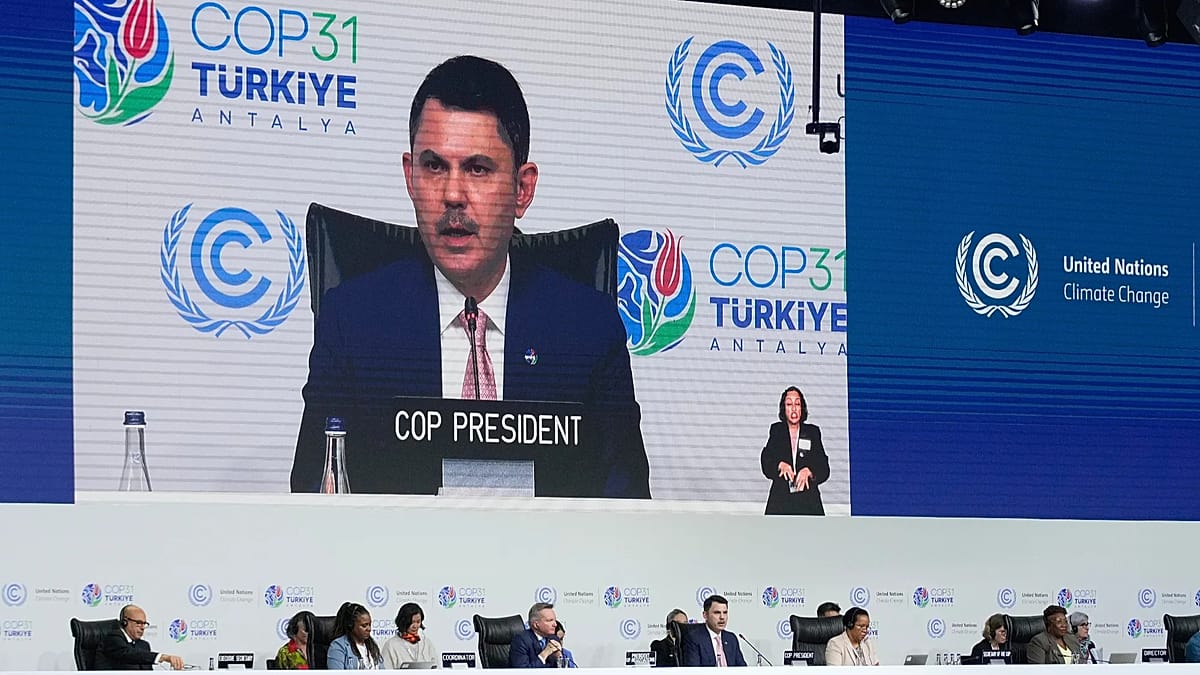
The COP31 President and Turkish Environment Minister, Murat Kurum, told an assembly late on Friday that the parties were close to the finish line but not there yet. A new agreement is expected to be published on Saturday. The European Union said the revised draft risked "turning this climate COP into a fossil summit", a phrase that captures how far the politics of the text have shifted in a matter of days.
A number of countries, including France and Panama, shared a letter on Friday insisting the deal include "a clear transition away from fossil fuels". Panama has gone further, threatening to walk away from the talks, with its environment minister, Juan Carlos Navarro, accusing a "petroleum mafia" of blocking progress. Australian Climate Minister Chris Bowen, who is leading negotiations, said he would work "for as long as it takes, to get the job done".
The dispute over language is bound up with a wider fight over climate finance, which Euronews reports has been one of the deep divisions at the conference. The removal of fossil fuel references from the draft appears to have sharpened both questions at once: what the text commits countries to, and who pays for the transition. The presence of OPEC at the talks adds another layer. The oil cartel said its Secretary General, Haitham al-Ghais, met the Russian climate envoy, Ruslan Edelgeriev, at COP31 to discuss "the importance of inclusive and balanced approaches across all multilateral environmental fora", and that the talks covered cooperation between OPEC and Russia on international climate action.
What matters now is whether the Saturday text restores an explicit reference to fossil fuels or settles on softer language that France, Panama and the EU can accept. The source material does not say which countries pressed for the deletions, what the new draft will contain, or whether Panama would carry through its threat to leave. Nor is it confirmed how the finance question will be resolved. Those gaps will shape how the outcome is judged.
For an informed reader, the episode is a reminder that the gap between a headline commitment and a final negotiated text is where climate diplomacy is actually decided. A conference that began with a phase-out in its draft may end with a formula designed to keep everyone at the table. Whether that counts as progress will depend on the wording published on Saturday, and on how firmly the parties that demanded a transition hold their line.