The world is entering a period described as "overshoot", beyond which scientists warn that millions more people will be exposed to sea level rise and extreme heat.
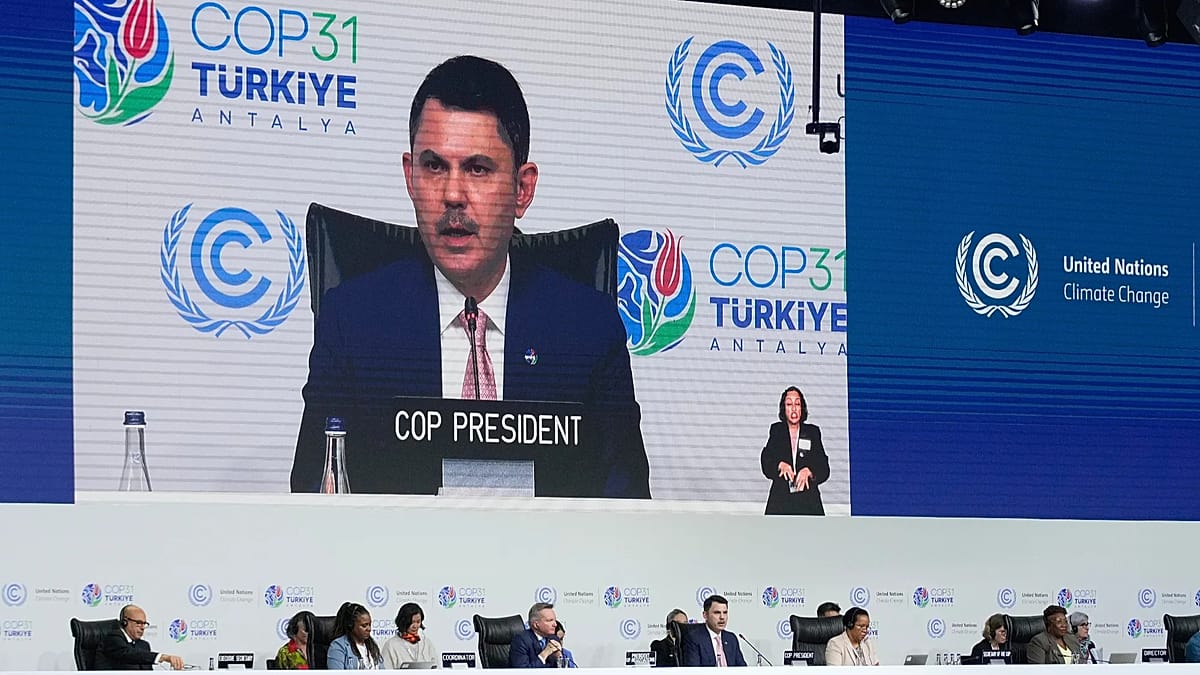
Negotiations at the UN COP31 summit in Antalya were set to resume on Sunday for a second day of overtime, after co-hosts Turkey and Australia published a new draft agreement in the early hours in an attempt to bridge the divide between nations, the BBC reports. Countries were expected to reconvene at 09:00 local time to decide whether to approve a deal.
The third version of the text still contains no specific reference to "transitioning away from fossil fuels", an omission in the previous draft that prompted threats of walkouts. According to the BBC, it does acknowledge an earlier commitment made by countries to do so three years ago, and for the first time it recognises that the world is on track to miss the goal of keeping warming below 1.5C. The world is entering a period described as "overshoot", beyond which scientists warn that millions more people will be exposed to sea level rise and extreme heat.
The fault lines remain sharp. The EU and Pacific states had argued against removing fossil fuels from the text, and the EU had not yet reacted to the latest draft when the BBC reported. Panama's environment minister, Juan Carlos Navarro, said it was not acceptable to have a COP decision that does not even mention fossil fuels. Tuvalu's climate minister, Maina Talia, called the issue a "red line" for the low-lying Pacific nation, describing fossil fuels as the root cause of the problem. France's minister for ecological transition, Monique Barbut, criticised references to carbon capture, use and storage as a licence for countries to keep burning oil and gas; those commitments have since been reduced, which may ease EU concerns.
Australia's climate change and energy minister, Chris Bowen, who is leading negotiations, pushed back on the need for language on fossil fuels, arguing the summit was about implementation and should focus on the shift towards clean energy. COP31 President Murat Kurum, Turkey's environment minister, told delegates he believed concerns had been addressed and that they were closer than ever to agreement. Hours before the text appeared, EU Commissioner for Climate Wopke Hoekstra said that without what was needed on climate action there would be no deal, while the UK's chief negotiator, Energy Secretary Miatta Fahnbulleh, struck a more hopeful tone.
Money is the other unresolved question. The latest iteration contains no specific figure on finance for adaptation, deferring the decision to future meetings; an earlier proposal to raise adaptation funding to $120bn by 2035 was removed. The African Group is likely to be disappointed. Zanetor Agyeman Rawlings, Ghana's environment minister and chair of the group, said African nations had come to claim what was rightfully theirs rather than to beg. Mohamed Adow of Powershift Africa, an observer group, called it the worst COP ever.
Much is still unknown. Whether the EU, the Pacific states and the Africa Group will accept the text is not confirmed, and consensus is required under the UN process. If it cannot be reached, talks could be suspended until next year, something that has happened only once since COP meetings began in 1995. Delegates who had Sunday flights were rescheduling them on Saturday, raising the risk that the meeting loses the numbers needed to pass an agreement.