The gap between recommendation and coalition is the real story.
Israel's opposition parties have settled on a single name. According to TRT World, citing public broadcaster KAN, the Democrats led by Yair Golan announced on Monday that they would recommend President Isaac Herzog task Yashar leader Gadi Eisenkot with forming the next government. Naftali Bennett's Together party and Avigdor Lieberman's Yisrael Beytenu had made the same commitment a day earlier, and the Joint List and the United Arab List were expected to follow.
The arithmetic is striking on paper. If all opposition and Arab parties back Eisenkot, he would carry recommendations from 67 of the Knesset's 120 members, against 53 for Prime Minister Benjamin Netanyahu's bloc. Last Tuesday's elections produced a fractured parliament in which neither camp reached the 61 seats needed for a majority. Likud remains the largest single party with 27 seats; Eisenkot's Yashar took 21. The Arab parties hold 19 between them.
The gap between recommendation and coalition is the real story. The opposition and Arab parties together command 67 seats but have not agreed to govern together, and Lieberman made the obstacle explicit. Speaking in Modi'in on Monday, he said his party would back Eisenkot for prime minister and support Yair Lapid for Knesset speaker when parliament convenes on 10 November, according to The Jerusalem Post. He also ruled out sitting with Netanyahu, opposed a minority administration propped up from outside, and refused to join any government including Arab parties or reliant on their support. He conceded the opposition had suffered "a resounding failure", winning 48 seats against expectations, and placed responsibility on Eisenkot and his team.
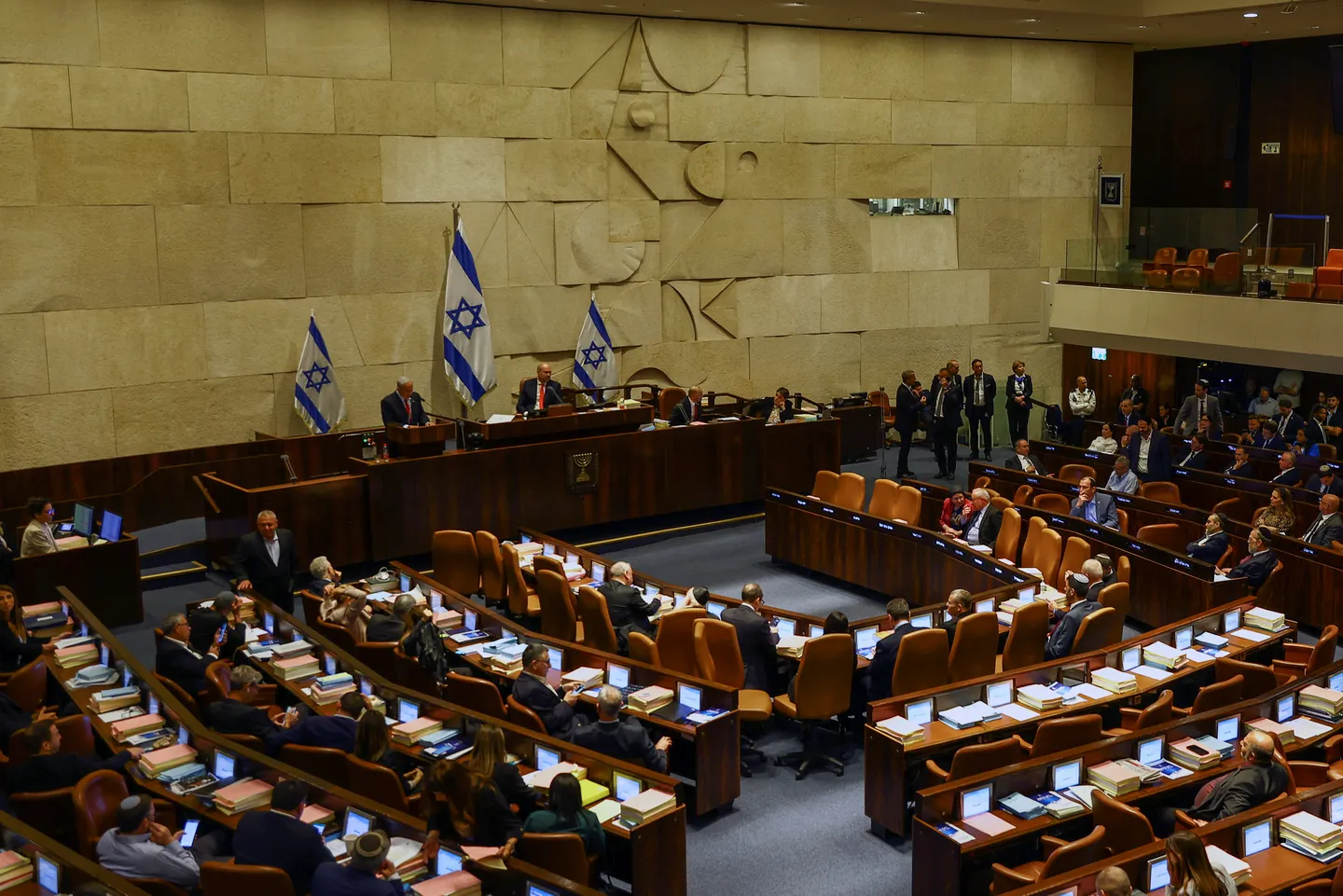
Herzog's consultations begin at 5pm local time on Wednesday, with factions received in ascending order of parliamentary strength — an unusual sequence his office said was meant to encourage fresh ideas. Religious Zionism, Shas and Yisrael Beytenu come first; Thursday brings United Torah Judaism, Otzma Yehudit, the Democrats, Ra'am, the Joint List, Together, Yashar and finally Likud, after which the president will announce his choice.
Under Israel's system, voters choose a Knesset, not a prime minister, and the president may pick whichever lawmaker he judges best able to win the chamber's confidence. The nominee has 28 days to form a government, extendable by up to 14. Failure allows Herzog to hand the task to another member with 28 days and no extension; further failure could mean another election. The outgoing government stays until a new one wins a confidence vote.
Securing the mandate would strengthen Eisenkot's hand without making him prime minister. Without a coalition deal he would need support from beyond the 67, including possible defections from Netanyahu's bloc. What remains unconfirmed is whether the Arab parties will in fact recommend him, and whether any arrangement can bridge Lieberman's red lines. Failure could bring further negotiations, a unity government or another election.