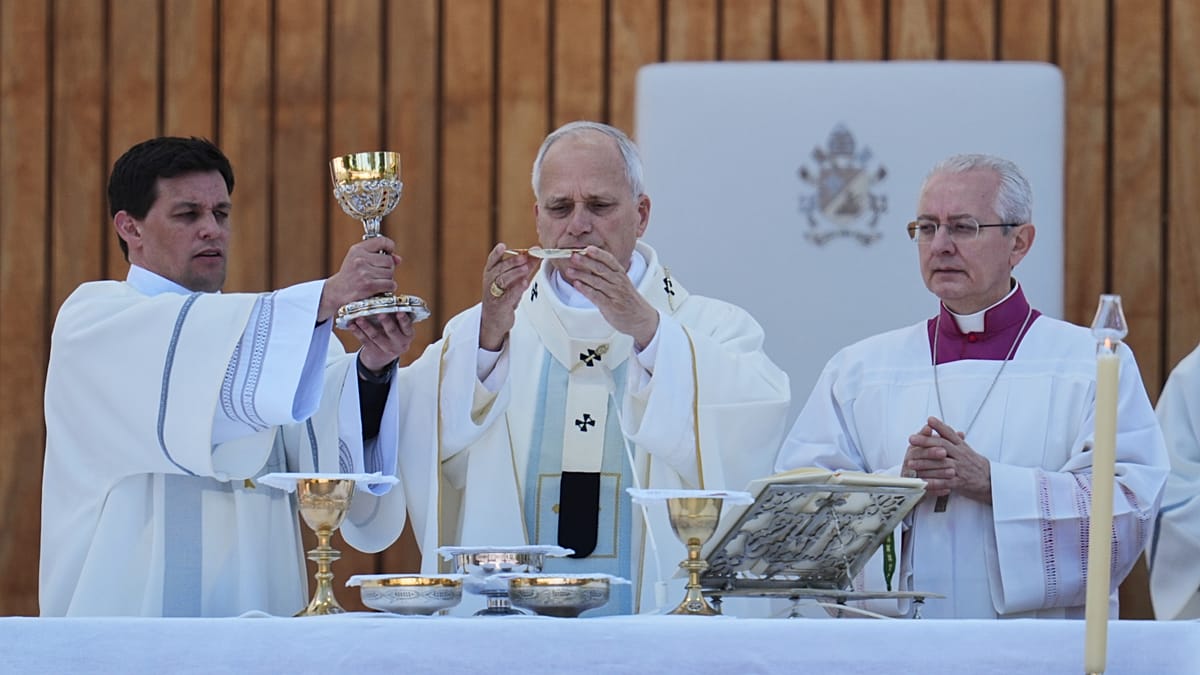
Eisenkot's appeal rests partly on what he is not.
Israel's President Isaac Herzog has tasked Gadi Eisenkot, leader of the Yashar party, with assembling a government after elections on 27 October left no political alliance with a majority in the Knesset, Al Jazeera reports. Eisenkot, a former military chief of staff, has 28 days, with the possibility of a 14-day extension, before Herzog may invite an alternative leader, most likely Benjamin Netanyahu, to try. If that too fails, new elections would follow.
On the reporting, Eisenkot is unlikely to assemble the kind of majority Netanyahu has relied upon to push through a right-wing agenda. He may need at least one of the two parties representing the ultra-Orthodox community, often Netanyahu's allies, and would have to persuade more right-wing elements of his own opposition bloc to accept support from Arab parties outside the government. United Torah Judaism, which has broken with its traditional ally Shas in declining to endorse Netanyahu, is likely to want the de facto shield for young ultra-Orthodox men who refuse military service to continue. Parties representing Palestinians with Israeli citizenship, even supporting from outside, are likely to seek meaningful action on the violent crime wave in their communities and an end to settler violence in the occupied West Bank.
Aida Touma-Sliman, a Knesset member from Hadash and the Palestinian-led Joint List, told Al Jazeera that recent days showed Eisenkot does not want to rely on Palestinian voters, appearing more willing to compromise with the ultra-Orthodox over conscription than to be seen depending on Arab support. That reading, if correct, narrows the room for the "different Israel" his admirers hope for.
The next prime minister inherits a damaged standing in Washington. Al Jazeera reports that Israel's reputation among the American public has fallen to an all-time low over the war on Gaza and the US-Israel war on Iran, which Netanyahu is accused of persuading President Donald Trump to start. On the eve of disastrous midterm elections for Trump, he announced an end to the $3.8bn annual military aid package. Trump's Republicans suffered historic losses, and senior officials including Vice President JD Vance blamed the war on Iran. Aaron David Miller of the Carnegie Endowment told Al Jazeera that perceptions of Israel are entrenched, with the public watching a split screen since 2023, and that Eisenkot may face the toughest US landscape any Israeli prime minister has had to navigate.
Eisenkot's appeal rests partly on what he is not. Born in Tiberias to parents from Marrakesh and Casablanca and raised in Eilat, he rose to chief of staff before entering politics and serving in Netanyahu's national unity government after the Hamas-led attacks of 7 October 2023. His son Gal was killed in Jabalia in December 2023, followed a day later by his nephew Maor; another nephew, Yogev Pazy, was killed in Gaza in November 2024. Yossi Mekelberg of Chatham House described him as steady and military in bearing, offering a sense of normalcy and rules that apply equally to everyone, including the government.
For Palestinians, the report suggests, little would change. Eisenkot is the architect of the Dahiyeh Doctrine, which advocates disproportionate force and widespread destruction against civilian communities resisting Israeli force, and as chief of staff oversaw operations in Gaza and the West Bank and strikes on Iranian targets. UN figures recorded about 650 Palestinians killed by Israeli forces or in conflict-related incidents between 2015 and 2018, including 295 in 2018 alone. Whether he can form a government at all, and on what terms, is not yet known.