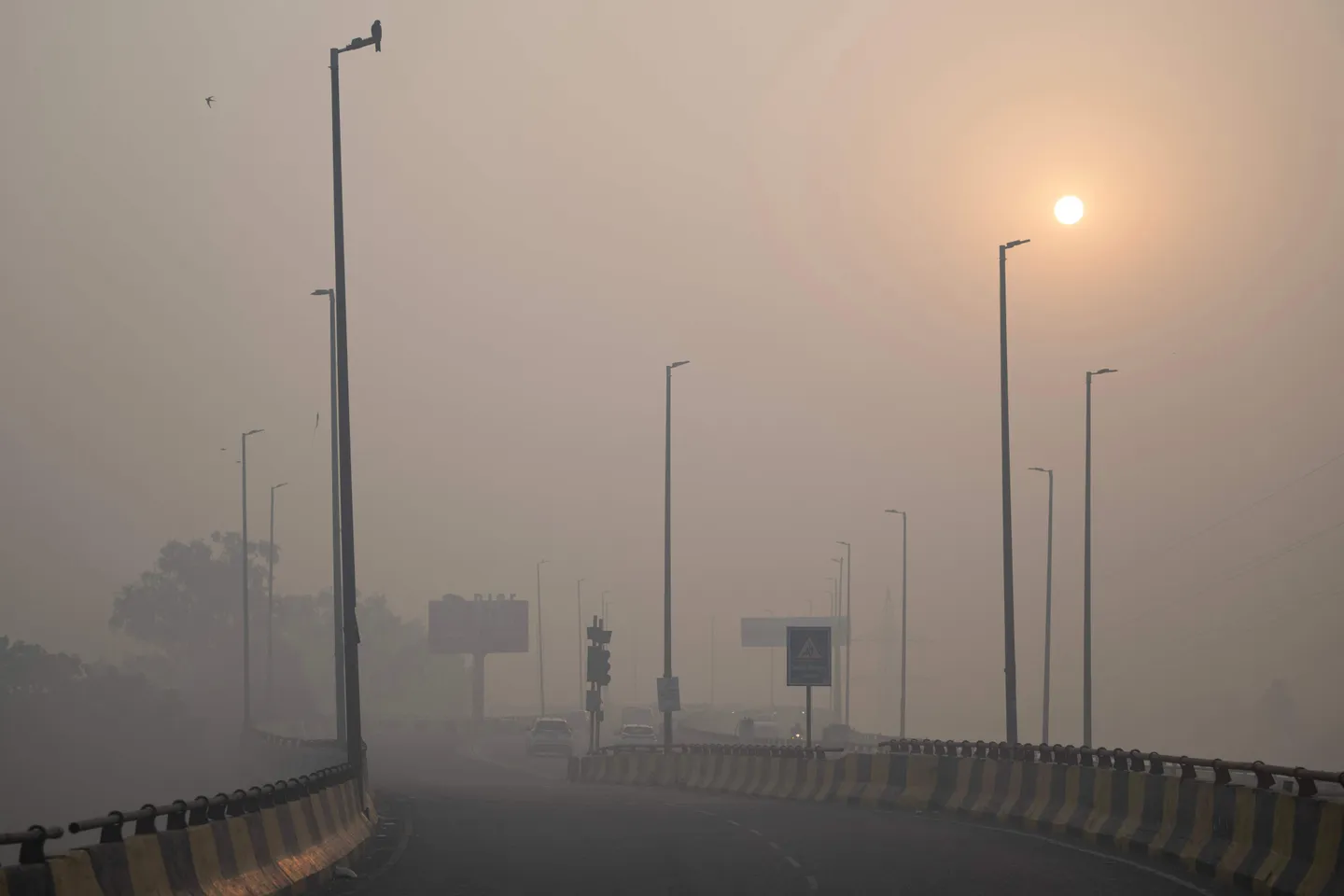
For a city where winter smog already chokes millions, the practical question is whether the monitoring network can measure the worst days it exists to document.
Delhi's air quality monitors were overwhelmed during Diwali, according to TRT World, with concentrations of fine particulate matter exceeding the upper measurement limit of the instruments. The report says readings reached a level equivalent to 66 times the World Health Organization's recommended daily maximum. The admission followed accusations from opposition politicians that authorities had allowed gaps in official readings for several hours between Sunday night and Monday morning, as fireworks for the Hindu festival of lights pushed pollution sharply higher.
The Central Pollution Control Board rejected claims of deliberate under-reporting. In a statement quoted by TRT World, the board said the gaps reflected "differences in measurement of pollutant concentration" rather than an attempt to conceal pollution. Particulate analysers installed when the National Air Quality Index was introduced in 2015 were calibrated to measure concentrations of up to 1,000 micrograms per cubic metre, against a WHO daily maximum of 15 micrograms for PM2.5. The board said its automated validation system treats hourly readings beyond the calibrated range as outside range, and that such readings are not used in the computation. During extreme episodes, it added, this may appear as a data gap at the station concerned.
The political row has been sharp. Saurabh Bharadwaj, Delhi president of the Aam Aadmi Party, said in a video posted on X that the government had shut down monitoring stations on Diwali night and committed "data fraud". Senior Congress lawmaker Ajay Maken asked who would answer for the air if Diwali night's PM2.5 was not in the record. Pawan Khera, also of Congress, said the disappearance of the data did not mean the pollution had disappeared. The board's explanation addresses the mechanics of measurement rather than the substance of those charges, and the dispute over intent is unresolved on the available record.
The scale of the episode was captured only when monitors resumed reporting, roughly eight hours after the fireworks peaked. TRT World reports that readings then reached 879 micrograms per cubic metre in the Mandir Marg locality, according to IQAir, which cited data from a city government station. That is more than 58 times the WHO daily limit. Indian government data showed firecrackers were responsible for nearly 55 per cent of PM2.5 in the capital a day earlier, the report says, with vehicle emissions, construction dust and crop-waste burning also major contributors to winter pollution.
The consequences cross borders. Lahore topped IQAir's ranking of the world's most polluted major cities for a second day on Tuesday, with an index reading of 263, categorised as "very unhealthy", and PM2.5 concentrations 37.2 times above the WHO's annual guideline. Marriyum Aurangzeb, environment protection minister for Pakistani Punjab, said pollutants had been carried into the region by light winds and air drifting from India after Diwali. Delhi ranked second on the same list, with an index reading of 188. The report does not give a full attribution of Lahore's pollution between domestic sources and transboundary drift, and the respective shares are not established here.
What remains unconfirmed is how far the missing hours distorted the official record, and whether any readings above the calibrated range were preserved elsewhere. The board's account implies a technical limit rather than a political decision, but it does not say how such episodes should be recorded in future. For a city where winter smog already chokes millions, the practical question is whether the monitoring network can measure the worst days it exists to document.