The result is a blow to the left wing of the Democratic Party, and it lands awkwardly: Democrats won decisive majorities in both houses of Congress in a sweeping midterm election rebuke of Trump and his policies.
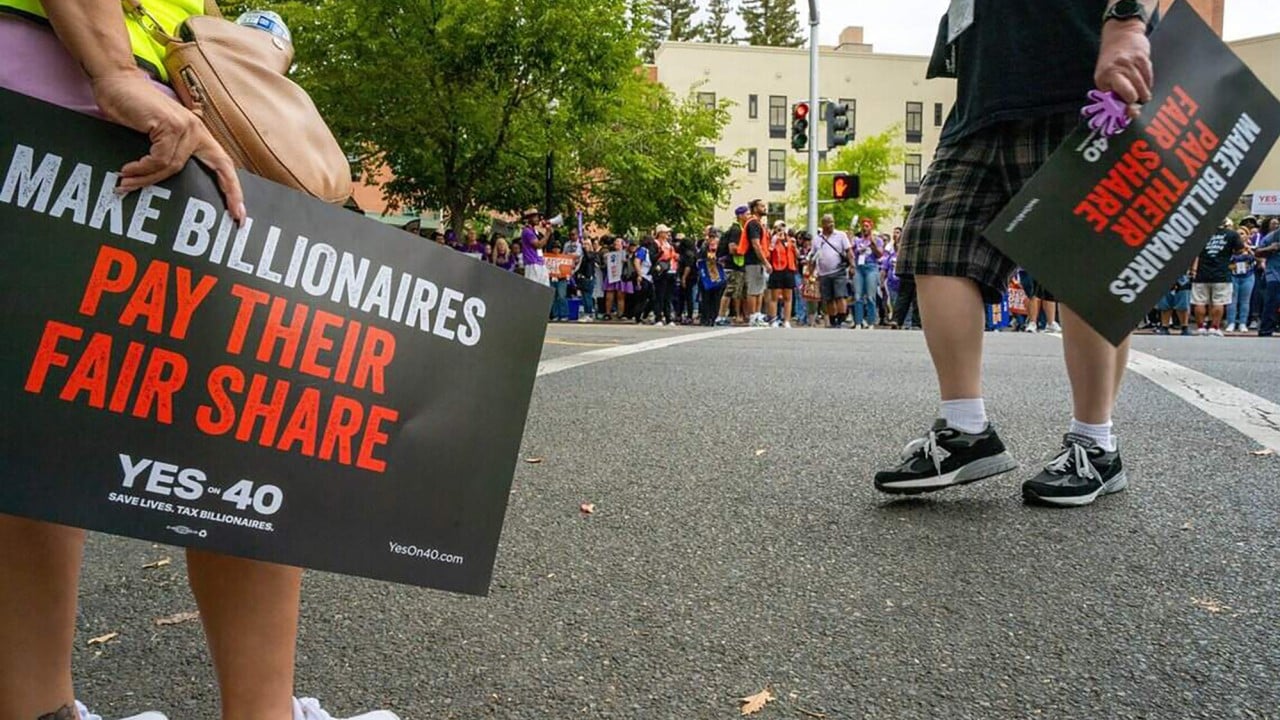
A billionaire tax championed by US Senator Bernie Sanders and other progressives as an antidote to economic inequality, and as a possible model for the rest of the country, has been defeated in California, US media projected on Monday. According to the report, proponents had estimated that Proposition 40 would raise US$100 billion in revenue, most of it earmarked for healthcare programmes intended to offset federal funding cuts designed to pay for tax breaks enacted last year under President Donald Trump's "One Big Beautiful Bill". Those breaks, largely benefiting wealthy individuals and corporate interests, passed with Republican-only support in the US Senate.
The measure targeted stocks, bonds and business assets rather than earned income. Supporters reasoned it stood a healthy chance in a state where voter rolls favour Democrats over Republicans by a nearly two-to-one margin. That arithmetic did not hold. Governor Gavin Newsom, a likely candidate for the Democratic presidential nomination in 2028, came out against the measure, arguing it would backfire in the long run by creating an unwelcome climate for upwardly mobile hi-tech entrepreneurs. His opposition, and division among party leaders, led initial support to wane ahead of the vote.
Opponents argued the tax would prompt the ultrawealthy to leave the state, taking their income-tax payments and job-producing enterprises with them, and would discourage entrepreneurs from building start-ups in California at all. Labour unions were also divided. Billionaires contributed more than a quarter of a billion dollars to ads framing the measure as a gateway to more aggressive taxation for all Californians and as a threat to retirement accounts. Google co-founder Sergey Brin and at least 11 other billionaires gave a collective US$269 million to a political action committee called Building a Better California, which poured more than US$300 million into campaigns opposing Prop 40, according to the report.
Those arguments may have resonated at a moment when higher fuel prices and affordability concerns have put a broad swathe of the country in a sour economic mood. The result is a blow to the left wing of the Democratic Party, and it lands awkwardly: Democrats won decisive majorities in both houses of Congress in a sweeping midterm election rebuke of Trump and his policies. The party's national leadership, in other words, is not retreating from the argument. Incoming Senate Finance Committee Chairman Ron Wyden said in a November 4 statement outlining the panel's priorities that the committee would "redouble its efforts to ensure billionaires pay their fair share and hold tax cheats accountable".
What the vote does not settle is whether the defeat reflects hostility to the tax itself or to this particular design. The report gives no breakdown of the result, no margin and no turnout figures, and the projection rests on US media rather than final certified counts. It is also not established how far Newsom's opposition moved voters, or how much the advertising spending did. What is clear is that the fight over taxing the ultrawealthy has moved from California's ballot to Congress, where the Democratic leadership has signalled it intends to keep pressing the case.