The case illustrates how modest boundary disagreements can become lengthy legal battles, particularly where changes to a property's access depend on land belonging to someone else.
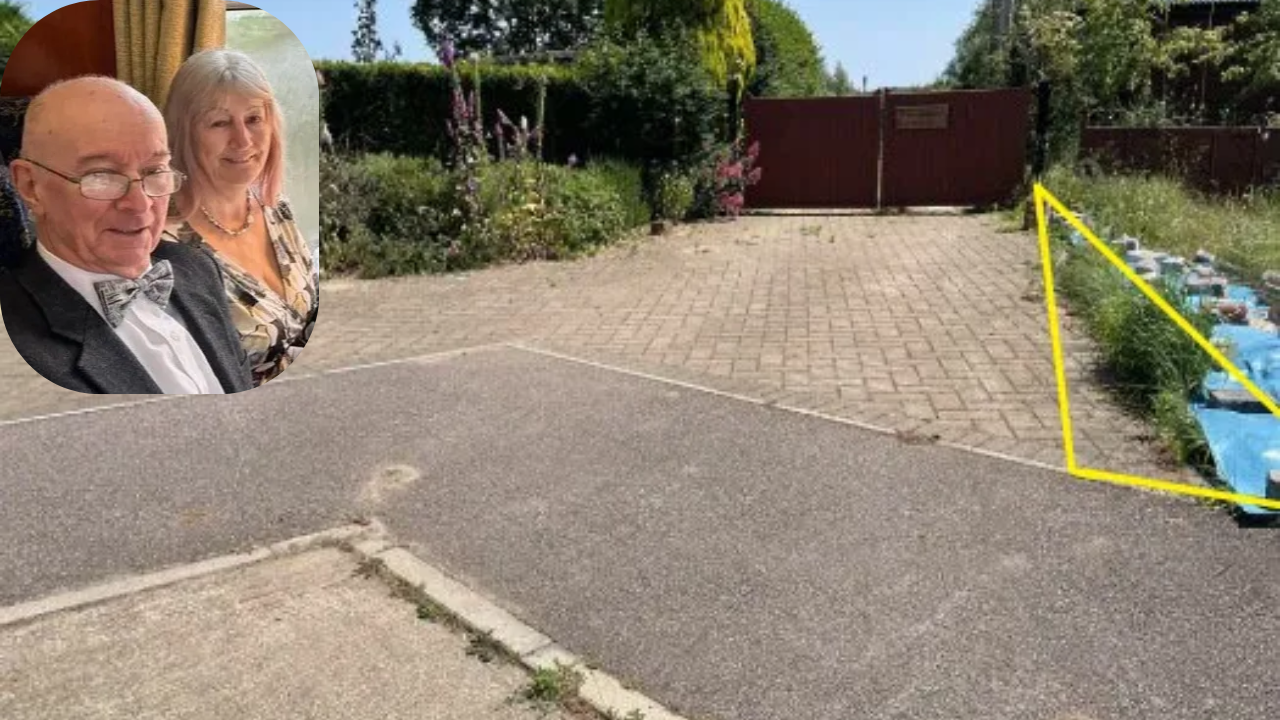
A boundary dispute in Kirby Bellars, Leicestershire, has ended in defeat for a couple who paved a narrow strip of their neighbour's garden to widen access to their horse paddock. According to reports carried by The Independent, The Telegraph and The Daily Mail on 5 November 2026, Dr Piers Connor and Professor Christine Pasquire failed to establish ownership of the tapering wedge of land, measuring up to 1.4 metres wide, after the First-tier Tribunal rejected their claim under adverse possession rules.
The couple installed a block-paved accessway in 2017 to make it easier for larger vehicles to reach the paddock adjoining their home. Their neighbours, GP Dr Dawn Moore-Elphick and her husband Richard, objected that the new paving encroached on their garden. By 2021 the disagreement had escalated, with the neighbours threatening to cut through and remove the portion of paving extending onto their property.
Connor and Pasquire then sought to establish ownership through adverse possession, the principle commonly associated with squatters' rights. Under the rules governing registered land in England and Wales, applicants generally need to show at least ten years of factual possession and an intention to possess. The couple argued that they had always understood the accessway to belong to their property, pointing to a large leylandii hedge that once marked the edge of the neighbouring garden as the boundary. They also cited vehicles belonging to previous occupants of their home, whose wing mirrors regularly passed over the disputed section, and an earlier covering of stones at the entrance as evidence of historical use.
The tribunal was not persuaded. It found that simply driving across another person's land did not amount to taking control of it, and that the earlier stone covering was not substantial enough to demonstrate factual possession. Judge Ewan Paton concluded that the couple's qualifying possession began only in 2017, when contractors excavated the existing surface and laid the new driveway, meaning the required ten-year period had not been completed when the application was considered. He directed the Chief Land Registrar to reject the request to register the land in their names.
The ruling framed the dispute as one about access rather than ownership. The couple wanted a wider turning area to ease movement between their home and the paddock, and the judge acknowledged that the narrow wedge was important to their preferred arrangement. Yet the tribunal heard no expert evidence on whether losing the section would make access impossible, more difficult or merely less convenient. The decision leaves the couple without legal ownership, but it does not automatically require the paving to be demolished. What happens to the disputed portion of the driveway now remains uncertain, and the Moore-Elphicks have succeeded in defending their claim to the land.
The case illustrates how modest boundary disagreements can become lengthy legal battles, particularly where changes to a property's access depend on land belonging to someone else. It also shows the limits of adverse possession as a remedy: use that is incidental, such as vehicles crossing a strip of garden, is not the same as possession. For owners contemplating works that edge onto a neighbour's title, the ruling is a reminder that the ten-year clock runs from the point of clear, exclusive control, not from the date a family first assumed a hedge marked the line.