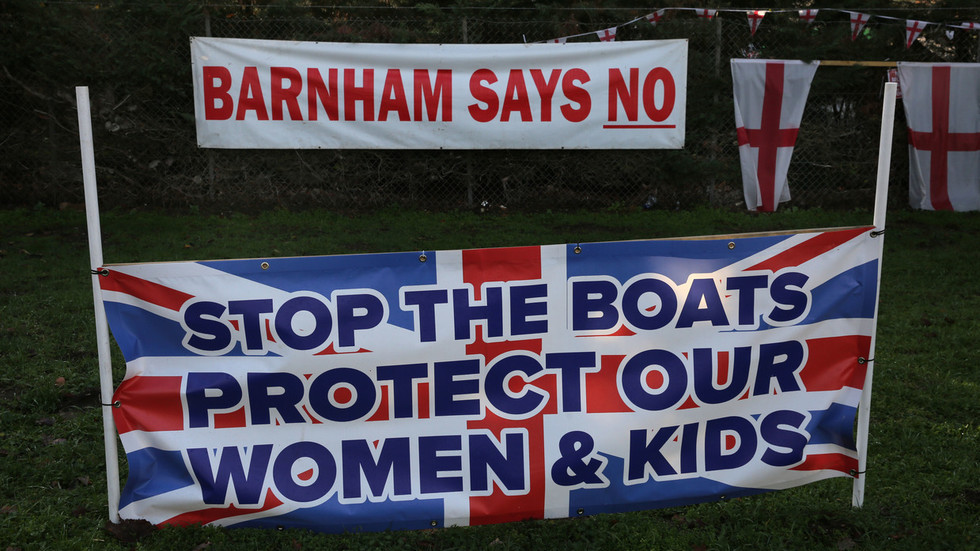
The votes in Suffolk and Oxfordshire are best read as a form of political signalling rather than a constitutional event.
Residents of Barnham, a village of fewer than 600 people in Suffolk, eastern England, have voted for symbolic independence from the United Kingdom in protest at government plans to house more than 900 male migrants at a nearby former military base. According to RT, the vote was carried by 257 to 16, making Barnham the second English village to stage such a referendum after Piddington in Oxfordshire held a similar ballot in September.
The result carries no legal weight. The referendum was organised to support a petition for Crown dependency status, a device intended to keep the village loyal to the British monarch while removing it from the jurisdiction of the Home Office. That framing is telling: the grievance is not with the Crown but with the department responsible for asylum accommodation, and the campaign's architects have chosen a constitutional fiction precisely because no real mechanism exists for a parish to secede.
The numbers behind the dispute are stark. The government proposed accommodating up to 931 asylum seekers at the former RAF Barnham base, around 60 per cent more than the village's total population of 584. The Home Office initially proposed housing 1,250 people but withdrew that application on 13 October following months of local opposition, submitting a revised plan the following day. The scale of the original proposal relative to the village helps explain the intensity of the reaction, though the revised figure remains far larger than anything Barnham has previously been asked to absorb.
The votes in Suffolk and Oxfordshire are best read as a form of political signalling rather than a constitutional event. They give residents a visible way to register opposition, and they generate national coverage that a parish council consultation would not. Whether that pressure changes the revised Home Office plan is not yet known. Nor is it confirmed how the petition for Crown dependency status will be handled, or whether the department intends to proceed with the 931-place scheme at the RAF Barnham site. The source material does not say what legal advice the campaign has received, how the Home Office has responded to the latest vote, or what local authorities in Suffolk have said about the revised application.
What the episode does illustrate is the friction that arises when national asylum accommodation is sited in small communities with little prior experience of it. The government faces a genuine constraint in finding suitable sites at scale; villages such as Barnham face a sudden and disproportionate change to their surroundings. Neither side's case is served by treating the other as illegitimate, and the symbolic referendum format, whatever its legal emptiness, is a reminder that consultation and consent are not the same thing. The next test will be the Home Office's handling of the revised plan, and whether the discontent expressed at the ballot box is met with a more granular local engagement than the first application received.