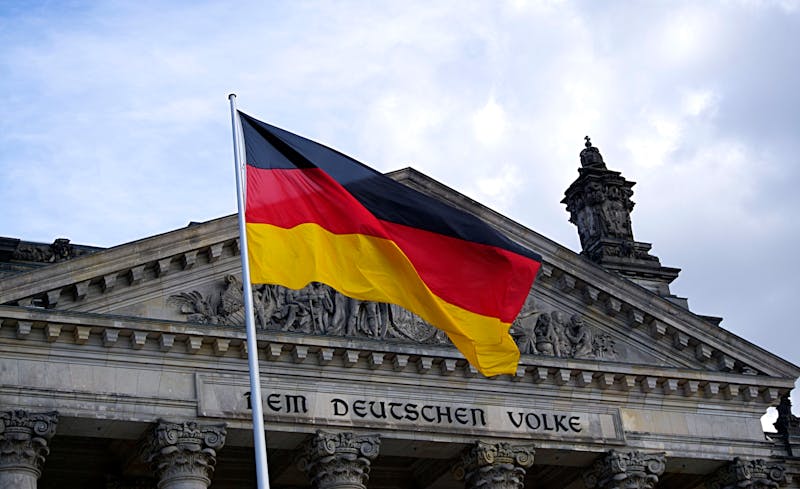
The decision to reduce troop levels reflects a complex interplay of domestic priorities and international commitments, potentially altering the balance of power in both Europe and the Middle East.
The recent announcement regarding the withdrawal of 5,000 U.S. troops from Germany should be interpreted not merely as a logistical maneuver but as a significant development in the broader context of U.S.-Iran relations and NATO’s evolving security landscape. This decision appears to be motivated by the ongoing tensions with Iran, underscoring a strategic pivot that could alter the balance of power in Europe and the Middle East.
Historically, Germany has served as a pivotal base for U.S. military operations in Europe, providing a critical platform for deterrence against potential aggressors. However, as the Biden administration faces mounting pressures to recalibrate its foreign policy, particularly regarding Iran, the decision to reduce troop levels reflects a complex interplay of domestic priorities and international commitments. This withdrawal might be seen as a response to internal calls for re-evaluating America's military footprint abroad, especially in light of shifting alliances and the rise of new geopolitical challenges.
From a diplomatic perspective, reducing troop numbers could be interpreted by Iran as a sign of American disengagement, potentially emboldening its regional aspirations. Conversely, it may also serve as an attempt to leverage negotiations with Tehran by signaling that U.S. military presence in Europe is not an infinite resource. Such a strategy carries inherent risks; it could lead to perceptions of U.S. weakness or indecisiveness in the face of Iranian provocations, which may further complicate efforts to stabilize the region.
The ramifications of this troop reduction extend beyond the Iranian theater. NATO allies, already wary of U.S. commitments, might interpret this move as a signal that the United States is reconsidering its role as the primary security guarantor in Europe. This could prompt European nations to reassess their defense strategies and capabilities, potentially leading to a fragmented security environment where collective defense becomes increasingly difficult to maintain. In this context, the need for cohesive NATO strategies and stronger European defense initiatives becomes even more pressing.