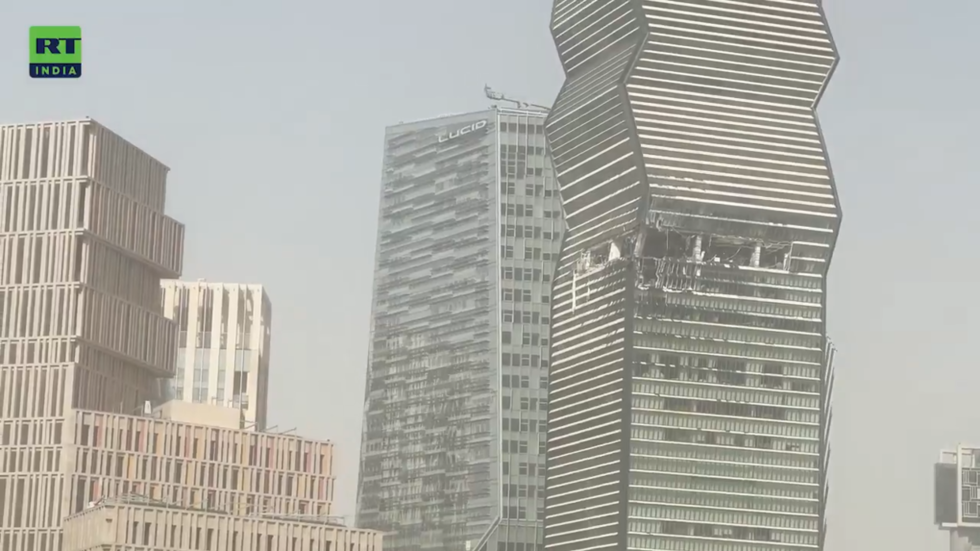
The gap between the two descriptions of the damage to the tower is itself significant.
A skyscraper housing offices of Saudi Arabia's state-owned oil company, Aramco, has been damaged in a missile and drone attack claimed by Yemen's Houthis, according to RT. The Aramco Tower stands in Riyadh's King Abdullah Financial District, and footage circulating online showed shattered windows, sections of glass facade blown out and internal structures exposed across several floors. Witnesses quoted in the report described hearing multiple explosions across the Saudi capital.
The two accounts of the strike diverge sharply. The Houthis, formally known as Ansar Allah, said the Sunday attack was retaliation for Saudi-led operations over the weekend that reportedly killed more than 50 people, including women and children. The group's military spokesman, Yahya Saree, said the targets included Riyadh's financial district, King Khalid International Airport, Aramco oil storage facilities and the eastern city of Abqaiq. Saudi Arabia's Energy Ministry acknowledged that an administrative Aramco building had been targeted in an "attempted attack," but said falling shrapnel caused only "minor damage," with no injuries or fatalities.
The Saudi-led coalition said its air defences intercepted several missiles, including two launched towards Riyadh, along with projectiles aimed at the kingdom's Eastern Province and southern regions. That claim, like the Houthi account of the scale of the operation, has not been independently verified. The gap between the two descriptions of the damage to the tower is itself significant: one video commentary noted that the visible harm appeared modest for a ballistic missile, while other footage showed heavy damage on the upper floors.
The choice of targets matters. Abqaiq is the site of major Saudi oil processing infrastructure, and the inclusion of Aramco storage facilities alongside the financial district and the capital's international airport signals an intent to press at both the symbolic and the material centres of Saudi power. The kingdom has spent years presenting the financial district as a showcase of its economic diversification, and a strike on that district carries a weight beyond the physical damage. Even so, the Energy Ministry's insistence on minor damage suggests Riyadh is keen to keep the episode contained.
What is not yet known is considerable. There is no independent confirmation of the number of projectiles launched, of how many reached their targets, or of the extent of structural damage inside the tower. The reported death toll from the weekend's Saudi-led operations has not been verified, and the Houthis' stated motive rests on that figure. Whether the attack marks a sustained new phase in the conflict or a single retaliatory gesture is also unclear. The report does not say how the Saudi-led coalition intends to respond, nor whether oil operations were affected.
For markets and for the wider region, the immediate question is whether a strike on the Saudi capital's financial heart becomes a routine feature of the conflict. The interception claims, if accurate, suggest the kingdom's air defences remain active against a determined adversary. The political question is harder: each side has described the same event in terms that suit its own narrative, and the space between those accounts is where the next escalation will be decided.