The attribution rests on a single party to the conflict.
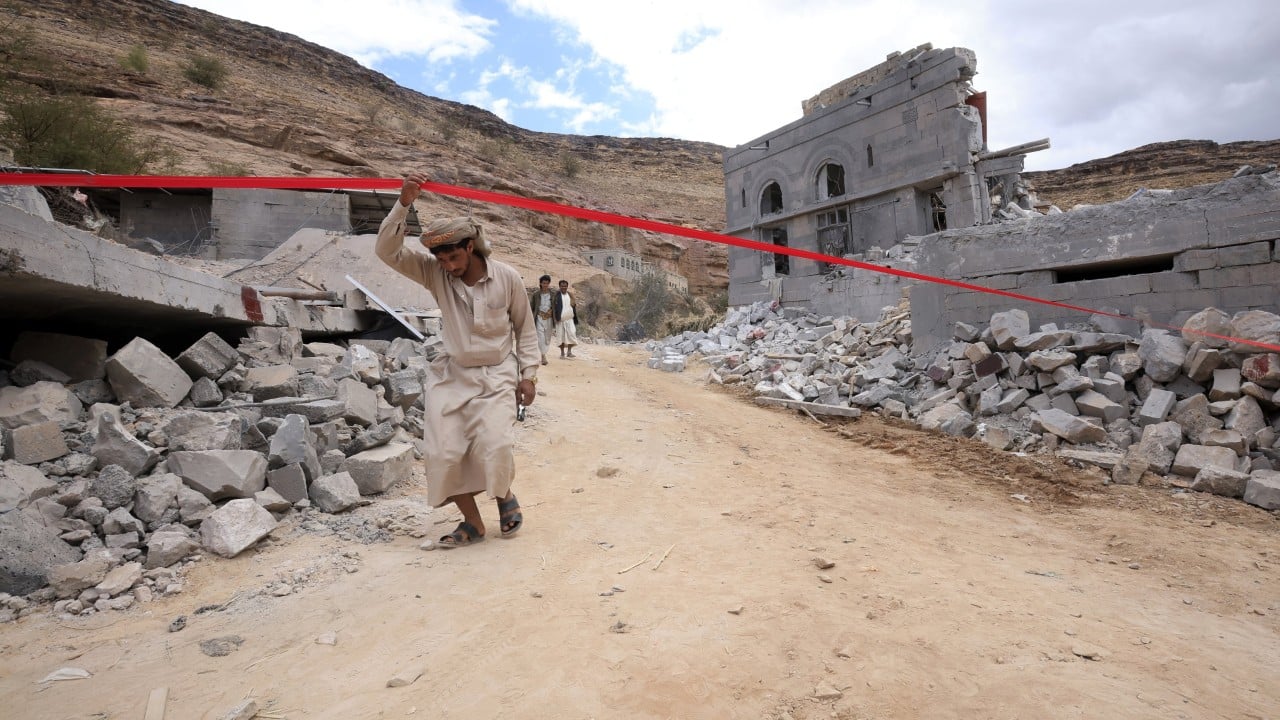
Health authorities run by Yemen's Houthi rebels say air strikes on the village of Al-Shariya, east of Sanaa, killed at least 44 people and wounded 40 others, according to the South China Morning Post. Anees al-Asbahi, spokesman for the Houthi-run Health Ministry, said the dead included 21 children and 10 women, and that rescue teams were still searching for missing people. He blamed Saudi Arabia for the strikes. The reported toll, if confirmed, would make the attack one of the deadliest of Yemen's year-long civil war.
The attribution rests on a single party to the conflict. Saudi Arabia has not, in the material available, confirmed or denied responsibility for the Al-Shariya strikes, and no independent verification of the casualty figures is given. The report places the attack within a broader escalation between the Iran-backed rebels and the kingdom that it says has killed hundreds of people in Yemen and dozens in Saudi Arabia. Readers should treat the figures as claims by an interested party until corroborated.
The same escalation is visible on Saudi soil. The kingdom's Energy Ministry said an attack on Monday in the Medina region caused a limited fire that was quickly extinguished, with no casualties and no effect on operations. It did not identify the perpetrators. The Houthis, who have repeatedly targeted Saudi infrastructure, did not immediately comment. The incident followed a day on which falling debris from intercepted missiles damaged several floors of a Saudi Aramco office tower in Riyadh's financial district, an attack the Houthis subsequently claimed.
The diplomatic picture is no less fluid. Syria's foreign minister, Asaad al-Shibani, said Damascus has not deployed forces to Yemen and has no immediate plan to do so, responding to an Associated Press report that Syria was preparing to send 600 special forces fighters to Saudi Arabia for deployment on the border with Yemen. He did not address that report directly, saying only that any military operation outside Syria's borders would be announced and discussed publicly. Two Iraqi officials, speaking anonymously, said Prime Minister Ali al-Zaidi travelled to Iran to deliver a message from President Donald Trump on containing tensions, and that Iran remained firm in insisting it would make no concessions.
Those threads converge on Washington. Iran's foreign ministry dismissed Secretary of State Marco Rubio's description of Iranian demands as outrageous and ridiculous, with spokesman Esmail Baghaei saying US strikes during talks in June 2025 and February this year were the illogical acts. Trump is due to meet Qatar's prime minister, Sheikh Mohammed bin Abdulrahman al-Thani, at the White House, with Qatar having helped mediate. Turkey's President Recep Tayyip Erdogan said he had told Trump he does not want a new wave of attacks on Iran. What remains unconfirmed is who ordered the Al-Shariya strikes, the final death toll, and whether the various mediation tracks can hold.