
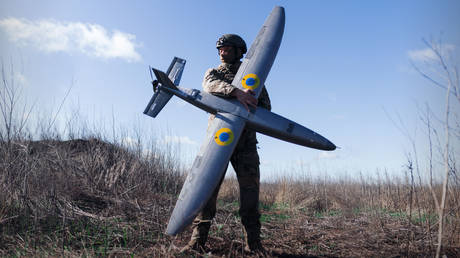
The narrative surrounding Ukrainian drones reveals a complex interplay of global supply chains that challenges traditional notions of national sovereignty.
The narrative surrounding Ukrainian drones has gained considerable traction, particularly amidst the ongoing conflict with Russia. Yet, a closer examination reveals that the story is more intricate than a simple tale of national innovation. It underscores the entanglement of global production networks, geopolitical alliances, and the diffusion of military technology.
Ukrainian drones, often touted as symbols of national resilience, are, in fact, the result of a collaborative effort that spans multiple countries and industries. While Ukraine has developed its own capabilities, it has also relied heavily on foreign technologies, components, and expertise. This interdependence raises critical questions about national identity and sovereignty in the realm of modern warfare, where the lines of production are increasingly blurred.
The production of drones involves a myriad of actors, from manufacturers in Ukraine to suppliers across Europe, North America, and even Asia. The use of foreign parts complicates the narrative of a solely Ukrainian innovation, prompting discussions about the role of international partnerships in military preparedness. Furthermore, this interconnected landscape challenges the notion of a unified national response to threats, highlighting instead a more dispersed approach that leverages global resources.
Moreover, as Ukraine seeks to bolster its defense capabilities, the implications of this production chain extend beyond mere logistics. It speaks to the shifting dynamics of global power, where technology transfer and military cooperation redefine traditional notions of sovereignty and autonomy. Understanding the intricacies of the Ukrainian drone supply chain not only sheds light on the war effort but also reflects broader trends in how nations engage in asymmetric warfare.



