
The gap between the reported tone and the president's public description is the most telling detail in the story: it suggests a disagreement being managed rather than resolved.
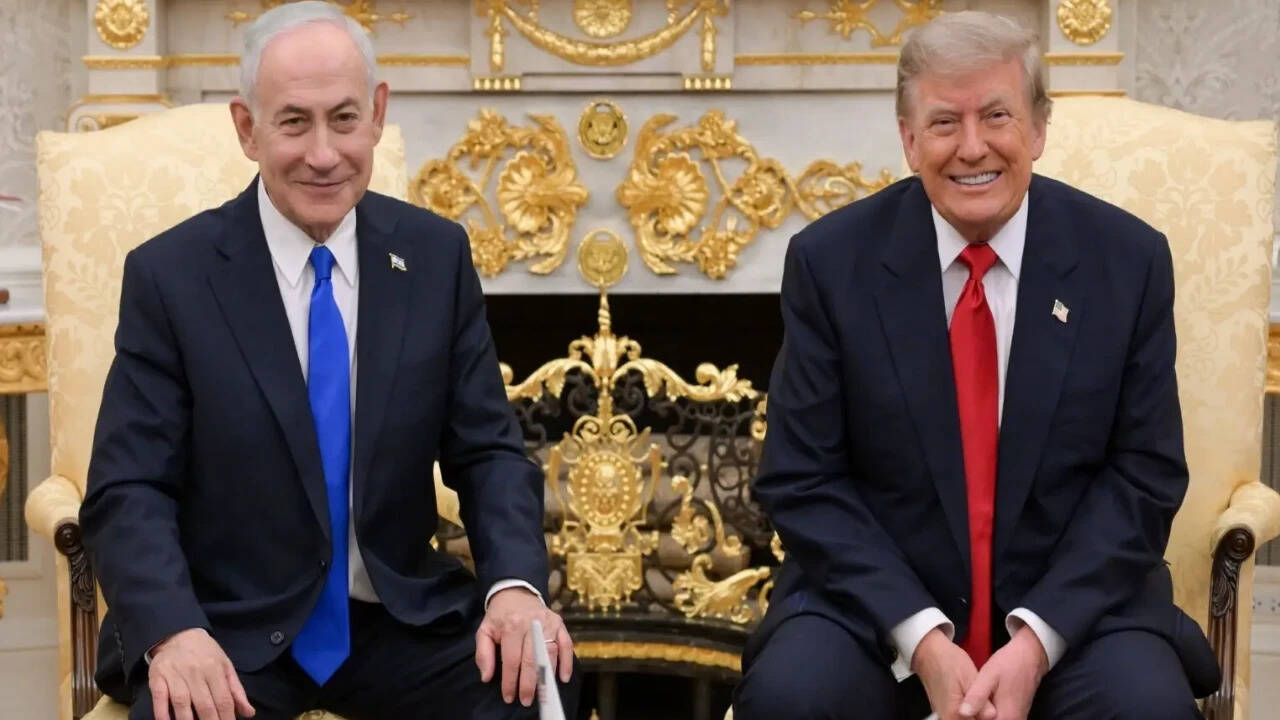
Donald Trump and Benjamin Netanyahu spoke by telephone on Saturday about Washington's negotiations with Iran and the possibility of resuming military operations, according to an Axios report carried by the Times of India. The Israeli prime minister pressed for fresh strikes after Tuesday's US midterm elections, while the US president wants to let diplomacy continue for now. One Israeli source described the call as "tough"; a US source called it "direct".
The two leaders gave different accounts of the same conversation. Trump told reporters in Iowa on Sunday that he had a "very good talk" with Netanyahu and confirmed Iran was among the subjects discussed, without giving further details. The White House and the Israeli prime minister's office declined to comment. The gap between the reported tone and the president's public description is the most telling detail in the story: it suggests a disagreement being managed rather than resolved.
Trump is running diplomatic and military tracks at once. He said on Saturday that negotiations were "going fine" and that he was not "in much of a hurry", while questioning Tehran's reliability. "They make a deal and then they back out," he said. He also indicated that one or two nuclear sites still needed to be addressed, referring to the suspected underground facility at Pickaxe Mountain. "We can do that in 10 minutes. We have that planned," he said.
The diplomatic track has visible momentum. Vice President JD Vance sent a letter last week to Iran's national security chief, Mohsen Rezaei, about restarting negotiations, the highest-level US outreach to Tehran in several months. Qatari mediators met Iranian officials on Sunday for the third consecutive day. Iranian foreign minister Abbas Araghchi said no agreement had been reached and that progress depended on Washington answering Tehran's questions. He said Iran remained prepared for both defence and diplomacy. He also said negotiators were in Qatar discussing a proposal that could reopen the Strait of Hormuz within two days if Washington met several conditions, and stressed that no direct talks were taking place, AP reported.
What is not known is considerable. The Axios account rests on one Israeli and one US source, and neither government would confirm it. The content of the Vance letter, the conditions Tehran has set and the answers Washington might give are all undisclosed. Whether the midterms change the calculus in the White House is a matter of speculation, not reporting.
The significance lies in the sequencing. An Israeli leader asking for strikes to begin after another country's election, and a US president declining to commit while keeping the option publicly alive, describes an alliance under strain rather than a rupture. For now the mediators carry the burden. If the Qatari channel stalls, the argument that lost on Saturday's call will return with more force.


