
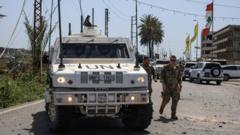
The death of the French soldier could be seen as an indictment of the limitations of UNIFIL's mandate, compelling stakeholders to reassess the mission's objectives.
The recent killing of a French peacekeeper in southern Lebanon serves as a stark reminder of the perils that accompany international peacekeeping missions in volatile regions. This incident not only highlights the dangers faced by those tasked with maintaining peace but also raises critical questions regarding the effectiveness and sustainability of such operations in an increasingly fractious landscape.
The United Nations Interim Force in Lebanon (UNIFIL) has been deployed in the region since 1978, tasked with monitoring ceasefires and ensuring stability along the Israel-Lebanon border. However, the operational environment has become significantly more complex in recent years, marked by the rising influence of non-state actors, particularly Hezbollah, and the persistent instability in neighboring Syria. The death of the French soldier could be seen as an indictment of the limitations of UNIFIL's mandate, compelling stakeholders to reassess the mission's objectives and its capacity to adapt to evolving threats.
Furthermore, this incident raises broader implications for international peacekeeping efforts. The ongoing risks faced by peacekeepers can undermine the perceived legitimacy of their missions, potentially leading to calls for withdrawal or a reevaluation of engagement strategies. For France, the loss of a serviceman in a foreign intervention context may evoke domestic scrutiny regarding its military presence abroad and its long-term goals in the region.
The geopolitical stakes in southern Lebanon extend beyond the borders of the country itself. As Iran continues to bolster its support for Hezbollah and other militant groups, the potential for escalation remains high. The international community must grapple with the challenge of providing effective security without exacerbating the very tensions they seek to mitigate. In light of this tragedy, it is imperative for policymakers to engage in a robust dialogue regarding the future of peacekeeping missions in Lebanon and the broader Middle East.



