
The government's willingness to disclose information about UAPs could serve as a litmus test for its commitment to transparency.
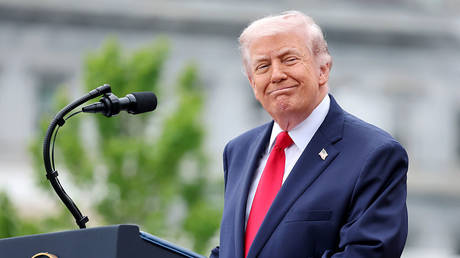
In a recent statement, former President Donald Trump indicated that the public should prepare for the release of 'very interesting' files related to unidentified flying objects (UFOs). This announcement, albeit vague, has not only piqued public curiosity but also reignited discussions about government transparency regarding extraterrestrial matters. As these developments unfold, they hold significant implications for both domestic policy and international relations.
The topic of UFOs has long been a point of fascination and speculation, oscillating between the realms of serious investigation and fringe conspiracy theories. Trump's remarks come on the heels of the U.S. government's increasing acknowledgment of unidentified aerial phenomena (UAPs), which has culminated in several reports outlining military encounters with objects displaying capabilities beyond current human technology. This shift towards transparency marks a significant departure from decades of secrecy and denial, reflecting an evolving narrative that suggests a more open governmental posture towards phenomena previously relegated to the margins of scientific inquiry.
Strategically, the potential release of these files could have far-reaching impacts. For one, it could alter public perceptions regarding government credibility and accountability. In an age where misinformation and skepticism dominate political discourse, the government's willingness to disclose information about UAPs could serve as a litmus test for its commitment to transparency. Furthermore, the release may catalyze international dialogue on space governance and the potential ramifications of extraterrestrial contact, a subject that remains largely uncharted in contemporary diplomacy.
Moreover, the anticipation surrounding the release of these files also intersects with broader cultural phenomena. The fascination with UFOs reflects deep-seated human curiosity about the unknown and the existential questions surrounding humanity's place in the universe. As we stand at the precipice of possible revelations about extraterrestrial life, it is crucial to consider the implications for society at large. Will these disclosures unify the public in pursuit of knowledge, or will they exacerbate divisions and lead to new conspiracy theories? The answers may be as elusive as the phenomena themselves.



