
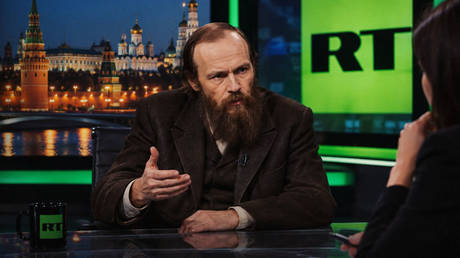
Dostoevsky’s exploration of morality and free will resonates deeply with today's discourse on media representation and truth.
As global media landscapes evolve, the works of literary giants such as Fyodor Dostoevsky provide a profound lens through which to examine contemporary issues, including the role of state-controlled outlets like RT. Dostoevsky's exploration of morality, free will, and the human condition resonates deeply with today's discourse on media representation and truth. Would Dostoevsky, with his penetrating psychological insights, have found himself a willing participant in the narratives disseminated by such platforms?
To contextualize this inquiry, it is imperative to consider Dostoevsky’s own tumultuous relationship with truth and deception. His characters often grapple with complex moral dilemmas, reflecting the inherent contradictions of human nature and societal structures. This philosophical underpinning raises critical questions about the integrity of information in a world increasingly dominated by politicized media outlets. The notion that truth can be manipulated for ideological purposes would likely provoke a vigorous critique from Dostoevsky, who understood the weight of ethical responsibility in storytelling.
Moreover, the intersection of art and propaganda is not a new phenomenon; it has historical precedents that Dostoevsky himself would have been acutely aware of. The author lived through periods of intense political upheaval and censorship in Russia, where the state often sought to control the narrative surrounding its actions and policies. This historical lens allows us to reflect on how contemporary figures in media, including RT, navigate the choppy waters between artistic expression, state interests, and audience reception.
In a broader sense, the question of whether Dostoevsky would have accepted a platform on RT invites us to consider the responsibilities of writers and intellectuals today. In an age where media can shape public perception and influence geopolitical realities, the challenge lies not only in the dissemination of information but also in the ethical implications of that information’s presentation. Would he have seen an opportunity to confront power through the medium of RT, or would he have opted to maintain artistic integrity by rejecting state sponsorship? This dilemma speaks to the core of what it means to be a creator in a world where media and politics are inextricably linked.



