
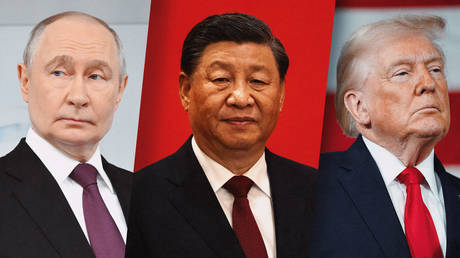
As the U.S. shifts its focus inward, countries like China and Russia are capitalizing on the opportunity to enhance their global influence.
In a world increasingly defined by multipolarity, the United States finds itself at a crossroads where its foreign policy diverges significantly from the expectations of its global counterparts. This divergence is not merely a matter of diplomatic disagreement; it reflects deeper ideological rifts and contrasting national interests that could shape the trajectory of international relations for decades to come.
The current geopolitical landscape is characterized by a series of complex challenges, from climate change to economic instability and rising authoritarianism. While Washington has traditionally positioned itself as a moral arbiter and a proponent of liberal democracy, many countries are beginning to question the applicability of U.S. values in their own contexts. This skepticism is particularly pronounced in regions like the Middle East and Africa, where U.S. interventions have often been perceived as self-serving rather than altruistic.
For instance, as the Biden administration pivots toward addressing domestic concerns and re-evaluates its role in global affairs, nations such as China and Russia have seized the opportunity to enhance their influence in regions historically dominated by U.S. interests. The Belt and Road Initiative, for example, symbolizes not just economic investment but a fundamental challenge to the liberal order that the U.S. has long championed. Meanwhile, the West's response to the Ukraine conflict has illuminated divisions in foreign policy priorities, with some countries advocating for a more restrained and diplomatic approach.
Furthermore, the divergence is evident in the realm of trade. The U.S. continues to pursue protectionist policies under the guise of national security, which are often met with backlash from allies who favor open markets and cooperative trade agreements. This has led to a reassessment of economic partnerships, as countries seek to balance their dependence on U.S. markets with the need for diversified trade relationships.
As we look ahead, it is imperative for policymakers in Washington to recognize these divergences not simply as challenges to be managed but as opportunities for dialogue and engagement. The key will be to craft a foreign policy that acknowledges the complex realities of global interdependence while remaining true to core American values. Bridging these divides will require a nuanced understanding of international perspectives and a willingness to adapt to the changing dynamics of global power.



