
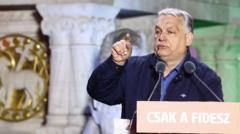
Hungarians stand at a crossroads that could redefine their political trajectory after 16 years of Viktor Orbán's grip on power.
As Hungary approaches a critical electoral juncture, the nation stands at a crossroads that could redefine its political trajectory. For the past 16 years, Prime Minister Viktor Orbán has maintained a firm grip on power, steering the country through a controversial blend of nationalism, economic reforms, and a tilt toward authoritarian governance. His administration has been characterized by a populist approach that has resonated with many Hungarians but has simultaneously raised concerns among international observers about the erosion of democratic norms.
The upcoming elections present a unique opportunity for Hungarians to voice their discontent and seek an alternative to Orbán's rule. The opposition, which has historically been fragmented, now appears more unified, rallying under a central banner to challenge the long-standing dominance of Orbán’s Fidesz party. This consolidation may reflect a growing impatience among voters who yearn for a governance style that prioritizes democratic institutions and civil liberties over the strongman politics of recent years.
In the backdrop of these elections lies a complex interplay of domestic and international factors. Hungary's economy, which has seen growth during Orbán's tenure, is now grappling with inflation and rising living costs, prompting many citizens to question the sustainability of the current model. Additionally, Hungary's relationship with the European Union has been strained due to Orbán's controversial policies, which have drawn criticism for undermining the rule of law. Voter sentiment may also be influenced by these external pressures, with many citizens weighing the merits of a more collaborative approach with European partners against the backdrop of Orbán's confrontational stance.
The ramifications of these elections will extend beyond Hungary's borders, as the outcome could signal a shift in Central European politics. A victory for the opposition would not only challenge the status quo in Hungary but could also inspire similar movements in neighboring countries where populist leaders have taken root. Conversely, a continued Orbán leadership may entrench nationalist sentiments across the region, reinforcing a narrative that prioritizes sovereignty over collective European governance.
As Hungarians prepare to cast their votes, the world watches closely. The outcome of this election may not only determine the fate of Orbán’s political legacy but also chart a new course for Hungary amidst the broader landscape of European democracy.



