
That history is central to the current argument: the institution now under scrutiny in Pristina is one Kosovo itself created.
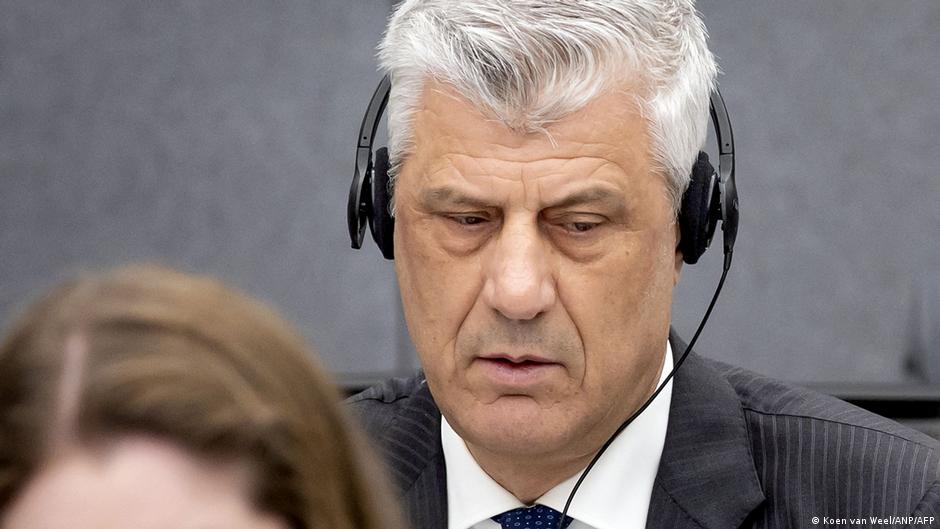
A court in The Hague on Tuesday convicted former Kosovo President Hashim Thaci of obstructing justice and attempting to influence witnesses during his war crimes trial, sentencing him to 17 months in prison. According to the DW report, the term will be added to the 25-year sentence handed down by the same court, the Kosovo Specialist Chambers, on 16 September. Three other men were also convicted: Bashkim Smakaj, former head of the Kosovo Intelligence Agency; former Justice Minister Hajredin Kuci; and Fadil Fazliu.
The indictment alleged that Thaci passed confidential information about witnesses to visitors at the detention facility and instructed them on how to influence testimony. Thaci, the former political leader of the Kosovo Liberation Army during the 1998-1999 war, is regarded by many in Kosovo as a hero, and his September war crimes conviction was met with anger and dismay at home. He has vowed to appeal that conviction.
The political response in Pristina was swift. The government said trust in justice rested not only on decisions but on how they are reached, insisting that proceedings be fair, transparent and credible. Prime Minister Albin Kurti has said a working group chaired by Foreign Minister Glauk Konjufca continues to regard the first-instance judgment as unjust both legally and morally, and that the government is seeking correction at the appeals level. The parliament is meanwhile considering amendments to the law governing the court, which would narrow its jurisdiction, cap sentences at 15 years, allow terms to be served in Kosovo and permit presidential pardons.
Analysts quoted by DW see risk in the timing. Artan Muhaxheri said that from an international perspective the initiative could at first glance be read as an attempt to interfere in the judicial process, and that Kosovo's political spectrum and legal experts must show beyond doubt that it does not conflict with the country's obligations to the European Union. Ehat Miftaraj of the Kosovo Law Institute said the conduct of the proceedings had created an impression that judges, prosecutors and some international actors treated both the accused and Kosovo itself with distrust and condescension. He drew a distinction between criticism grounded in legal argument and attempts to delegitimise courts or influence proceedings, adding that there is room for criticism on both sides.
The court was established in 2015 by Kosovo's parliament at the instigation of the EU and the United States, to investigate serious crimes allegedly committed by KLA members during and after the war, and was seated in The Hague for security reasons including concern about witness intimidation. That history is central to the current argument: the institution now under scrutiny in Pristina is one Kosovo itself created. What remains unconfirmed is whether the draft law will pass in its current form, how the appeals process will treat either conviction, and what response the EU and the United States will give to the amendments. Tuesday's ruling has not settled those questions; it has made them harder to avoid.



