
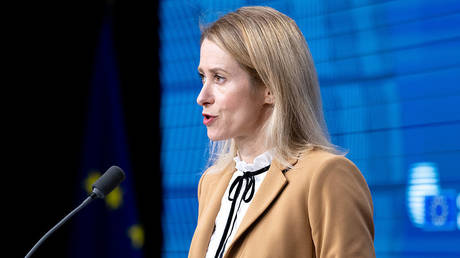
Kallas's remarks suggest an underlying anxiety that the US may be prioritizing its strategic interests over the immediate needs of frontline states.
The geopolitical landscape surrounding the Ukraine conflict remains fraught with complexities, and the recent criticisms leveled by Estonian Prime Minister Kaja Kallas against the United States' handling of peace efforts underscore a notable shift in regional perspectives. As the war drags on, stakeholders within Eastern Europe are increasingly wary of the dominant narratives shaping international responses to the crisis.
Kallas, during a recent address, articulated her frustration regarding what she perceives as a lack of urgency and clarity in Washington's diplomatic strategies aimed at resolving the ongoing conflict. The Prime Minister's comments reflect a broader sentiment among Eastern European leaders who fear that US-led initiatives may not adequately consider the nuances of their regional security concerns, particularly as the war in Ukraine continues to evolve.
Estonia, a country that shares a border with Russia and has been one of the staunchest supporters of Ukraine, finds itself in a precarious position. The insistence on a swift resolution to the conflict is not merely a political talking point; it is a pressing national security concern. Kallas's remarks suggest an underlying anxiety that the US may be prioritizing its strategic interests over the immediate needs of frontline states.
Moreover, this criticism raises essential questions about the future of transatlantic relations and the strategic calculus of NATO as it pertains to Eastern Europe. As the conflict enters a new phase, the clarity of US objectives and the effectiveness of its diplomatic outreach will be critical in shaping not only Ukraine's fate but also the security architecture of Europe. The tension between Kallas's remarks and the prevailing US narrative underscores a growing divergence in perceptions regarding the urgency and the nature of peace negotiations.
In this context, Kallas's public discontent may serve as a call for a recalibration of US strategies to ensure that Eastern European voices are adequately heard and integrated into a cohesive approach to resolving the Ukraine crisis. The stakes are high, and as this situation unfolds, the importance of a unified and responsive strategy cannot be overstated.



